

On July 31, 2026, the U.S. Department of Commerce announced the start of the fifth administrative review of the antidumping duty order on hot-rolled steel coil from China under HS 7208.51-7208.90. The review covers export shipments from October 1, 2024 to September 30, 2025 and matters well beyond a procedural update: exporters, U.S. importers, distributors, and downstream processors now need to watch possible changes in dumping margins, pricing assumptions, customs documentation, and origin-related compliance over the next 12 months.
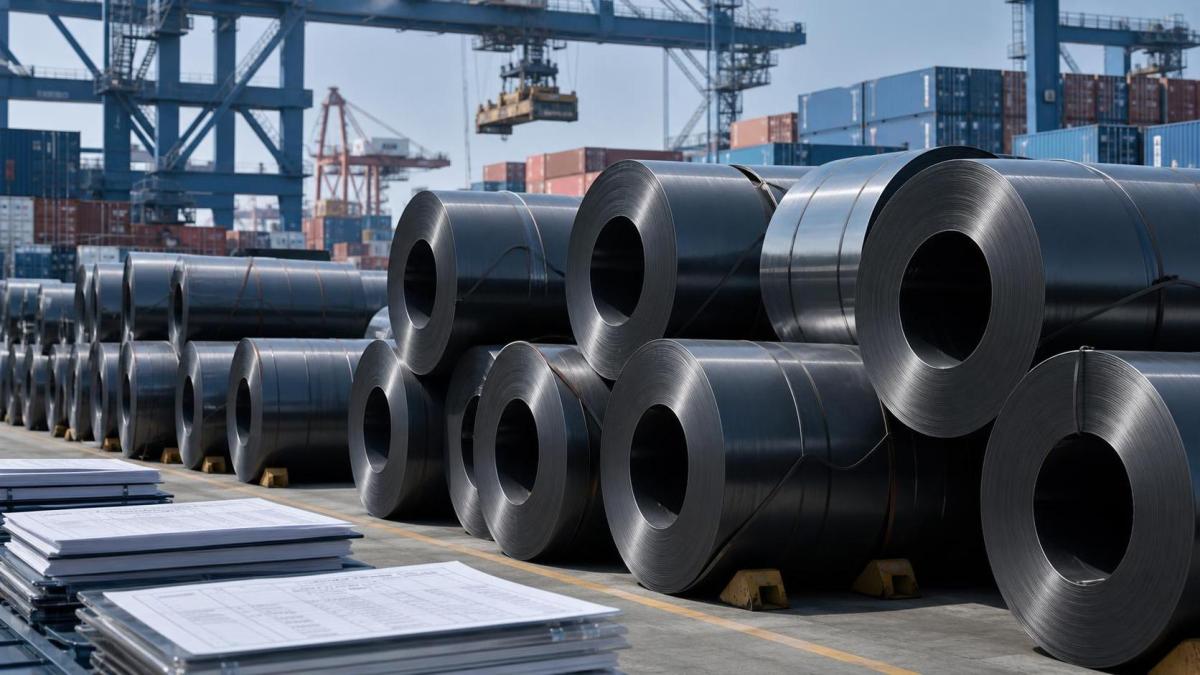
What the New Review Covers
The confirmed facts are limited but commercially important. The U.S. Department of Commerce formally initiated the fifth administrative review of the antidumping duty order covering Chinese hot-rolled steel coil on July 31, 2026. The scope identified in the input is HS 7208.51-7208.90, and the review period applies to export batches shipped between October 1, 2024 and September 30, 2025.
According to the provided event summary, this review will reassess dumping margins for exporters and producers. The same summary indicates that the outcome may affect export quotations to the U.S. market, customs clearance document preparation, and origin compliance requirements during the coming 12 months.
Where Commercial Pressure May Appear First
Quotation risk for direct trading companies
From an industry perspective, trading companies shipping covered hot-rolled coil to the U.S. may face immediate uncertainty in offer strategy because the review can lead to a recalculation of exporter or producer dumping margins. That matters most in contract pricing, margin protection, and timing of offers tied to U.S.-bound business.
Purchasing exposure for U.S. importers and distributors
Analysis shows that U.S.-based importers and distribution channels are among the most directly exposed roles named in the event summary. Their risk is not limited to price. It also extends to supplier selection, landed-cost assumptions, customs file readiness, and the need to confirm whether shipment records and product classifications are aligned with the reviewed scope.
Operational pressure on downstream processors
For downstream processing companies in the United States, the issue is procurement continuity rather than policy interpretation alone. If reviewed margins affect future quotations or import procedures, processors may need to reassess sourcing rhythm, contract terms, and inventory planning for hot-rolled coil inputs connected to covered Chinese supply.
Higher documentation demands across supply-chain services
Service providers involved in customs, logistics coordination, and trade compliance may also see tighter operating requirements. What deserves closer attention is the document chain behind shipment history, origin-related declarations, and consistency in clearance materials, because the summary specifically flags documentation and origin compliance as areas likely to be affected.
Practical Issues Companies Should Track Now
Watch official language closely
Businesses involved in covered products should follow subsequent official wording and procedural updates tied to this review. The key point is that the initiation itself is a confirmed fact, while the eventual commercial effect depends on how margin reassessment and related requirements are expressed in later stages.
Recheck product scope and shipment records
Companies dealing in HS 7208.51-7208.90 should review whether their past shipments, item descriptions, and supporting records are consistent with the covered period and declared product scope. In practical terms, this is where later disputes over classification, documentation completeness, or supplier traceability can become costly.
Separate policy signal from immediate execution risk
Observably, the launch of a review does not by itself confirm a final commercial outcome, but it does create a live risk window for pricing and execution. Procurement and sales teams should avoid treating the announcement as a completed result while still preparing for possible changes in quotations, customs handling, and customer communication.
Prepare counterpart communication and fallback plans
Exporters, importers, and downstream buyers should align early on document requirements, origin-related files, delivery schedules, and contract language where U.S.-bound orders are involved. The practical focus is less about broad strategy and more about reducing avoidable friction if compliance expectations or cost assumptions shift during the review cycle.
Why This Should Be Read as a Live Signal
This section is analysis rather than fact. It is more appropriate to understand this development as an active regulatory signal with direct commercial relevance, not as a final determination. The reason the market should keep watching is that the review reaches into several operational layers at once: exporter margin exposure, importer procurement decisions, clearance preparation, and origin compliance control.
Analysis shows that the current significance lies in uncertainty management. The announcement does not yet establish the final burden on trade flows, but it clearly raises the importance of transaction-level accuracy and counterpart coordination for any business exposed to covered Chinese hot-rolled coil entering the U.S. market.
How the Market Should Read the Announcement
At this stage, the industry meaning of the announcement is precise: a formal review has begun, and that review may influence pricing, customs preparation, and compliance expectations tied to Chinese hot-rolled steel coil exports to the United States. It should not yet be framed as a settled outcome, but it is also not a routine notice that affected businesses can ignore.
From a practical standpoint, this is better understood as a near-to-mid-term operating risk signal that deserves ongoing monitoring. The most rational reading today is that companies exposed to the covered HS lines should tighten documentation control, review sourcing assumptions, and stay alert to later procedural and margin-related developments.
Basis of This Article
This article is based on the user-provided news title, event date, and event summary. The specific official source link was not provided in the input, so the underlying announcement and any later procedural documents still require continued verification.
For this type of development, commonly relevant source categories include official government notices, company disclosures, industry association updates, authoritative media coverage, and trade or standards-related documentation where applicable. The next points to monitor are any follow-up official statements, revised margin-related language, and further clarification affecting quotation practices, customs documentation, and origin compliance.
By clicking 'Allow All', you agree to the storage of cookies on your device to enhance site navigation, analyze site usage and assist with our marketing efforts. Coo Cookie Notice