

On July 30, 2026, the EU formally brought steel semi-finished products and sections, including HS 7216 and 7228, into Phase III of CBAM, requiring importers to submit certified embedded carbon emissions data in tCO2e per tonne through the EU CBAM portal, together with proof of upstream electricity and coke sources. For steel exporters, EU distributors, customs-facing teams, and supply chain service providers, this is not just a reporting update: it directly affects document readiness, shipment timing, and whether goods can clear entry at all.
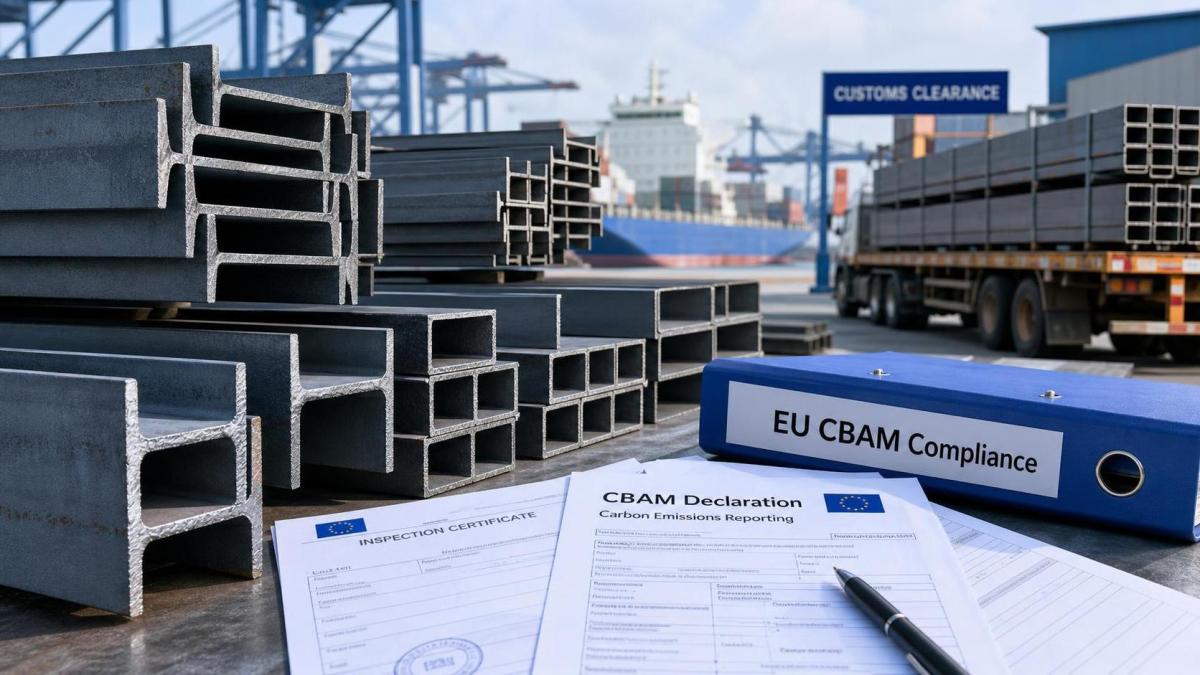
What the new filing requirement covers
According to the provided information, from July 30, 2026, Phase III of the EU CBAM formally extends to steel semi-finished products and sections, including product categories such as HS 7216 and 7228. Importers are required to file certified embedded carbon emissions data through the EU CBAM portal, expressed as tCO2e per tonne, and must also provide proof relating to upstream electricity and coke sources.
The same information states that non-compliant declarations may lead to customs clearance delays or refusal of entry. It also confirms that this requirement directly affects the supply rhythm and document preparation process for Chinese steel exporters shipping to European distributors.
Where the pressure is likely to appear first
Export transactions tied to EU distributors
From an industry perspective, companies selling steel sections and related products into the EU market are likely to feel the most immediate operational pressure. The reason is straightforward: if the importer must submit certified emissions data and upstream source proof, exporters will need to prepare supporting materials earlier and in a more consistent format. The business impact is likely to show up in pre-shipment coordination, document handover, and delivery scheduling.
Customs and border-facing logistics processes
Observably, the customs stage becomes a direct control point under this requirement. Because non-compliant filing may result in delayed clearance or refusal of entry, logistics teams, customs brokers, and distribution partners will need to pay closer attention to whether shipment files are complete before cargo reaches the border. The key issue here is not only transport timing, but whether the supporting carbon data package is aligned with the importer's filing needs.
Upstream data collection inside the supply chain
Analysis shows that the requirement for proof of electricity and coke sources pushes attention further upstream. This means the impact does not stop with the importer alone. Suppliers, mills, and documentation teams involved in preparing export files may need to coordinate more closely on how source information is gathered, verified, and passed forward. For affected businesses, the main change is that carbon-related documentation becomes part of routine shipment preparation rather than a separate compliance exercise.
What companies should watch now
Whether product scope and filing responsibility are matched correctly
What deserves closer attention is whether the goods being shipped fall within the covered steel semi-finished and section categories referenced in the provided information, and whether internal teams clearly understand which party is responsible for each filing and supporting document step. Misalignment at this stage could affect shipment release and customer delivery expectations.
How complete the emissions file is before shipment
For companies supplying EU-bound steel products, a practical priority is the completeness of the certified embedded emissions data package before goods move. This includes not only the emissions figure in tCO2e per tonne, but also the related upstream electricity and coke source proof referenced in the event summary. The main operational issue is whether documents are available in time for the importer's CBAM portal submission.
Whether customer communication needs to move earlier
Analysis shows that this change is likely to affect the timing of communication between exporters and European distributors. Where shipments previously focused on commercial and customs documents, there is now a stronger need to confirm carbon-related documentation status earlier in the order cycle. Businesses should pay attention to how this may affect promised delivery windows and document checklists.
The difference between rule activation and smooth execution
It is more appropriate to understand this as a live compliance requirement rather than a distant policy signal, but practical execution may still depend on how consistently companies can prepare documents across orders and product lines. For that reason, businesses should closely watch any further official wording, filing clarifications, or implementation details that may affect day-to-day handling.
Why this matters beyond a single customs step
Observably, the immediate significance of this development is procedural: covered steel imports into the EU now require a more complete carbon data trail to avoid disruption at entry. Analysis also suggests a broader operational implication for cross-border steel trade, because document readiness now has a more direct relationship with delivery continuity.
At the same time, this should not be overstated as a fully settled market outcome based on the provided information alone. What can be said with confidence is that the rule is already active for the covered categories, and that affected businesses need to treat carbon data preparation as part of shipment execution rather than a secondary compliance matter.
How this update is best understood
Based on the confirmed facts provided, this development is best read as an active compliance change with immediate operational consequences for steel trade into the EU, especially for importers, distributors, and Chinese exporters serving that channel. The most rational conclusion at this stage is not to treat it as a one-day news item, but as a business process requirement that may influence paperwork timing, supply coordination, and border risk for covered products.
Basis of this article
This article is based on the user-provided news title, event date, and event summary. In coverage of this kind, relevant source types typically include official notices, company disclosures, industry association updates, authoritative media reporting, and standard-setting or compliance-related documents. A specific official source link was not provided in the input, so the exact original publication path still requires ongoing verification. Continued attention should be paid to any later official clarifications on filing practice, covered product handling, and documentation expectations under the EU CBAM portal process.
By clicking 'Allow All', you agree to the storage of cookies on your device to enhance site navigation, analyze site usage and assist with our marketing efforts. Coo Cookie Notice