
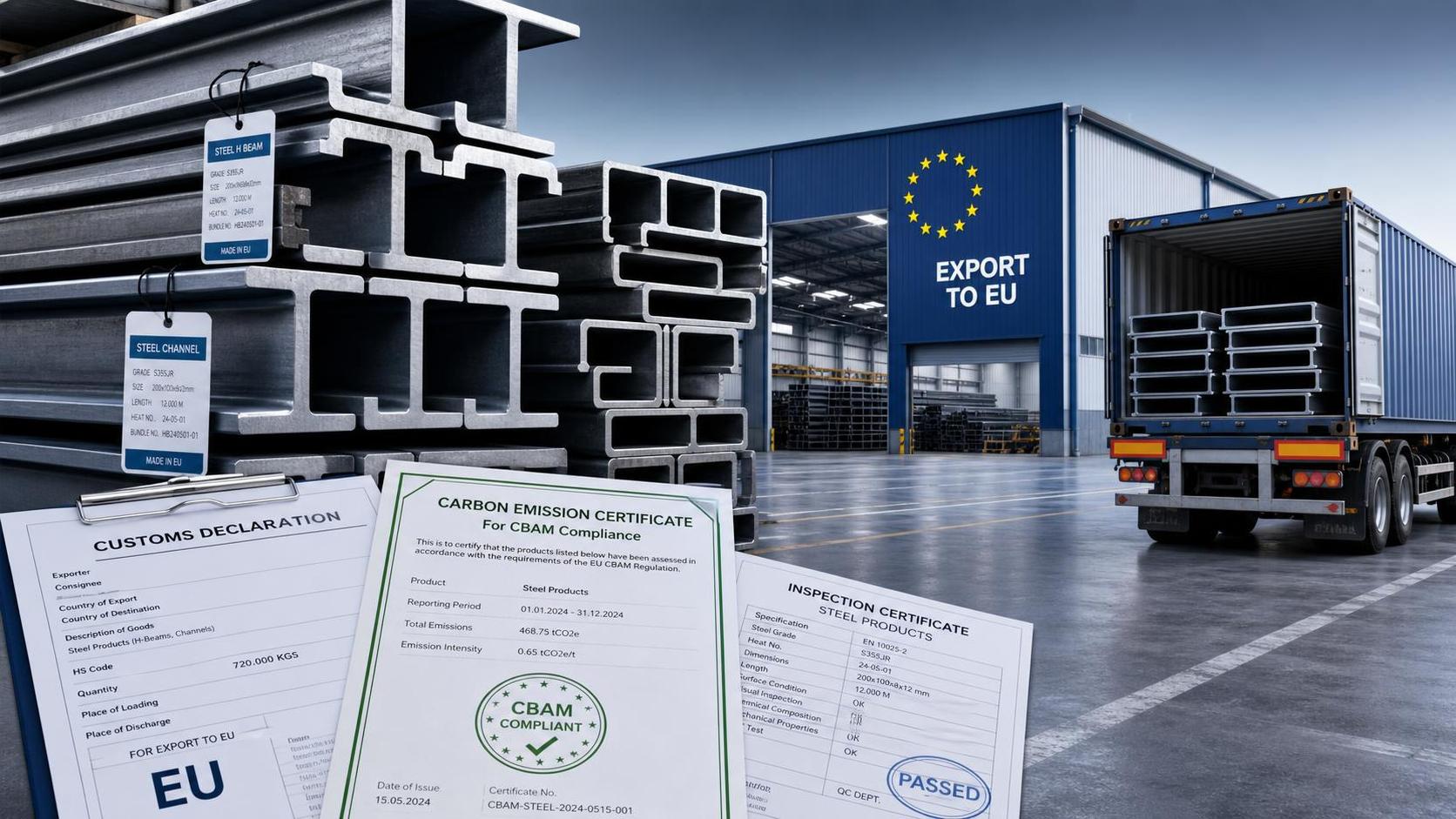
On July 28, 2026, the European Commission formally put the third phase of CBAM into effect for steel imports, extending the requirement to steel semi-finished products and profiles. For products under HS codes including 7216 and 7217, import clearance now requires certified embedded carbon emissions data to be submitted through the EU CBAM Registry before customs processing. This is worth close industry attention because it directly affects export execution, documentation readiness, verification arrangements, and delivery timing for steel suppliers serving the European market.
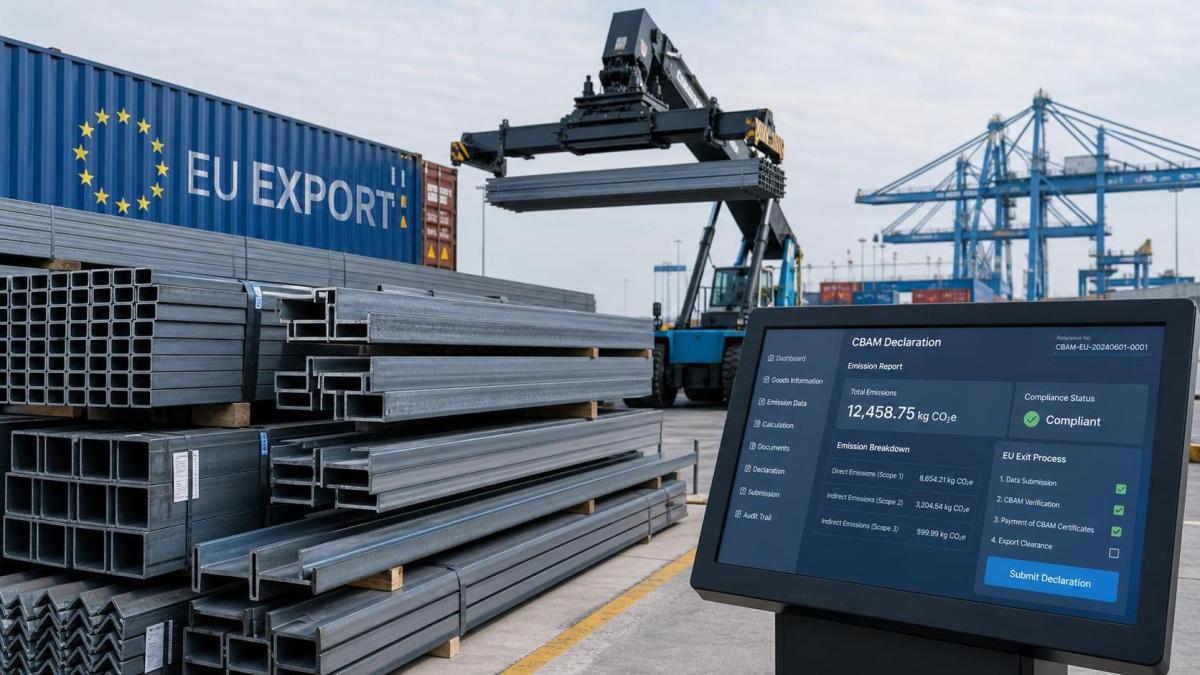
What the new filing requirement now covers
According to the provided information, from July 28, 2026, CBAM Phase III fully covers imports of steel semi-finished products and profiles. Products under HS code 7216 for hot-rolled sections and HS code 7217 for cold-formed profiles are included among the affected categories.
Before customs clearance, importers must submit certified embedded carbon emissions data, expressed in tCO2e/t, through the EU CBAM Registry. If this information is not provided, the products may be taxed using a 100% default emissions value.
The provided event summary also makes clear that this requirement directly affects delivery procedures to Europe, third-party verification costs, and lead times for Chinese steel exporters.
Where the operational pressure is likely to appear
Export shipments heading into EU customs procedures
Export-oriented steel suppliers are likely to feel the most immediate impact because the new requirement is tied to pre-clearance submission. The main pressure point is no longer only product shipment, but whether the carbon data package is ready, certified, and aligned with the import filing process before customs release.
From an industry perspective, what deserves closer attention is the growing linkage between trade execution and emissions documentation. For affected shipments, companies will need to pay closer attention to product classification, emissions records, certification status, and the timing of submission through the EU CBAM Registry.
Manufacturers and processors feeding profile exports
For mills, processors, and profile manufacturers supplying the EU market, the issue is not limited to final export paperwork. Analysis shows that upstream production and processing records may become more important because certified embedded carbon emissions data must be prepared before clearance.
This means affected businesses should watch whether their internal data collection, production traceability, and technical documentation are sufficient to support external verification. Where these materials are incomplete or slow to assemble, delivery schedules may come under pressure.
Verification and compliance service providers in the transaction chain
Third-party verification bodies and related compliance service participants are also likely to become more involved in the export process. The provided information already indicates a direct effect on verification costs, which suggests that carbon-related certification work is becoming a more visible transaction step rather than a secondary compliance formality.
Observably, this can influence how exporters coordinate with outside service providers, how early supporting documents need to be prepared, and how responsibilities are allocated between exporter, importer, and compliance support partners.
Buyers and procurement teams managing delivery certainty
For buyers and procurement teams sourcing steel profiles for the EU market, the rule change may affect supplier evaluation and shipment planning. The practical concern is whether suppliers can provide compliant emissions data in time for customs handling, rather than only whether product specifications and commercial terms are acceptable.
What deserves closer attention is the potential effect on procurement timing, document review, and supplier readiness checks. In transactions involving covered HS codes, compliance capacity may increasingly become part of delivery reliability.
Practical points companies should now monitor
Check whether covered product codes are involved
Companies shipping steel products into Europe should first review whether their export lines fall within the covered categories referenced in the provided information, including HS 7216 and HS 7217. This is a practical starting point because the compliance burden depends on whether the shipped product is captured by the CBAM Phase III scope described here.
Prepare carbon data and supporting files earlier in the shipment cycle
Analysis shows that the timing of emissions data preparation is now part of shipment readiness. Since certified embedded carbon emissions data must be submitted before customs clearance, companies should pay closer attention to whether technical files, calculation records, and supporting compliance materials can be assembled early enough to avoid delays.
Track verification arrangements and lead-time effects
The provided information confirms direct pressure on third-party verification cost and delivery cycle. It is therefore more appropriate to understand this as an operational issue as much as a regulatory one. Businesses should closely monitor how verification scheduling could affect dispatch plans, promised lead times, and coordination with EU-bound customers.
Follow later clarification in execution practice
The input does not provide detailed implementing guidance beyond the filing obligation and default-value consequence. For that reason, companies should continue watching for later clarification in official wording, compliance interpretation, and transaction documents used in actual trade flows. This is especially relevant for customs preparation, supporting document expectations, and any market-side adjustments in tender or purchase requirements.
Why this should be read as an execution-stage signal
Observably, this development is more than a policy headline because the requirement is tied directly to customs clearance and tax treatment. That makes it closer to an execution-stage rule change than a distant policy direction.
At the same time, analysis should remain measured. The available information confirms the filing obligation, the need for certified embedded carbon data, the use of a 100% default emissions value where data is missing, and the likely effect on cost and delivery timing. It does not, however, provide fuller detail on later market adaptation, verification practice, or how participants may adjust contract and procurement language. Those points still need to be observed through implementation.
What this development currently means for the market
At this stage, it is more appropriate to understand the measure as a concrete compliance requirement that is already connected to shipment execution for covered steel products, rather than as a general policy signal. For affected companies, the immediate issue is not abstract carbon regulation but whether emissions data, certification support, and customs-related filing can move in step with commercial delivery.
A neutral reading is that this rule change raises the importance of document completeness, verification timing, and supply-chain coordination in EU-facing steel trade. The full market response still requires continued observation, but the compliance threshold described in the provided information should already be treated as a real operational consideration.
Basis of this article and points that still need verification
This article is generated based on the user-provided news title, event date, and event summary. Typical source types for developments of this kind may include official announcements, publications from regulatory authorities, customs or trade administration updates, industry association communications, standards-related documents, and reporting by authoritative media.
No specific official source link was provided in the input, so the underlying official publication path still needs to be verified on an ongoing basis. Further observation is also needed regarding later policy detail, certification interpretation, tender document changes, industry feedback, and how companies implement the requirement in actual export operations.
By clicking 'Allow All', you agree to the storage of cookies on your device to enhance site navigation, analyze site usage and assist with our marketing efforts. Coo Cookie Notice