

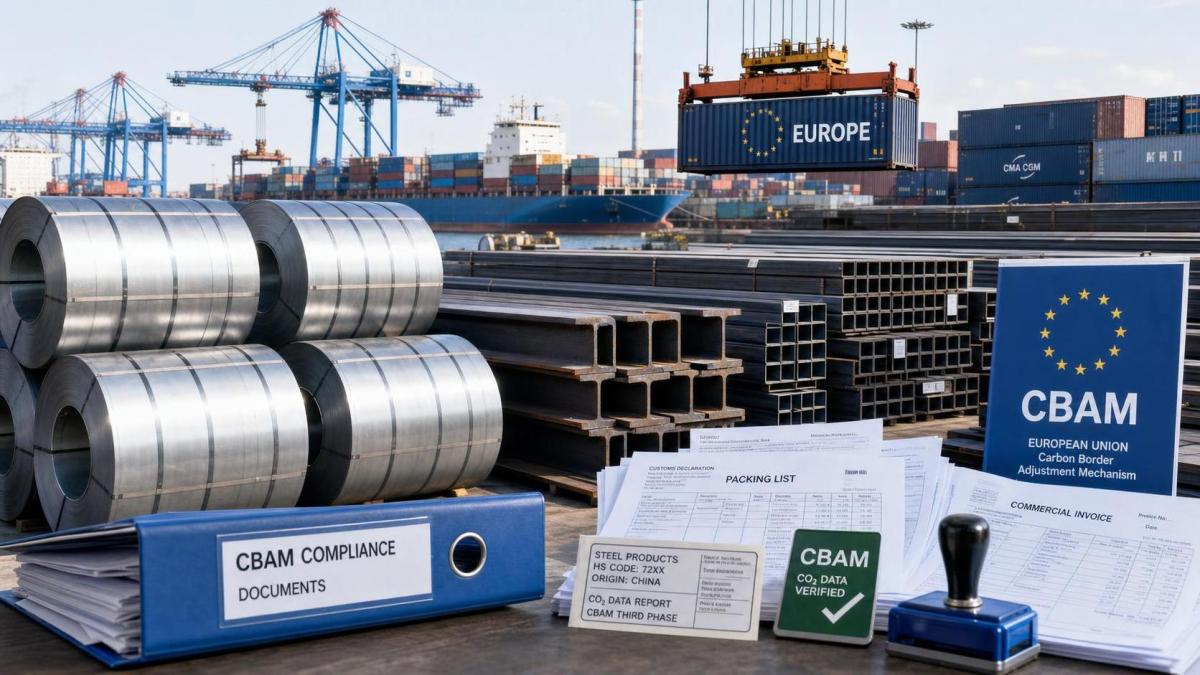
On August 1, 2026, the European Commission formally moved the CBAM transitional period for steel products into its third phase, bringing major exported steel categories such as hot-rolled coils, H-beams, and square tubes into a tighter reporting framework. For Chinese exporters, the change centers on monthly submission of embedded carbon emissions data and third-party verification, while for importers and supply-chain participants it raises immediate questions around customs timing, compliance handling, procurement review, and delivery planning.
What Has Officially Changed in This Stage
According to the confirmed event information, the third stage of the EU CBAM transitional period for steel products took effect on August 1, 2026. The scope covers major steel and section categories, including hot-rolled coils, H-beams, and square tubes. Chinese exporters are required to submit embedded carbon emissions data on a monthly basis and accept third-party verification. The adjustment directly affects customs clearance timeliness for overseas importers, compliance costs, and procurement decision chains. Products that do not complete the required data declaration face the risk of delayed release.
Where the Pressure Is Likely to Appear First
Export transactions now face a documentation threshold
From an industry perspective, exporters are likely to feel the change first because the rule now links product movement with recurring emissions reporting and verification. The practical impact is not limited to reporting itself; it also touches shipment preparation, document readiness, and handover timing with overseas counterparties. What deserves closer attention is whether monthly emissions declarations can be aligned with export schedules and product batches without creating gaps that affect release timing.
Import-side purchasing decisions may become more cautious
Overseas buyers and importers may be affected because customs release timing is now more closely tied to whether declaration requirements have been completed. Analysis shows that this can influence procurement review cycles, supplier screening, and order confirmation steps. Buyers are therefore likely to pay closer attention to whether suppliers can provide compliant emissions data, third-party verification support, and documentation that can be matched to the goods being shipped.
Processing and supply-chain coordination become part of compliance
For manufacturers, processors, traders, and logistics-related service participants, the impact is likely to appear in coordination rather than in a single standalone task. Observably, the expanded coverage of major steel export categories means that upstream and midstream participants may need to align product information, shipment records, and compliance materials more closely than before. Any disconnect between product category, emissions data, and shipping documents may affect delivery rhythm and customer acceptance.
What Companies Need to Watch in Current Practice
Monthly reporting should be treated as an operating requirement
Analysis shows that the monthly submission requirement is not simply an administrative add-on. It should be understood as a recurring compliance condition tied to export continuity. Companies involved in covered steel categories should pay attention to how reporting cycles interact with contract execution, shipment windows, and internal review processes.
Third-party verification will affect document preparation depth
What deserves closer attention is the role of third-party verification in supporting emissions declarations. Even though the provided information does not specify detailed execution standards, companies should monitor how verification materials, technical records, and supporting files are expected to match export documentation in actual practice.
Customs timing risk now extends into delivery planning
Observably, the stated risk of delayed release for undeclared products means delivery planning can no longer be separated from compliance readiness. Exporters, traders, and buyers should therefore pay attention to whether order scheduling, shipping commitments, and buffer times need adjustment when covered steel products are moving into the EU market.
Procurement and supplier review may tighten around covered products
From an industry perspective, hot-rolled coils, H-beams, square tubes, and other major steel and section products now sit closer to a compliance-based purchasing review. This does not by itself confirm a uniform market response, but it is reasonable to monitor whether procurement documents, supplier qualification checks, and bid or supply-file requirements begin to place more weight on emissions reporting capability and verification readiness.
Why This Looks More Like an Execution Signal
Analysis shows that this development is better understood as a rule entering a more operational stage rather than as a general policy statement. The significance lies in the shift from broad regulatory direction to a requirement that can affect release timing, transaction handling, and supplier assessment in day-to-day trade. At the same time, it remains necessary to observe how official interpretations, verification practices, and market-side implementation develop in real transactions.
How This Update Should Be Read for the Market
At this stage, the event is most appropriately understood as a live compliance and trade execution signal for steel exports covered by CBAM phase 3. The confirmed change is clear in scope and reporting direction, while the full market effect will depend on how participants adapt their documentation, verification, procurement, and delivery processes. A measured reading is that this is neither a routine paperwork adjustment nor a basis for overstated conclusions, but a practical rule change that deserves continued operational attention.
About the Basis of This Article
This article is generated from the user-provided news title, event date, and event summary. For events of this type, commonly relevant source categories may include official announcements, regulatory releases, customs or trade authority information, industry association updates, standard-setting documents, and reporting by authoritative media. No specific official source link was provided in the input, so the exact official reference still requires follow-up verification. Further attention should remain on implementation details, verification interpretations, procurement document changes, tender language, industry feedback, and how companies carry out the reporting requirement in practice.
By clicking 'Allow All', you agree to the storage of cookies on your device to enhance site navigation, analyze site usage and assist with our marketing efforts. Coo Cookie Notice