

On August 2, 2026, the U.S. Department of Commerce formally opened anti-dumping and countervailing duty investigations into carbon steel welded pipe from China under HS 7306.30. With preliminary findings expected in December 2026, the case is already relevant to U.S. importers, Chinese exporters, compliance teams, and buyers tied to construction, oil and gas transport, and infrastructure projects, because it affects customs clearance, landed cost calculations, and documentation requirements tied to supplier qualification and proof of origin.
What has been formally confirmed so far
The confirmed facts are limited but commercially significant. The U.S. Department of Commerce initiated both anti-dumping and countervailing duty investigations on August 2, 2026, covering carbon steel welded pipe from China classified under HS 7306.30. The preliminary determination is expected in December 2026.
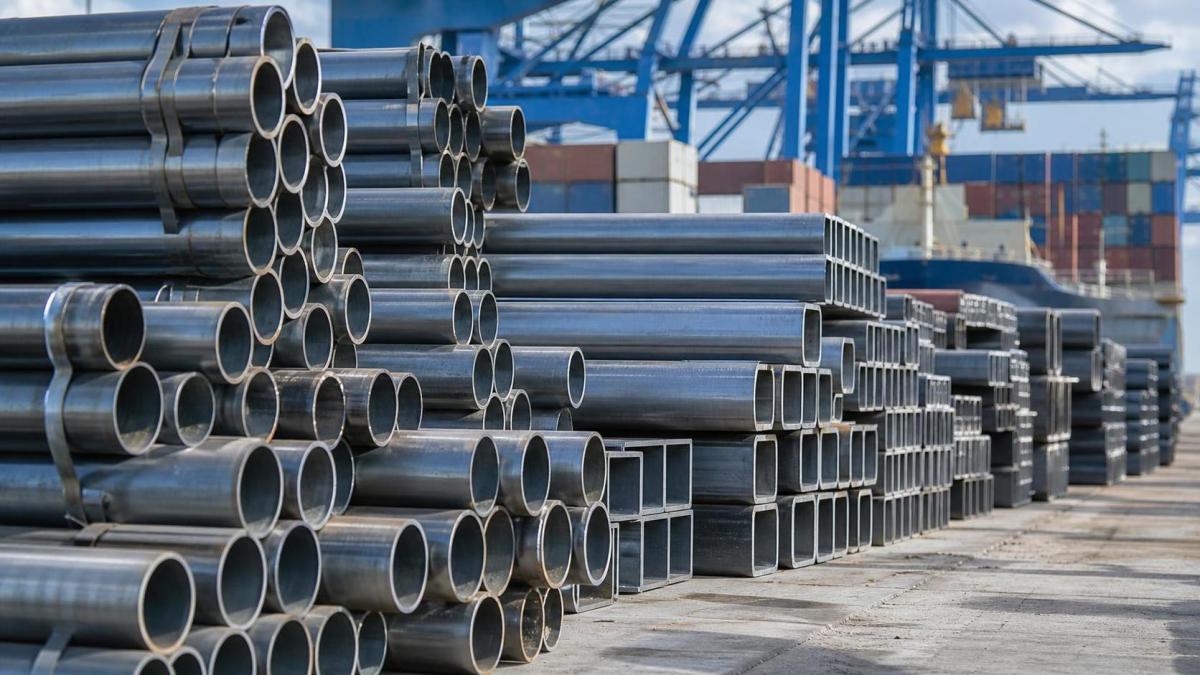
The product in question is widely used in construction, oil and gas transportation, and infrastructure-related projects. The trade involved exceeds USD 3.2 billion in annual export value. Based on the event summary provided, the investigation is expected to directly affect customs clearance for U.S. importers, procurement costs, and compliance certification requirements, while also prompting a reassessment of supplier qualifications and origin documentation.
Where the pressure is likely to appear across the chain
Import execution becomes more sensitive for U.S. buyers
From an industry perspective, U.S. importers are among the first to feel the operational impact because customs treatment, landed cost assumptions, and document review can all become more sensitive once an investigation is underway. What deserves closer attention is not only price exposure, but also whether shipment files, origin records, and supplier supporting documents can withstand closer scrutiny.
Chinese exporters face a documentation and qualification challenge
For exporters shipping the covered product, the issue is not limited to market access in a broad sense. Analysis shows that supplier credentials, product classification accuracy, and origin-related documentation move closer to the center of customer due diligence. Even before any preliminary ruling is issued, counterparties may ask for tighter documentation review and more explicit compliance support.
Project-based end users may need to revisit sourcing assumptions
Companies connected to construction, oil and gas transport, and infrastructure projects may not be the direct subject of the investigation, but they are exposed through procurement timing, supplier selection, and budget planning. Observably, if imports face added uncertainty, downstream users may need to recheck lead-time assumptions, qualification criteria, and contract language linked to material sourcing and delivery schedules.
Service providers in trade and compliance gain a larger role
Customs brokers, trade compliance teams, and related service providers may see increased involvement as importers and exporters reassess filing accuracy and supporting records. The practical impact is likely to concentrate in origin verification, document consistency, and communication between commercial teams and customs-facing functions.
What companies should be watching now
Track the path to the December preliminary decision
The immediate practical milestone is the expected preliminary determination in December 2026. Companies involved in affected transactions should distinguish between the current initiation of the case and any later official findings. That distinction matters because market reaction can begin early, while actual trade treatment may evolve as the case progresses.
Recheck HS classification and origin files
Because the case specifically refers to HS 7306.30 and highlights origin documentation, businesses should review whether internal product classification, supplier declarations, and origin-related records are aligned and complete. This is less about broad policy interpretation and more about whether trade files are ready for closer examination.
Review supplier qualification against compliance needs
The event summary directly points to a reassessment of supplier qualifications. In practice, that means companies should look beyond price and availability to examine whether suppliers can support documentation requests, certification needs, and transaction-level traceability expected by customers or customs-related processes.
Prepare customer and procurement communication early
Analysis shows that uncertainty itself can disrupt purchasing decisions. Importers, distributors, and project-facing procurement teams may need clearer communication on potential cost changes, customs timing, and documentation requirements. Early alignment between sourcing, sales, compliance, and logistics functions can reduce confusion if counterparties begin asking for updated assurances.
Why this should be read as a developing signal
Observably, this news is not yet a final trade outcome; it is the formal start of a dual anti-dumping and countervailing duty process. That matters because the business effect begins before a final conclusion is reached, especially in procurement planning and customs preparation, but the case should still be understood as an evolving regulatory development rather than a completed result.
What deserves closer attention is the combination of scale and end-use relevance. The covered product is tied to construction, oil and gas transportation, and infrastructure applications, and the trade value involved is substantial. For that reason, the case is better understood as more than a narrow procedural step, while still requiring continued verification as official determinations develop.
How to read the near-term significance
At this stage, the most balanced interpretation is that the investigation creates immediate operational attention points without yet establishing a final market outcome. For the industry, the key significance lies in documentation discipline, sourcing review, and the possibility of changing import cost assumptions ahead of the December 2026 preliminary ruling.
It is more appropriate to understand this as a live trade and compliance development with short-term business implications and longer-term signaling value, rather than as a settled conclusion. That is why companies tied to the product should keep their focus on execution details as much as on headline policy risk.
Basis of this article and what still needs verification
This article is based on the user-provided news title, event date, and event summary. The information supplied confirms the launch of the U.S. Department of Commerce investigations, the product scope under HS 7306.30, the expected timing of the preliminary determination, the product's application areas, the annual export value involved, and the immediate areas of likely business impact.
For this type of industry update, source verification would typically involve official government notices, company disclosures, industry association updates, authoritative media reporting, and relevant trade or standards documentation. No specific official source link was provided in the input, so the exact primary-source citation remains to be verified on an ongoing basis. Continued attention should focus on future official statements, any changes in procedural requirements, and the December 2026 preliminary determination timeline.
By clicking 'Allow All', you agree to the storage of cookies on your device to enhance site navigation, analyze site usage and assist with our marketing efforts. Coo Cookie Notice