
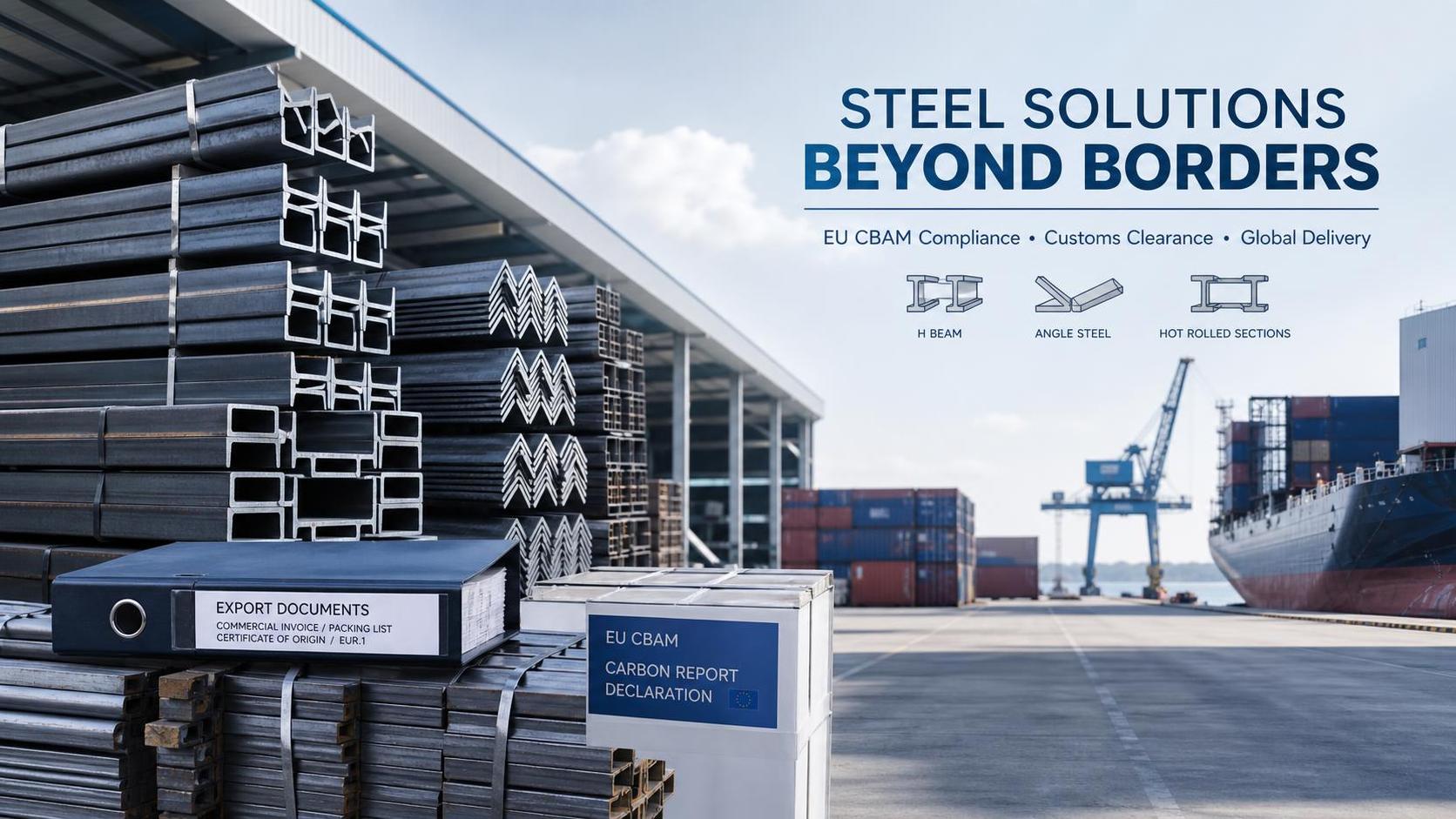
On August 1, 2026, the EU moved the Carbon Border Adjustment Mechanism (CBAM) for steel products into a mandatory reporting stage for embedded carbon data. The change directly affects Chinese suppliers exporting steel sections to the EU, including hot-rolled sections, H-beams, and angle steel, while also reshaping how overseas importers handle supplier screening, customs preparation, and order delivery risk. For the steel trade and processing chain, this is not just a compliance update but an operational issue that now touches transactions, documentation, and execution.
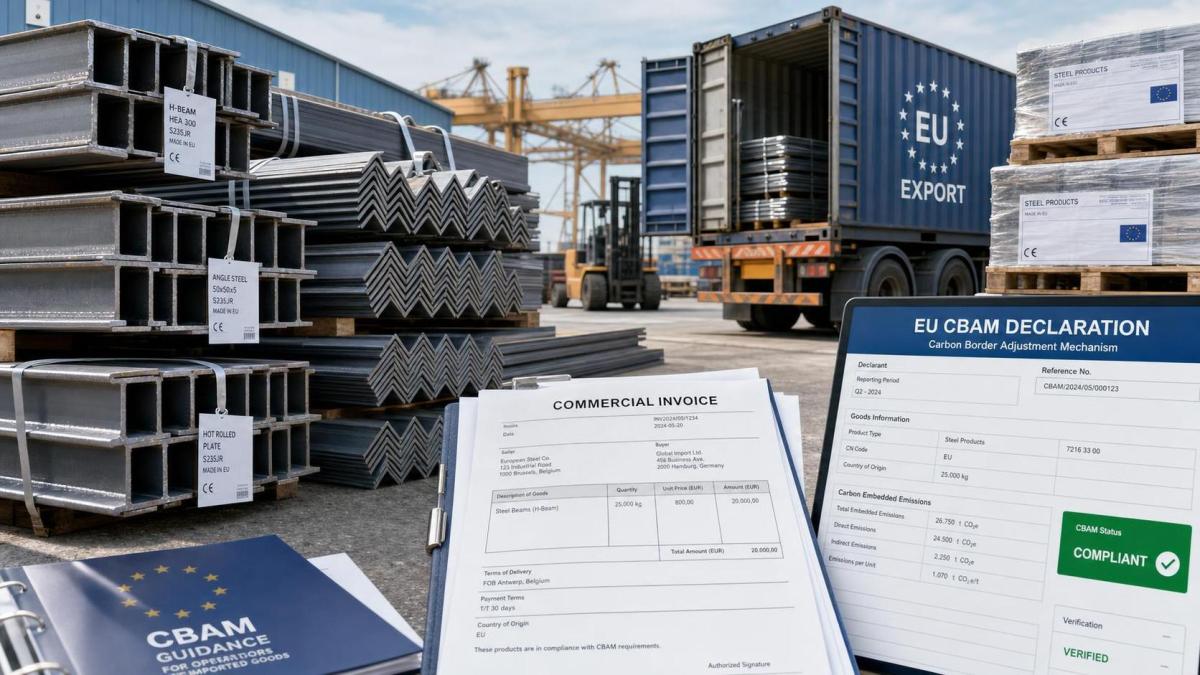
What Has Officially Taken Effect
According to the information provided, from August 1, 2026, the EU CBAM entered a compulsory data reporting phase covering major exported steel section categories such as hot-rolled sections, H-beams, and angle steel. Chinese suppliers exporting steel and steel sections to the EU are required to submit quarterly embedded carbon emissions data through the CBAM system. The provided information also states that non-compliant reporting may affect customs clearance and order delivery. In addition, the mechanism directly influences overseas importers' procurement procedures, compliance costs, and supplier qualification assessment.
Where the Immediate Pressure Appears in the Supply Chain
Export-facing steel suppliers move from product delivery to data delivery
From an industry perspective, the most direct impact falls on suppliers shipping covered steel products into the EU market. Their responsibility is no longer limited to product specification, production scheduling, and shipment execution; it now includes quarterly submission of embedded carbon emissions data through the CBAM system. What deserves closer attention is that reporting compliance may affect customs clearance and delivery timing, which means documentation readiness becomes part of export performance.
EU importers face a stricter procurement and screening process
Observably, overseas importers are affected because the mechanism changes procurement workflows and supplier access review. If quarterly emissions reporting becomes a condition tied to customs and delivery, importers may need to examine whether suppliers can provide complete and timely CBAM-related information before placing or confirming orders. In practice, this can shift attention toward supplier compliance coordination, document timing, and delivery certainty.
Processing, distribution, and order coordination teams may see more execution friction
For businesses involved in processing, channel distribution, or order coordination around EU-bound steel sections, the issue is not limited to policy interpretation. Analysis shows that any reporting gap can flow into shipment release, delivery scheduling, and customer communication. Even where these parties are not the primary reporting entity, they may still be affected through revised lead times, added document checks, or tighter order confirmation procedures.
Service providers linked to trade execution may need closer document alignment
Supply chain service participants supporting export execution may also feel the effect because the reporting requirement introduces another compliance checkpoint around cross-border delivery. What deserves closer attention is whether operational handoffs between supplier, buyer, and execution support teams remain aligned when quarterly carbon data submission becomes a formal requirement tied to shipment continuity.
What Companies Should Track Now
Whether covered product categories are correctly identified
Companies involved in exports to the EU should first focus on whether their steel products fall within the covered categories referenced in the current information, including hot-rolled sections, H-beams, and angle steel. This matters because category scope determines whether quarterly embedded carbon reporting through the CBAM system becomes an immediate operational obligation.
The connection between reporting and shipment execution
What deserves closer attention is the practical link between reporting compliance, customs clearance, and delivery schedules. The provided information already indicates that non-compliant reporting may affect clearance and order fulfillment, so businesses should watch how reporting preparation is integrated into shipment planning, customer commitments, and internal approval steps.
Supplier qualification and buyer communication standards
Analysis shows that supplier access assessment is becoming more important in transactions involving the EU market. Exporters and importers should therefore pay close attention to how emissions data readiness is communicated, how often supporting information is updated, and how compliance capability is reflected in buyer-supplier discussions. This is especially relevant where procurement decisions now depend not only on price and delivery but also on reporting reliability.
Potential updates in official wording or implementation details
Although the current information confirms the start of mandatory reporting on August 1, 2026, companies should continue monitoring whether further official clarification affects reporting practice, documentation detail, or workflow interpretation. Observably, the difference between a policy requirement and day-to-day execution often appears in how systems, forms, and review standards are applied in real transactions.
Why This Matters Beyond a Single Compliance Deadline
This development is better understood as both an immediate operating requirement and a longer-term market signal. Analysis shows that the immediate issue is clear: covered steel exports to the EU now require regular embedded carbon reporting through the CBAM system, and failure to comply may interfere with customs clearance and delivery. At the same time, the broader signal is that carbon-related data is becoming more closely tied to supplier evaluation and trade execution in the steel business. That does not by itself confirm how far commercial standards will shift, but it does indicate why the market will keep watching implementation closely.
How the Industry May Read This Stage
At this stage, it is more appropriate to understand the development as a concrete compliance change with broader commercial implications still unfolding. The confirmed facts already point to operational consequences for exporters, importers, and supply chain coordination around EU-bound steel sections. The wider industry significance lies in how reporting obligations begin to influence procurement review, supplier access, and delivery management. The market does not need to treat this as a fully settled long-term outcome, but it should treat it as an active change that now affects real business handling.
Basis of This Article and Follow-up Verification
This article is based on the user-provided news title, event date, and event summary concerning the EU's formal implementation of transitional CBAM reporting requirements for steel products from August 1, 2026. For this type of development, commonly relevant source categories may include official announcements, company disclosures, industry association updates, authoritative media coverage, and standard-setting or regulatory documents. A specific official source link was not provided in the input, so further verification remains necessary. Continued attention should be paid to any later official clarifications affecting reporting practice, covered product handling, and execution requirements in cross-border steel trade.
By clicking 'Allow All', you agree to the storage of cookies on your device to enhance site navigation, analyze site usage and assist with our marketing efforts. Coo Cookie Notice