

On July 1, 2026, the U.S. Department of Commerce announced the start of the 12th annual administrative review of the antidumping duty order on hot-rolled steel from China, including structural sections such as H-beams and I-beams. For exporters, importers, buyers, and supply-chain service providers involved in steel sections shipped to the U.S., this is not just a procedural update: it directly affects duty application, customs documentation, and the timing of price commitments for shipments expected from the second half of 2026 through Q1 2027.
What Has Been Formally Announced
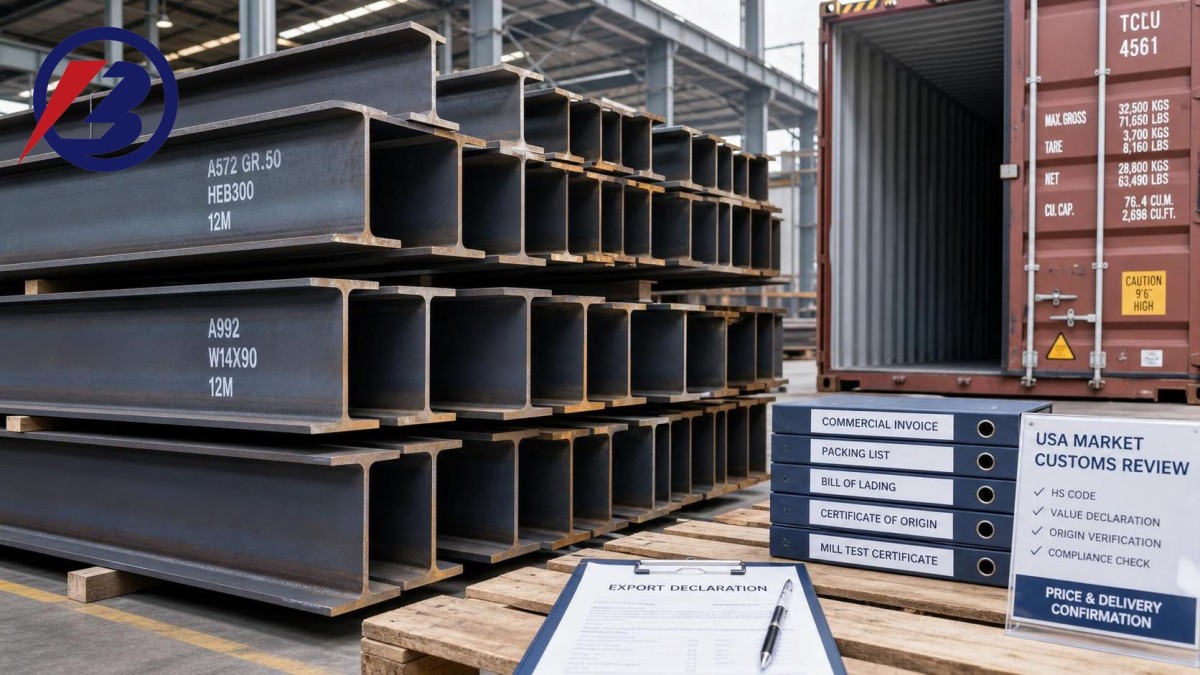
The confirmed development is limited but commercially significant. The U.S. Department of Commerce stated on July 1, 2026 that it has initiated the 12th annual administrative review of the antidumping duty order covering hot-rolled steel products from China, including structural steel sections such as H-beams and I-beams. According to the provided summary, the review will recalculate the dumping margins of the companies involved. The same summary also indicates that the outcome will directly affect the duty treatment, customs clearance document requirements, and price-locking cycle for exports of these steel sections to the U.S. during the second half of 2026 and Q1 2027. Importers are advised to confirm with Chinese suppliers whether they are participating in the review and how new duty rates may be estimated in order to reduce the risk of clearance delays and unplanned costs.
Where the Immediate Pressure Appears in the Trade Chain
Export transactions now face a narrower compliance window
From an industry perspective, exporters of covered steel sections may be affected first at the contract and shipment-planning stage. Because the review concerns dumping margins and future duty application, export teams need to pay closer attention to the review participation status tied to the supplying entity, as well as to the documentation used for customs clearance. What deserves closer attention is not only whether goods can be shipped, but whether the duty assumptions behind those shipments remain workable through the buyer's import process.
Import-side procurement must account for changing duty exposure
For importers and downstream buyers, the practical issue is cost visibility. Analysis shows that when a review is underway, quotation acceptance, landed-cost calculations, and purchasing approvals may all become more sensitive to estimated duty outcomes. Buyers relying on fixed-price arrangements may need to reassess how long a quoted price can realistically remain valid if duty treatment is still under review for the relevant supplier.
Logistics and customs support functions may see tighter document checks
Supply-chain service providers, including customs and trade-support functions, may also need to adjust working assumptions. Observably, the summary points to customs document requirements as an affected area, which means supporting parties should watch for changes in how shipment files, supplier status information, and related import paperwork are prepared and reviewed. This does not confirm a new documentation rule by itself, but it does indicate a higher compliance sensitivity around shipment execution.
Operational Points Companies Should Track Now
Confirm supplier review status early
Analysis shows that one of the most immediate tasks is to verify whether the Chinese supplier is participating in the administrative review. That status can shape how counterparties assess likely duty exposure and whether a quotation remains usable for a planned shipment window. This is especially relevant for contracts covering the second half of 2026 through Q1 2027.
Recheck quote validity and price-locking assumptions
Companies negotiating new orders or managing open offers should revisit the commercial logic behind fixed quotes. It is more appropriate to understand this review as a factor that may shorten the practical duration of price commitments, especially where import costs depend on estimated duty treatment that could be revised through the review process.
Prepare customs files with greater discipline
What deserves closer attention is the link between review activity and customs clearance documentation. Even though the provided information does not specify new forms or filing rules, companies should treat document completeness, supplier identity consistency, and shipment record accuracy as immediate control points. This is a monitoring need rather than a confirmed new filing regime.
Align purchasing and delivery schedules with compliance uncertainty
For procurement teams and project-based buyers, timing may become as important as price. Analysis shows that delivery planning, internal approval cycles, and supplier selection may need adjustment when duty assumptions and clearance conditions are under active review. This is particularly relevant where late delivery or cost overruns would create downstream contract pressure.
How This Signal Should Be Read at This Stage
Observably, this development is better understood as an execution signal rather than a final trade outcome. The review has been initiated, but the provided information does not establish a final recalculated margin, a final duty result, or a fully defined enforcement detail for every shipment scenario. From an industry perspective, the real significance lies in the fact that counterparties can no longer assume stable duty expectations for covered exports during the affected period. That makes this a compliance and transaction-management issue now, even before any later determinations are known.
Why the Market Still Needs a Measured View
The current update should be read as a live regulatory development with direct commercial implications, not as a completed outcome. The confirmed facts already justify closer attention to supplier status, customs preparation, and quotation strategy, but they do not support broad conclusions beyond the affected trade and compliance steps described in the summary. It is more appropriate to understand this as a rule-driven process that has entered an active stage and that warrants continued monitoring through the next phases of execution.
Basis of This Article and What Still Requires Verification
This article is based on the user-provided news title, event date, and event summary. For developments of this type, commonly relevant source categories include official government announcements, regulatory releases, customs or trade administration information, industry association notices, standard-setting documents, and reporting by established business or trade media. A specific official source link was not provided in the input, so the underlying publication and later updates still need to be verified on an ongoing basis. Continued observation should focus on later official wording, implementation approach, customs document expectations, changes in procurement or tender documentation, market feedback, and how affected companies handle execution during the review period.
By clicking 'Allow All', you agree to the storage of cookies on your device to enhance site navigation, analyze site usage and assist with our marketing efforts. Coo Cookie Notice