
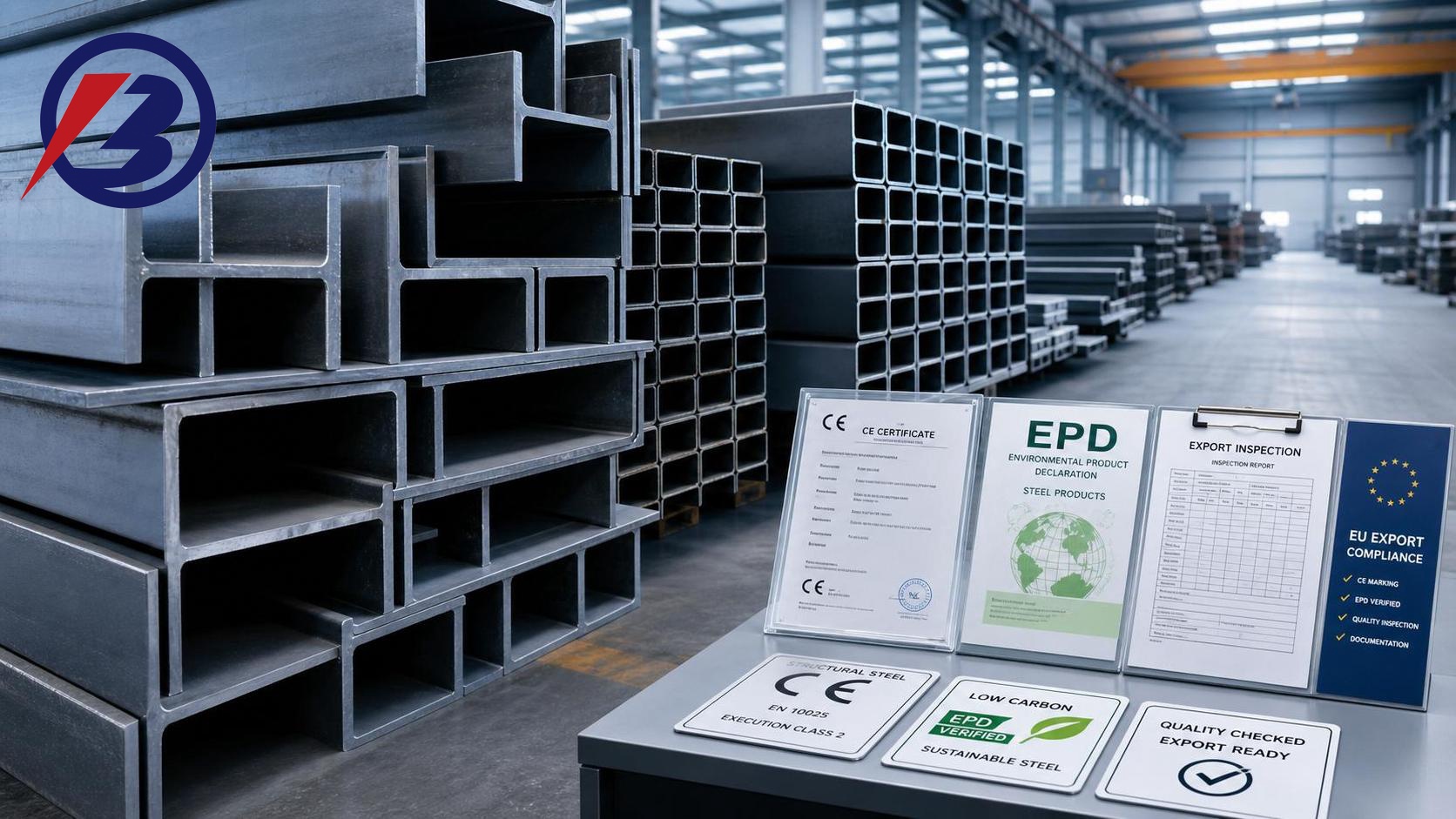
The revision of EN 1090-1:2026 has become a practical compliance issue for steel structure exports to the EU from July 1, 2026. According to the information provided, the updated standard was published in the Official Journal of the European Union (OJEU) on July 2, 2026, and requires CE declarations for exported structural steel sections to include life-cycle carbon footprint data in the form of EPD information verified by an EU-recognized third party. For exporters, processors, traders, and supply chain service providers, this is worth close attention because it affects filing procedures, testing timelines, and the structure of export quotations.
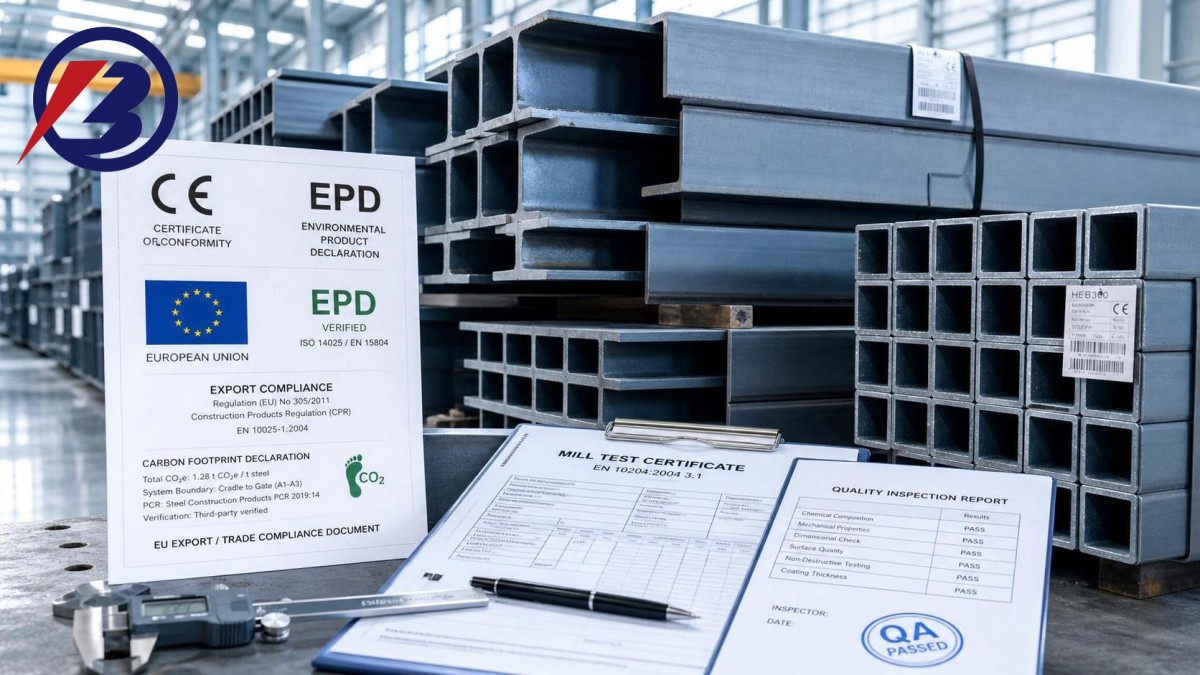
What the revised standard now requires
Based on the confirmed information provided, the revised EN 1090-1:2026 applies from July 1, 2026, and was published by OJEU on July 2, 2026. The new requirement covers structural steel sections exported to the EU, including H-sections, T-sections, and hollow sections. Under the revision, the CE declaration of conformity must include product life-cycle carbon footprint data expressed through EPD information, and that information must be verified by an EU-recognized third-party body.
The information provided also makes clear that this change directly affects the compliance declaration process, testing cycle, and export pricing structure of Chinese steel export enterprises.
Where the immediate business pressure may appear
Export-facing suppliers will feel the compliance shift first
From an industry perspective, direct exporters of structural steel products are likely to be the first group affected because the CE declaration sits directly in the export compliance chain. The main pressure points are likely to appear in document preparation, coordination of EPD data, and the need to align declarations with third-party verification before shipment or customs-facing submission steps.
Processors and manufacturers may face longer preparation cycles
Analysis shows that processing and manufacturing companies serving EU-bound orders may be affected through the added requirement for life-cycle carbon footprint information. Even where the physical product category remains unchanged, the compliance package now carries an additional verified data element. In practical terms, what deserves closer attention is whether this extends internal preparation time, changes testing and verification sequencing, or affects promised delivery schedules.
Trading and channel businesses may need to revisit quotation logic
Observably, trading companies and distribution intermediaries may not be the final manufacturers, but they still carry transaction responsibility when customers ask for complete compliance documentation. The information provided already indicates an impact on export quotation structure. That means commercial teams may need to pay closer attention to how verification-related costs and timing are reflected in offers, especially for products such as H-sections, T-sections, and hollow sections shipped to the EU market.
Service providers in the supply chain may see more coordination work
From an industry perspective, certification support, documentation handling, and cross-border supply chain coordination are also likely to be affected. The reason is straightforward: once CE declarations must include verified EPD data, the number of parties involved in preparing a compliant export file can increase, and the handoff between producer, exporter, and verifier becomes more time-sensitive.
What companies should watch now
Check which EU-bound product lines are directly exposed
The first practical issue is product scope. Companies exporting structural steel sections to the EU should review which existing product lines fall within the categories identified in the provided information, including H-sections, T-sections, and hollow sections. This matters because the rule change is not described as a general sustainability statement; it is tied to CE declarations for specific export products.
Distinguish document requirements from physical product requirements
Analysis shows that the current change should be read first as a compliance documentation requirement linked to CE declarations, rather than as a confirmed change to the physical specification of the steel products themselves. For operations teams, that distinction matters because documentation readiness, verification sequencing, and internal approval flow may become the immediate bottlenecks even when production capability itself has not changed.
Prepare for effects on lead time and customer communication
What deserves closer attention is the interaction between third-party verification and delivery commitments. Since the provided information explicitly notes an impact on testing cycles, companies should pay attention to whether quotation validity, shipment scheduling, and customer-facing lead times need to be adjusted. This is especially relevant for contracts already structured around fixed compliance submission milestones.
Track whether official wording or implementation practice evolves
Observably, the provided information establishes the effective date, the publication timing, and the core declaration requirement. Companies should still continue monitoring whether any subsequent official wording, interpretive guidance, or implementation practice changes the operational detail of how EPD data is presented in CE declarations and how third-party verification is handled in practice.
How this should be interpreted at this stage
Analysis shows that this development is more than a short-lived procedural notice because it links CE conformity declarations with verified life-cycle carbon footprint disclosure for relevant steel structure products exported to the EU. At the same time, based on the limited confirmed facts provided here, it would be premature to treat it as a fully settled commercial outcome across the entire steel value chain.
It is more appropriate to understand this as a clear compliance signal with immediate operational consequences. The reason the market should keep watching it is that the confirmed impact already reaches three concrete areas: declaration workflow, testing or verification timing, and export quotation structure. Those are not abstract policy themes; they are day-to-day trade execution issues.
Why this matters beyond the headline
In practical terms, the update to EN 1090-1:2026 matters because it shifts carbon footprint information from a peripheral sustainability topic into a required element of CE compliance documentation for covered steel structure sections exported to the EU. For the industry, the most reasonable reading at present is neither to overstate the result nor to dismiss it as a narrow paperwork adjustment. It should be understood as an active compliance change with direct commercial and operational implications, while the full implementation impact still merits continued observation.
Basis of this article and points for continued verification
This article is generated on the basis of the user-provided news title, event date, and event summary. The confirmed information used here is limited to the stated update of EN 1090-1:2026, the July 1, 2026 effective timing, the OJEU publication on July 2, 2026, the requirement to include verified life-cycle carbon footprint EPD data in CE declarations for relevant structural steel sections, and the stated impact on compliance procedures, testing cycles, and export pricing structure.
For this type of industry development, source categories commonly relevant include official notices, company announcements, industry association releases, authoritative media coverage, and standard-setting documents. A specific official source link was not provided in the input, so that point still requires ongoing verification. Areas worth continued monitoring include any later official clarification, implementation wording, and practical treatment of verification and declaration procedures in export operations.
By clicking 'Allow All', you agree to the storage of cookies on your device to enhance site navigation, analyze site usage and assist with our marketing efforts. Coo Cookie Notice