

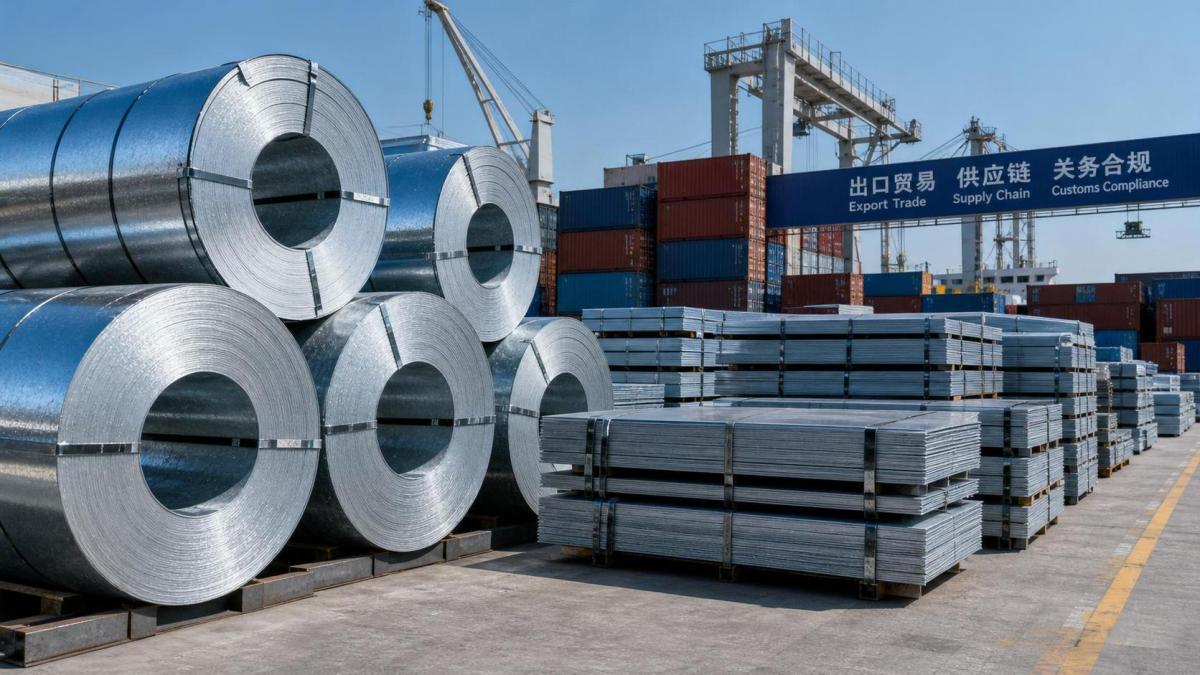
On July 11, 2026, the U.S. Department of Commerce formally opened a countervailing duty investigation into hot-dip galvanized steel sheet exported from China under HS 7210.49 and 7212.40. For importers, distributors, and supply chain participants tied to these products, the development matters immediately because it can affect customs clearance, cash deposits, and near-term sourcing costs, while also forcing a closer review of supplier compliance and pricing exposure ahead of an expected preliminary determination in November 2026.
What Has Been Confirmed So Far
The confirmed facts are limited but commercially significant. The U.S. Department of Commerce initiated the case on July 11, 2026, targeting Chinese exports of hot-dip galvanized steel sheet classified under HS 7210.49 and HS 7212.40. The case involves major exporting companies and production regions. Based on the information provided, the investigation is expected to have a direct effect on U.S. import customs procedures, deposit requirements, and subsequent procurement costs. The preliminary decision is expected in November 2026.
Where the Pressure May Appear First
Import execution and customs handling
From an industry perspective, U.S. importers are among the first parties likely to feel the impact because customs clearance and deposit obligations are directly referenced in the case information. The practical issue is not only whether goods can move, but under what financial and documentary conditions they move.
Distributor pricing and channel risk
Overseas distributors and channel operators may face pressure in quotation management and inventory planning. Analysis shows that once a trade case enters the formal investigation stage, the main commercial concern shifts toward whether current pricing still reflects potential duty-related exposure and whether existing supplier arrangements remain commercially workable.
Supplier review across affected product flows
For trading companies and sourcing teams dealing in the covered galvanized steel sheet categories, the case raises immediate questions around supplier qualification, product classification, and transaction continuity. What deserves closer attention is whether supplier-side compliance materials and trade documentation can withstand heightened review as the case progresses.
Downstream buyers and contract timing
Manufacturers and procurement-side buyers using imported galvanized steel sheet may also need to watch contract timing and replenishment cycles more closely. Observably, even before any preliminary outcome is published, uncertainty around landed cost can influence purchasing decisions, budget assumptions, and customer discussions tied to delivery schedules.
Operational Issues Companies Should Track Now
Watch for official case language and procedural updates
Companies should follow how the investigation is described in subsequent official communications, especially where scope, product treatment, or procedural milestones affect day-to-day trade execution. The distinction between a formal filing and later operational requirements matters in practice.
Recheck covered products and transaction exposure
Businesses handling products under HS 7210.49 and 7212.40 should reassess which shipments, contracts, and customer commitments may be exposed. This is particularly relevant for firms balancing orders already in process against future procurement decisions.
Review supplier compliance readiness
Based on the information provided, overseas distributors and channel companies need to re-evaluate supplier compliance qualifications. In practical terms, this means paying closer attention to the consistency of product documentation, transaction records, and any materials that support customs handling and ongoing supply arrangements.
Prepare for price and communication adjustments
Analysis shows that cost risk in this stage is not only a pricing issue but also a communication issue. Importers, suppliers, and customers may need clearer internal and external communication around possible deposit changes, procurement cost adjustments, and delivery assumptions before the expected November 2026 preliminary determination.
Why This Is a Signal Worth Watching
As an editorial observation, this development is better understood as an active trade-policy signal rather than a settled market outcome. The investigation has already created a practical risk layer for affected transactions, but it has not yet produced a final result. What deserves closer attention is the gap between the formal opening of the case and the preliminary decision expected in November 2026, because that period is often where procurement behavior, supplier screening, and channel pricing begin to change first.
It is also more appropriate to understand this as a development requiring continued observation rather than a complete reset of the market. The confirmed information points to immediate operational sensitivity, especially for import procedures and cost planning, but it does not by itself confirm a final duty burden or a definitive long-term trade outcome.
How the Market Should Read This Stage
At this point, the case should be read as a near-term operational issue with broader strategic implications still unfolding. The direct significance lies in customs handling, deposit exposure, sourcing cost management, and supplier compliance review. The wider industry meaning is that businesses connected to Chinese galvanized steel sheet exports to the U.S. should treat the period before the preliminary determination as one requiring tighter documentation, more cautious pricing assumptions, and closer monitoring of official developments.
Basis of This Article
This article is based on the user-provided news title, event date, and event summary concerning the U.S. Department of Commerce's July 11, 2026 initiation of a countervailing duty investigation into Chinese hot-dip galvanized steel sheet. For this type of development, relevant source categories typically include official government notices, company disclosures, trade association updates, authoritative media coverage, and related trade or standards documents. A specific official source link was not provided in the input, so further verification remains necessary. Continued attention should focus on later official statements, procedural developments, and the expected preliminary determination in November 2026.
By clicking 'Allow All', you agree to the storage of cookies on your device to enhance site navigation, analyze site usage and assist with our marketing efforts. Coo Cookie Notice