

On July 12, 2026, the EU Carbon Border Adjustment Mechanism (CBAM) formally moved steel products into its second-stage implementation, bringing a practical compliance shift for manufacturers exporting steel and sections to the EU. The immediate change is not only procedural reporting: it links quarterly submission of certified direct emissions data to customs clearance and to continued access to transitional exemptions, which makes this a matter of procurement screening, supplier qualification, carbon data readiness, and delivery risk across the steel trade chain.
What has now taken effect in steel trade compliance
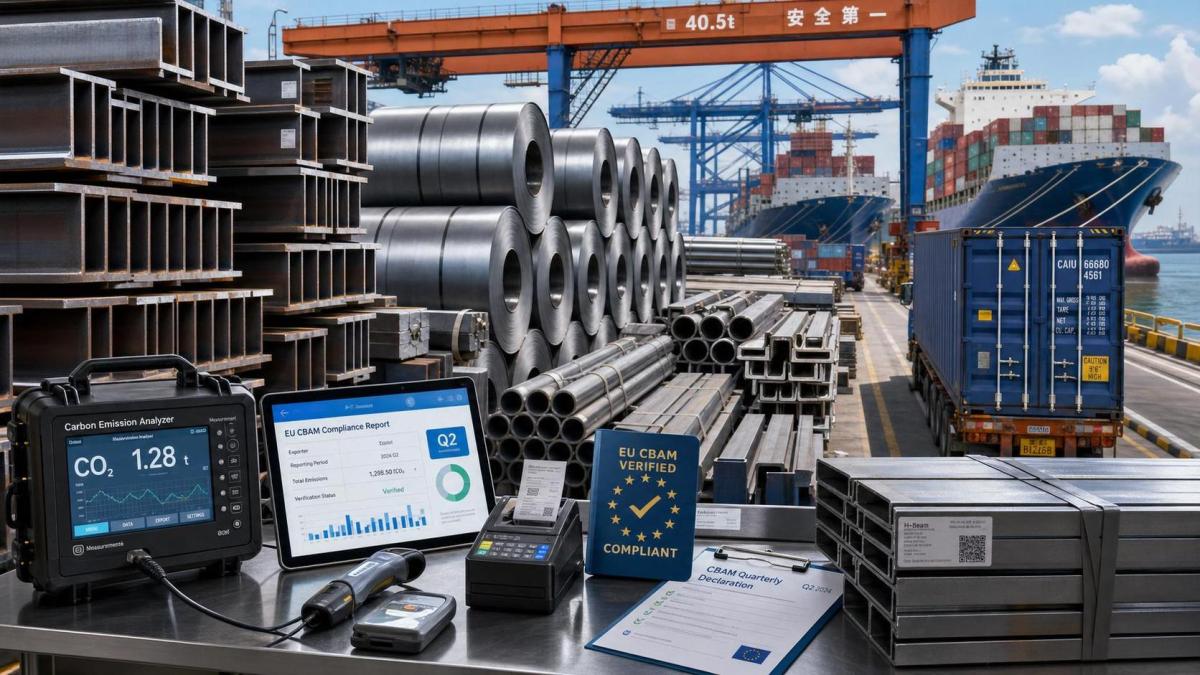
According to the provided event information, CBAM second-stage implementation for steel products officially started on July 12, 2026. All manufacturers exporting steel products and sections to the EU, including Chinese suppliers, are required to submit certified direct carbon emissions data on a quarterly basis. Those submissions are also subject to review by EU-authorized verification bodies. The provided summary further states that non-compliant reporting may affect customs clearance and eligibility for subsequent transitional exemption arrangements.
Where the pressure is likely to appear first
Export-facing steel manufacturers
These companies are the first point of impact because the new requirement is tied directly to emissions data submission and verification. From an operational perspective, the affected steps are no longer limited to production and shipment preparation; they now extend into data collection, document preparation, verification coordination, and filing rhythm by quarter. What deserves closer attention is whether product-level or shipment-linked documentation is prepared in a way that supports both customs handling and customer compliance requests.
EU importers and procurement teams
For overseas importers, the change is likely to reshape supplier screening and purchasing decisions. Analysis shows that procurement teams will need to look beyond price, lead time, and product specification, and assess whether a supplier can deliver certified direct emissions data in a form acceptable for CBAM reporting. This makes compliance readiness part of sourcing due diligence and may influence order allocation, contracting terms, and risk review before shipment.
Supply chain and trade service participants
From an industry perspective, logistics coordinators, trade service providers, and other intermediaries may also feel the effect because customs progress and exemption-related treatment can be influenced by reporting compliance. The practical concern is less about changing the goods themselves and more about whether shipment files, supporting documents, and compliance-related records move in step with delivery schedules. Where documentation is incomplete or delayed, the pressure may surface at handover and clearance stages.
Verification and compliance support activities
The summary confirms that EU-authorized verification bodies are part of the process, which means certified data is not simply a self-declared formality. Observably, this gives more weight to verification preparedness, internal record consistency, and document traceability. For businesses involved in compliance support, the focus will likely be on helping exporters and buyers align reporting materials with the verification requirement already described in the event information.
What companies should review now
Quarterly reporting readiness
Analysis shows that the reporting cycle itself deserves immediate attention. A quarterly filing requirement creates a recurring compliance workload, so companies trading affected steel products should review whether internal collection of direct emissions data is regular, documented, and capable of being certified within the required timing.
Supplier qualification standards
What deserves closer attention is how supplier approval criteria may change. Importers and procurement teams may need to treat emissions data capability as part of supplier qualification, especially where customs continuity or transitional exemption eligibility matters. This is less a branding issue than a documentation and execution issue tied to ongoing supply reliability.
Contract and document alignment
Companies should also examine whether purchase documents, shipment files, and compliance-related records are aligned with the new reporting obligation. The provided information does not set out detailed filing formats or official wording, so it is more appropriate to treat this as an area requiring close monitoring rather than assuming a settled market practice already exists.
Cost sharing across the chain
The event summary explicitly points to carbon management cost allocation within the supply chain. From an industry perspective, this suggests that discussions between exporters, importers, and buyers may increasingly cover who bears the administrative and verification burden connected to certified direct emissions data. That remains an execution issue to watch rather than a confirmed uniform outcome.
Why this looks like an execution signal, not just another policy headline
Observably, this development is better understood as a live compliance step than as a distant policy direction. The rule change described here reaches into customs handling, exemption-related treatment, and supplier selection, which means companies are dealing with an operational requirement rather than a broad policy narrative. At the same time, the available input does not provide detailed enforcement practice, filing interpretation, or market response, so part of the picture still requires continued observation.
How this update is best understood at this stage
At this stage, the most reasonable reading is that CBAM treatment for steel has moved further into practical execution through quarterly certified direct emissions reporting. The significance lies in how compliance data now interacts with trade flow, supplier credibility, and procurement control. It is more appropriate to understand this as a confirmed implementation signal with follow-on execution details still worth tracking, rather than as a completed and fully settled compliance framework.
Basis of this article and what still needs verification
This article is generated from the user-provided news title, event date, and event summary. For developments of this kind, commonly relevant source categories may include official notices, publications from regulatory authorities, customs or trade administration updates, industry association releases, standards-related documents, and reporting from authoritative media. A specific official source link was not provided in the input, so the exact official reference still requires follow-up verification. Continued monitoring is also needed for implementing details, verification interpretation, procurement document changes, bidding document adjustments, industry feedback, and how companies carry out reporting in practice.
By clicking 'Allow All', you agree to the storage of cookies on your device to enhance site navigation, analyze site usage and assist with our marketing efforts. Coo Cookie Notice