

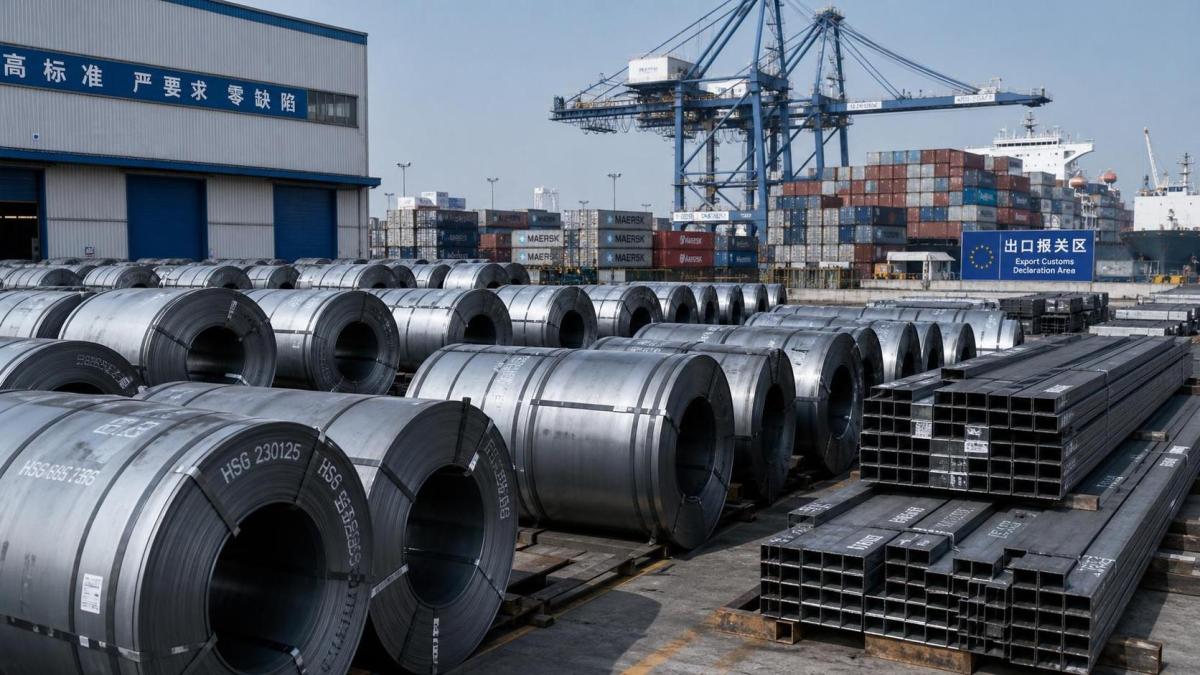
On July 10, 2026, the European Commission announced an interim anti-dumping review covering hot-rolled coil originating in China under HS codes 7208-7212. The review centers on possible changes in dumping margins, export price adjustments, and whether injury to the domestic industry remains ongoing. For importers, exporters, procurement teams, and supply chain service providers, the practical significance lies less in the announcement alone and more in the compliance and transaction checks that may now become more sensitive in customs clearance, supplier documentation, and purchasing schedules.
What the July 10 Notice Confirms
The confirmed facts are limited but commercially relevant. The European Commission formally published the notice on July 10, 2026 and initiated an interim review of anti-dumping measures concerning hot-rolled coil from China. The products referenced fall within HS codes 7208-7212. The stated review focus includes changes in dumping margins, adjustments to export prices, and the continuity of injury affecting the domestic industry. The event summary also indicates that the review may affect customs clearance costs for EU importers, certification-related processes, and procurement lead times, while prompting a reassessment of supplier compliance files and origin declarations.
Where the pressure may emerge in day-to-day trade
Import-side contract and customs handling
From an industry perspective, EU importers may be among the first to feel the operational effect because customs cost assumptions, declaration files, and shipment timing are closely tied to trade remedy exposure. What deserves closer attention is whether existing import arrangements, landed cost calculations, and supporting origin statements remain aligned with the documentation expected during a period of review.
Export-side document readiness and pricing discipline
For exporters shipping the covered HS categories, the review matters because it directly touches export price adjustments and dumping-related assessment. Analysis shows that document consistency may become more important across quotations, contracts, invoices, origin declarations, and other compliance records. Even without a confirmed outcome, businesses involved in outbound sales should treat file integrity and traceability as a near-term priority.
Procurement and supply planning across downstream users
Manufacturers, processors, and procurement teams that rely on hot-rolled coil may also need to reassess purchase timing and supplier qualification checks. Observably, when a trade review targets pricing and injury issues, buyers may need to revisit sourcing assumptions, especially where customs handling, certification steps, and delivery planning are linked to a specific country of origin or supplier declaration package.
Service providers supporting compliance and delivery
Supply chain service providers, certification-related firms, and inspection or documentation support teams may see additional demand for file review and coordination. The likely impact is procedural rather than purely commercial: tighter checking of origin-related statements, closer alignment between product classification and supporting paperwork, and more attention to document completeness before shipment or clearance milestones.
What companies should monitor now
Recheck origin declarations and supplier files
Analysis shows that one immediate task is to review whether supplier compliance documents and origin declarations are current, internally consistent, and suitable for transactions involving the covered HS codes. The event summary explicitly points to the need for reassessment in this area.
Watch for changes in official wording and execution practice
It is more appropriate to understand this stage as an active review signal rather than a final execution result. Companies should therefore track any subsequent official wording, implementation clarifications, or procedural interpretations that could affect customs treatment, compliance review depth, or documentary expectations.
Revisit procurement timing and delivery assumptions
Where supply contracts depend on predictable clearance cost and cycle time, procurement teams should examine whether delivery schedules, buffer stock decisions, or supplier allocations need adjustment. This is not a confirmed disruption, but the review creates a reasonable basis for closer planning around timing risk.
Align technical, compliance, and commercial records
For businesses involved in tenders, framework purchasing, or regular cross-border shipments, a practical point of attention is consistency across technical documents, compliance records, commercial paperwork, and origin-related statements. Observably, gaps between these materials can become more costly when a trade remedy review raises scrutiny over pricing and product origin.
How this development is best understood at this stage
Analysis shows that this notice should be read primarily as a regulatory and execution signal, not yet as a confirmed end-state for duties, costs, or market access conditions. The importance of the review lies in the fact that it reopens scrutiny over dumping margins, export pricing, and continuing injury, all of which can influence how companies prepare documents and structure transactions. What deserves closer attention is the downstream effect on compliance routines, supplier qualification, and procurement planning while the review process remains in motion.
A measured reading for the market
The July 10, 2026 development matters because it places Chinese-origin hot-rolled coil traded into the EU back under active anti-dumping review scrutiny. For the market, the most rational conclusion at present is not that outcomes are settled, but that affected businesses should treat documentation quality, origin control, and planning discipline as immediate concerns. It is more appropriate to understand this as a live rule-development event with practical implications for trade execution, while final commercial impact still requires continued observation.
Basis of this article and what still needs verification
This article is based on the user-provided news title, event date, and event summary. For events of this kind, the source types typically relevant include official notices, publications by regulatory authorities, customs or trade administration information, industry association updates, standard-setting documents, and reporting by authoritative trade media. A specific official source link was not provided in the input, so the exact official publication path still needs to be verified. Further observation is also needed regarding any detailed procedural clarification, certification-related execution practice, tender document changes, industry feedback, and how affected companies implement compliance adjustments in response to the review.
By clicking 'Allow All', you agree to the storage of cookies on your device to enhance site navigation, analyze site usage and assist with our marketing efforts. Coo Cookie Notice