

On July 4, 2026, the European Commission released transition-phase implementation rules for CBAM covering steel products, with quarterly carbon-related reporting by importers starting on October 1, 2026. For companies involved in exports of hot-rolled coil, H-beams, angle steel, and other ferrous metal sections to the EU market, the development is worth close attention because it reaches beyond policy wording into document preparation, compliance coordination between exporters and importers, and potential effects on customs timing.
What the New Steel-Specific Rules Confirm
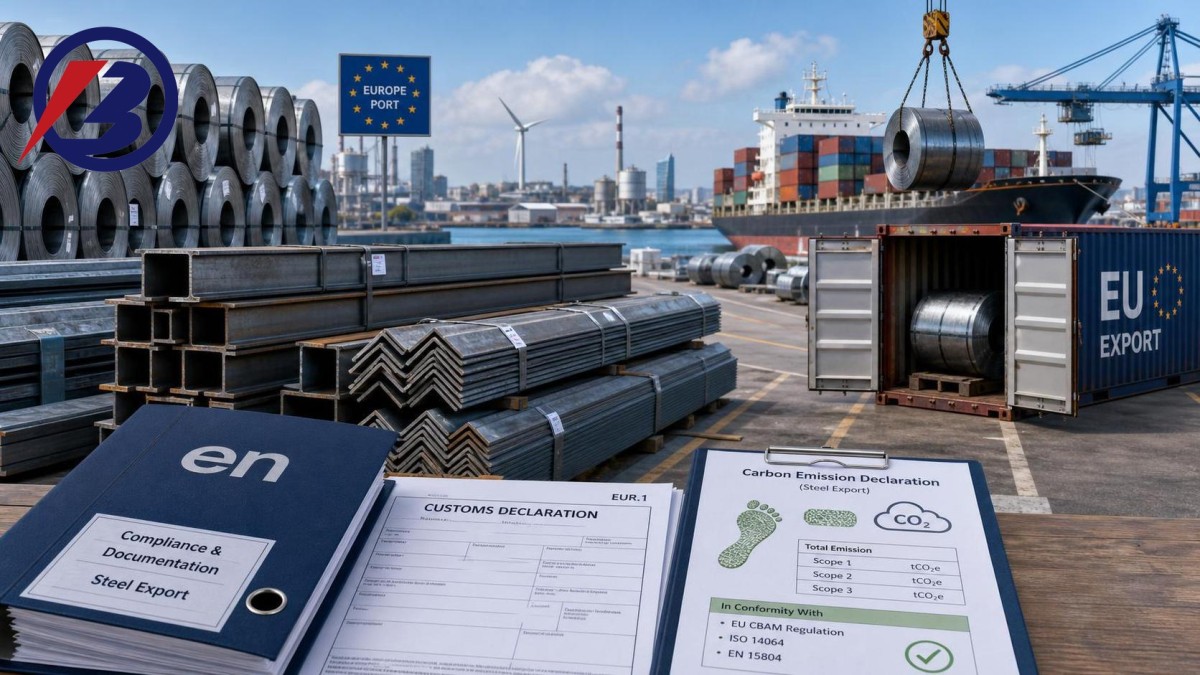
The confirmed facts are limited but commercially relevant. The European Commission formally published the transition rules for CBAM implementation for steel products on July 4, 2026. Under those rules, from October 1, 2026, importers of covered non-EU steel products into the EU must submit quarterly declarations through the CBAM registration system. The required reporting includes embedded carbon emissions in the products and any carbon price already paid. The products expressly referenced in the provided information include hot-rolled coil, H-beams, angle steel, and other ferrous metal sections. The change directly affects how compliance responsibilities are shared downstream and may influence documentation lead times and customs clearance efficiency for Chinese steel exporters.
Where the Operational Pressure May Appear First
Exporter-importer coordination is likely to become more structured
From an industry perspective, the immediate impact is less about a new sales opportunity and more about a tighter compliance interface between non-EU suppliers and their EU-side importers. Because the importer is required to file quarterly CBAM declarations, exporters may face more frequent requests for product-level emissions information and proof related to carbon costs already paid. What deserves closer attention is the practical division of responsibility: even where the legal filing obligation sits with the importer, the supporting data burden may move upstream to the producer or exporter.
Document handling may affect shipment timing
Observably, the rule change may affect the pace of trade execution. If embedded emissions data and carbon-price-related information must be assembled in time for quarterly filing, document preparation may need to start earlier in the shipment cycle. For trading companies, processors, and logistics-facing teams, the issue is not only whether documents exist, but whether they are consistent, traceable, and available within the importer’s reporting window. That raises the importance of internal handoffs between production, export documentation, sales, and customs support functions.
Procurement and supply chain service providers may see new review points
Suppliers, distributors, and supply chain service providers connected to covered steel products may also be affected through buyer requirements. Analysis shows that purchasers and downstream channel participants may begin asking for clearer carbon-related supporting materials before confirming orders, shipment schedules, or acceptance documents. Even without any confirmed change to product specifications in the provided information, the compliance layer around procurement and delivery appears set to become more document-sensitive.
What Companies Should Watch Before October
Prepare product-linked emissions records for importer use
Analysis shows that companies shipping covered steel products should pay attention to whether their internal records can support importer-side quarterly declarations. The key issue is not a general sustainability statement, but product-linked information that can be matched to exported goods and passed downstream in a usable form.
Review how carbon-price information is retained and communicated
The published summary states that importers must also declare any carbon price already paid. Based on that, exporters and trading parties should examine how such information is documented, retained, and shared across commercial and compliance teams. Since the detailed execution approach is not provided in the input, this is better treated as a preparation point rather than a settled reporting workflow.
Recheck document cycles around shipment and clearance
What deserves closer attention is whether existing document timelines are still workable once quarterly CBAM reporting begins. If supporting papers are collected late or across too many parties, the burden may show up in customs timing or post-shipment follow-up. Companies with regular EU-bound shipments may need to review how early they gather supporting materials and who validates them before dispatch.
Monitor whether buyers and contracts start changing their wording
Observably, another practical area to watch is downstream commercial language. Importers, buyers, or service partners may revise document requests, compliance clauses, or delivery conditions in response to the new reporting obligation. The input does not confirm such changes have already occurred, so this remains an area for continued observation rather than a reported outcome.
Why This Looks More Like an Execution Signal Than a Headline Alone
Analysis shows that this development is more appropriately understood as an execution-stage signal within steel trade compliance, not merely a policy headline. The reason is straightforward: the rules set a defined reporting start date, identify covered product categories in practical trade terms, and connect compliance directly to importer declarations. At the same time, it is still too early to present this as a fully settled operating model for every market participant, because the provided information does not include fuller implementation interpretations, contract practice, or market feedback.
How the Market May Need to Read This Update
For the steel sector, the significance of this update lies in the movement from broad CBAM discussion toward transaction-level reporting expectations for specific product flows. A neutral reading is that companies should view it as a concrete compliance development with immediate preparatory implications, especially for exporter-importer coordination, supporting documents, and delivery planning. It is more appropriate to understand this as a rule already taking operational shape, while still leaving room to observe how reporting practice, buyer requirements, and execution standards develop in the market.
Basis of This Article and What Still Needs Verification
This article is based on the user-provided news title, event date, and event summary. For developments of this kind, relevant source categories typically include official notices, releases from regulatory authorities, customs or trade administration information, industry association updates, standards-related documents, and reporting by authoritative media. A specific official source link was not provided in the input and still needs to be verified on an ongoing basis. Continued attention should also be given to later policy detail, compliance interpretation, tender or contract wording changes, market feedback, and how companies implement the reporting-related requirements in practice.
By clicking 'Allow All', you agree to the storage of cookies on your device to enhance site navigation, analyze site usage and assist with our marketing efforts. Coo Cookie Notice