
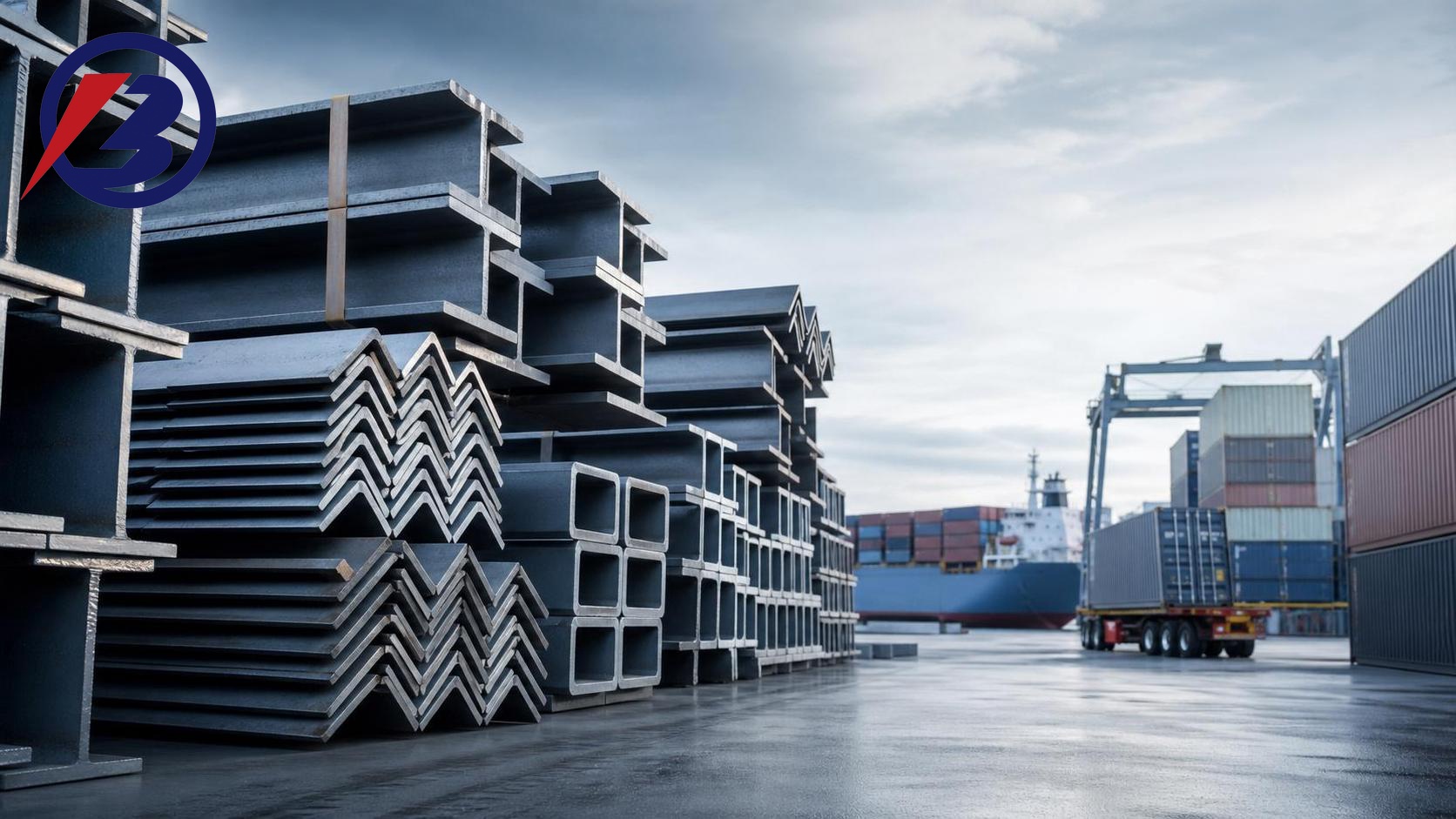
On June 28, 2026, the European Commission released transition guidance for CBAM covering steel products, setting a clear reporting requirement for third-country producers exporting hot-rolled sections, H-beams, angle steel, and similar steel profiles to the EU. For Chinese section exporters and the supply chain around EU-bound steel shipments, this matters because quarterly carbon reporting through the CBAM registration system will soon become part of customs compliance and delivery planning, with registration gaps or inadequate data carrying a direct risk of import delays and later punitive charges.

What the new transition guidance confirms
The confirmed facts are limited but commercially significant. The European Commission formally issued the CBAM Transition Implementation Guidance for steel products on June 28, 2026. Under that guidance, from October 1, 2026, all third-country producers exporting covered steel products and profiles to the EU, including Chinese exporters, must submit quarterly declarations through the CBAM registration system. The required reporting includes embedded carbon emissions for the product and the electricity emission factor. The guidance applies to steel materials and profiles such as hot-rolled sections, H-beams, and angle steel. The summary provided also makes clear that failure to complete registration or failure to meet data requirements may lead to import delays and subsequent punitive fees.
Where the pressure is likely to appear first
Export-facing steel producers and traders
From an industry perspective, the first direct impact is on companies shipping covered steel profiles into the EU market. The new requirement is tied to customs compliance, so the issue is not only regulatory reporting in the background; it may affect whether goods move on time. What deserves closer attention is the need to align quarterly emissions declarations with actual export execution, documentation, and customer schedules.
Processing and manufacturing links serving EU orders
Manufacturers producing hot-rolled sections, H-beams, angle steel, and related products for export may also feel pressure at the production-record level. Analysis shows that if carbon data and electricity emission factors must be submitted on a quarterly basis, then production-side data collection becomes part of order fulfillment rather than a separate administrative task. The operational concern is whether product-level and electricity-related information can be prepared in a form that supports timely filing.
Logistics, customs, and supply chain service providers
Supply chain service providers may be affected because the summary explicitly links compliance to customs clearance and delivery rhythm. Observably, where registration is incomplete or supporting emissions data is insufficient, the disruption may surface in shipment timing, customs processing, and coordination with import-side partners. For these service roles, the key change is that carbon-related reporting may become a practical checkpoint in shipment readiness.
EU buyers and procurement counterparts
Buyers sourcing covered steel products from third-country suppliers may also need to pay closer attention. Analysis shows that when import delays and later punitive fees are possible, procurement decisions are no longer shaped only by price, specification, and lead time. Supplier readiness on CBAM reporting may become a factor in transaction reliability, especially for orders with tighter delivery windows.
What companies should track now
Registration readiness before the October 1 start date
The most immediate practical issue is whether the relevant exporter or producer has completed the required registration pathway for CBAM reporting before the new timetable begins. Since the summary directly connects non-registration with import delays, companies involved in EU shipments should treat registration status as a live execution issue rather than a later compliance formality.
Data scope for embedded emissions and electricity factors
What deserves closer attention is the exact readiness of the two data categories named in the summary: embedded carbon emissions and the electricity emission factor. In practice, businesses will need to distinguish between having general sustainability materials and having data that is usable for quarterly CBAM declarations. That difference may affect internal coordination across production, compliance, sales, and shipping functions.
Order planning and delivery communication
Analysis shows that the business risk here is concentrated around timing. If reporting problems can delay imports, then exporters, freight coordinators, and EU customers may need earlier communication around shipment schedules, documentation milestones, and contingency timing. This is less about broad strategy and more about avoiding preventable friction in contract execution and delivery sequencing.
Watching for further official clarification
The guidance establishes a reporting obligation, but companies should continue monitoring how official wording is applied in practice. Observably, the distinction between the policy signal and day-to-day filing execution will matter. Businesses should therefore keep watching for clarifications affecting reporting interpretation, submission workflow, and how data sufficiency is judged during the transition period.
Why this looks like more than a routine filing update
This section is analysis rather than confirmed fact. It is more appropriate to understand this development as an operational compliance signal with immediate trade implications, not just a long-term sustainability statement. The reason is straightforward: the summary links the new reporting requirement directly to customs clearance, delivery timing, and the possibility of punitive fees. That makes the transition guidance relevant not only to compliance teams, but also to exporters, production planners, logistics coordinators, and EU-facing commercial teams.
At the same time, this should not be overstated as a finished market outcome. Observably, the current information confirms a reporting framework and a compliance consequence, but it does not by itself establish how every company will be affected in practice. That is why the development should be read both as a short-term operational change and as a longer-term signal that carbon data is becoming more tightly connected to cross-border steel trade execution.
How this update is best understood at this stage
In summary, the June 28, 2026 guidance matters because it turns CBAM carbon reporting for certain steel products and profiles into a concrete quarterly obligation for third-country exporters shipping to the EU, including Chinese companies. The immediate industry meaning lies in compliance readiness, data preparation, and delivery coordination rather than in abstract policy debate. Current conditions make it more appropriate to understand this as a live transition-stage requirement with clear business consequences, while still recognizing that further observation is needed on how implementation will develop in actual trade flows.
Basis of this article and what still needs verification
This article is based on the user-provided news title, event date, and event summary. For this type of development, relevant source categories typically include official notices, company disclosures, industry association updates, authoritative media reporting, and standard or regulatory documents. No specific official source link was provided in the input, so the exact official link remains to be verified on an ongoing basis. Continued attention should focus on any further official clarification related to reporting practice, registration process, and implementation at the customs and shipment-execution level.
By clicking 'Allow All', you agree to the storage of cookies on your device to enhance site navigation, analyze site usage and assist with our marketing efforts. Coo Cookie Notice