
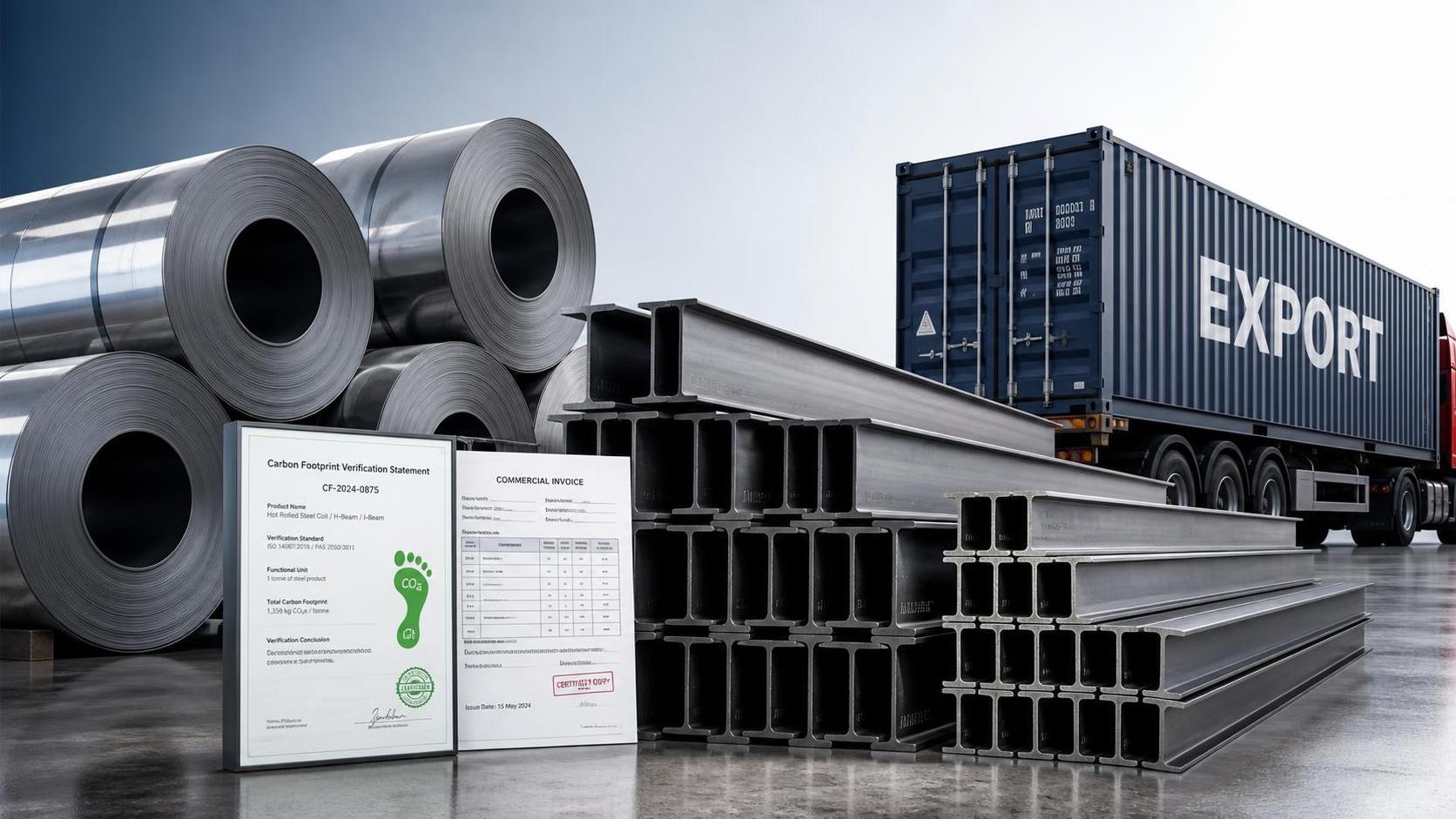
On August 14, 2026, China’s General Administration of Customs issued a notice further standardizing declaration elements for steel export goods. From September 1, exports of major structural steel products such as hot-rolled coil, H-beams, I-beams and channels to the EU, South Korea, Canada and Singapore will be required to include a carbon footprint statement issued by an accredited third-party institution, and the statement will be embedded in the Single Window declaration system.
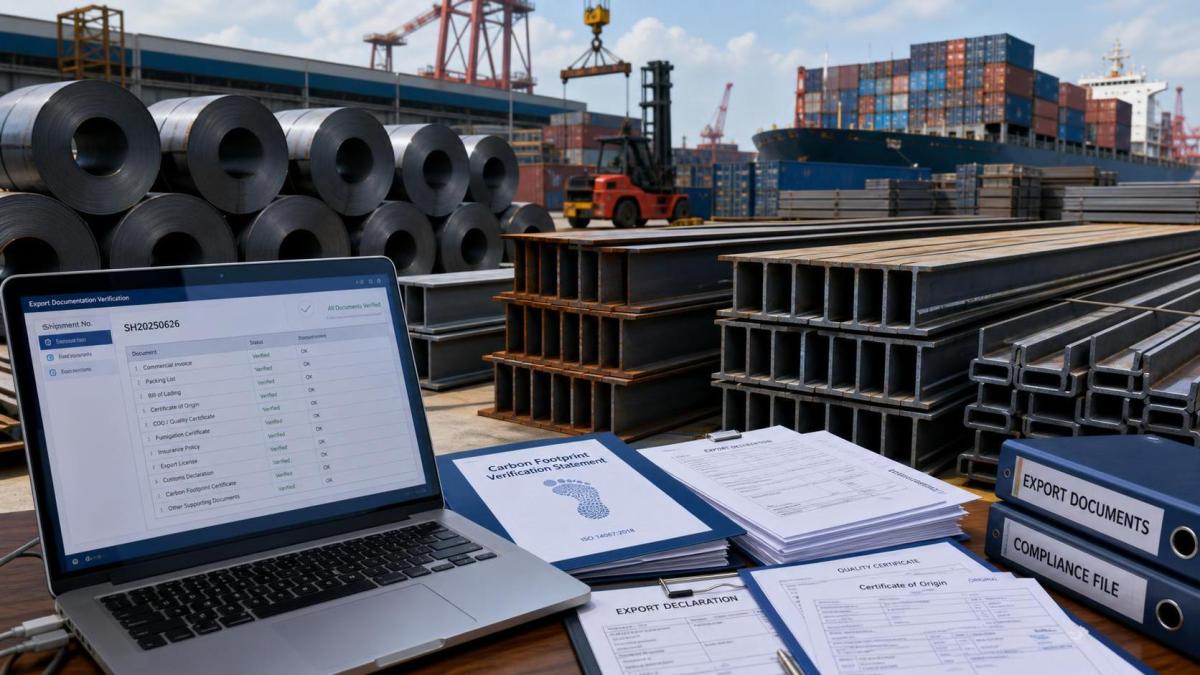
From an industry perspective, this change is less about a single compliance formality and more about the direction of export documentation. Carbon disclosure is moving closer to the core customs process, which means sustainability requirements are no longer limited to downstream procurement questionnaires or buyer-side audits. For exporters, the immediate impact may fall on declaration preparation, document verification and the coordination burden between factories, certifiers and trading companies.
The policy also appears likely to raise the practical threshold for overseas importers that rely on fast clearance and low-friction sourcing. Distributors in Europe and Asia-Pacific markets with stricter green procurement rules may need to adjust purchasing timelines and documentation workflows, especially where carbon-related proof is now part of the clearance package rather than a supplementary file.
For steel suppliers, the key issue is not only whether they can provide the statement, but whether the supporting data chain is stable enough to withstand repeated export use. In the short term, companies with mature emissions accounting and third-party verification arrangements may be better positioned to keep shipments moving. Others may face higher compliance costs and slower order processing until their internal reporting and external certification systems catch up.
Based on the information released here, the most important point to watch next is how the declaration requirement is implemented in practice through the Single Window system and how foreign buyers respond to the new document standard. Any follow-up guidance from customs, as well as reactions from exporters and importers, will help show whether this becomes a narrow procedural update or a broader signal for steel trade compliance.
By clicking 'Allow All', you agree to the storage of cookies on your device to enhance site navigation, analyze site usage and assist with our marketing efforts. Coo Cookie Notice