

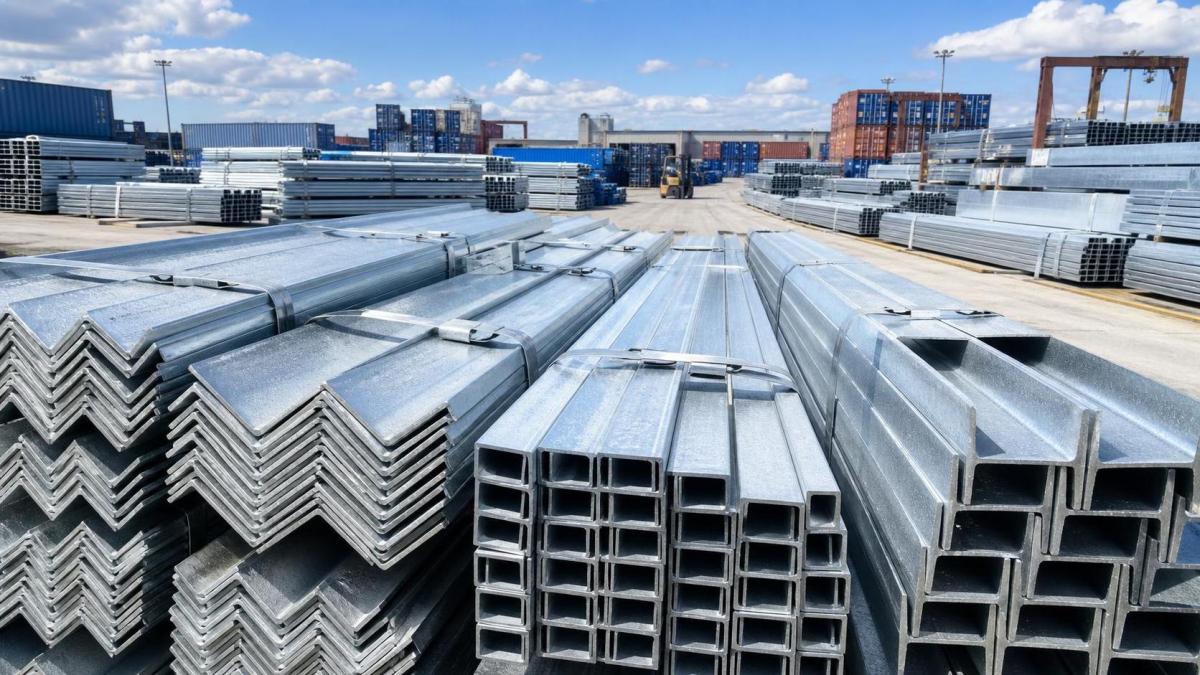
On August 15, 2026, the U.S. Department of Commerce formally opened an anti-dumping investigation into hot-dip galvanized sections originating in China, covering products such as galvanized angle steel, channel steel, I-beams, and H-beams. Based on the information provided, this development deserves attention not only as a trade case, but as a rule change with direct implications for market access, customs compliance, supplier review, and pricing decisions affecting steel exporters, importers, and related supply chain participants.
The Filing Defines a New Compliance Point for Covered Steel Products
The confirmed facts are limited but clear. According to the provided information, the investigation was formally initiated on August 15, 2026, and concerns hot-dip galvanized sections originating in China. The products referenced include galvanized angle steel, channel steel, I-beams, and H-beams, with the scope involving HS codes including 7216.91 and 7216.99.
The same information indicates that the case is expected to directly affect U.S. market access for Chinese steel export companies, as well as customs clearance compliance and pricing strategy. It also states that importers need to reassess supplier qualifications, certificates of origin, and the room available for price restructuring.
Where the Pressure May Appear Across the Trade Chain
Exporters facing a narrower path to the U.S. market
From an industry perspective, Chinese exporters of the covered galvanized sections may face the most immediate commercial pressure. The reason is not only the investigation itself, but the compliance and documentation burden that often rises once a product category comes under formal trade scrutiny. Analysis suggests that affected exporters will need to pay closer attention to product classification, origin-related records, and transaction documentation tied to shipments intended for the U.S. market.
Import-side review is likely to become more document-driven
For importers, the provided summary already points to supplier qualification review and origin documentation as practical concerns. At this stage, it is reasonable to understand this as a signal that procurement and customs-related checks may become more stringent in practice. Importers may need to examine whether existing supplier files, origin evidence, and pricing structures are sufficient to support future transactions, even though the detailed execution standard is not provided in the input.
Pricing, contracting, and delivery planning may need adjustment
Analysis also suggests that the effect may extend beyond customs filing into contract management and delivery planning. If pricing assumptions were built around earlier trade conditions, both buyers and sellers may need to revisit quotation logic, allocation of trade risk, and shipment timing. For supply chain service providers, this could translate into closer coordination around declarations, document consistency, and delivery commitments where U.S.-bound orders are involved.
What Companies Should Review First
Check product scope and tariff classification carefully
The first practical step is to verify whether exported or sourced products fall within the covered range described in the provided information, including the cited HS headings. Where product portfolios include multiple structural steel categories, companies should review classification logic and internal product mapping to reduce the risk of inconsistent declarations.
Recheck origin records and supplier qualification files
Because the summary specifically highlights certificates of origin and supplier qualification, companies should treat document readiness as an immediate review item. This does not mean new rules have already been fully defined in the input, but it does indicate that origin substantiation and supplier traceability are likely to become more important in transaction review and customs handling.
Reassess price structure and commercial exposure
The information provided explicitly mentions pricing strategy and room for price restructuring. Companies with U.S.-related business should therefore evaluate whether current offers, contract terms, and landed-cost assumptions remain workable under a more uncertain trade environment. This is best understood as a risk assessment task rather than a conclusion that a final pricing outcome is already fixed.
Track follow-up language and execution signals
The current input confirms the launch of an investigation, but it does not provide later-stage details on interpretation, enforcement timing, or transaction handling. For that reason, companies should continue monitoring subsequent official wording, customer-side documentation requests, and any changes appearing in trade execution, tender documents, or customs-related communication.
Why This Matters More as an Execution Signal Than a Finished Outcome
Analysis suggests that this development is better understood as an active trade-rule signal rather than a fully settled commercial outcome. The formal opening of an anti-dumping investigation can alter how market participants assess compliance, sourcing, and pricing even before all later-stage details are clear. What deserves closer attention now is not only the existence of the case, but how quickly counterparties begin adjusting document review, supplier screening, and transaction terms around the covered products.
It is also important to keep the boundary between fact and interpretation clear. The provided information confirms the investigation and identifies likely areas of impact, but it does not establish final determinations, definitive tariff consequences, or a complete enforcement framework. Those points remain matters for continued observation.
How the Industry Should Read the Current Development
At this stage, the most rational reading is that the case introduces a meaningful compliance and trade-planning variable for galvanized structural steel connected to the U.S. market. It should not be treated as a complete outcome, but neither should it be viewed as a routine headline with no operational effect. For affected businesses, the practical response is to combine document review, supplier reassessment, and pricing analysis with continued monitoring of how the case develops in execution.
Basis of This Article and What Still Needs Verification
This article is generated solely from the user-provided news title, event date, and event summary. For events of this type, companies would typically monitor source categories such as official notices, regulator releases, customs or trade authority information, industry association updates, standards-related documents, and reporting by authoritative media. However, no specific official source link was provided in the input, so the exact original publication path still needs to be verified.
Further attention should remain on any later policy detail, compliance interpretation, tender document changes, trade execution developments, industry feedback, and company-level implementation responses that may shape how this investigation affects actual business operations.
By clicking 'Allow All', you agree to the storage of cookies on your device to enhance site navigation, analyze site usage and assist with our marketing efforts. Coo Cookie Notice