
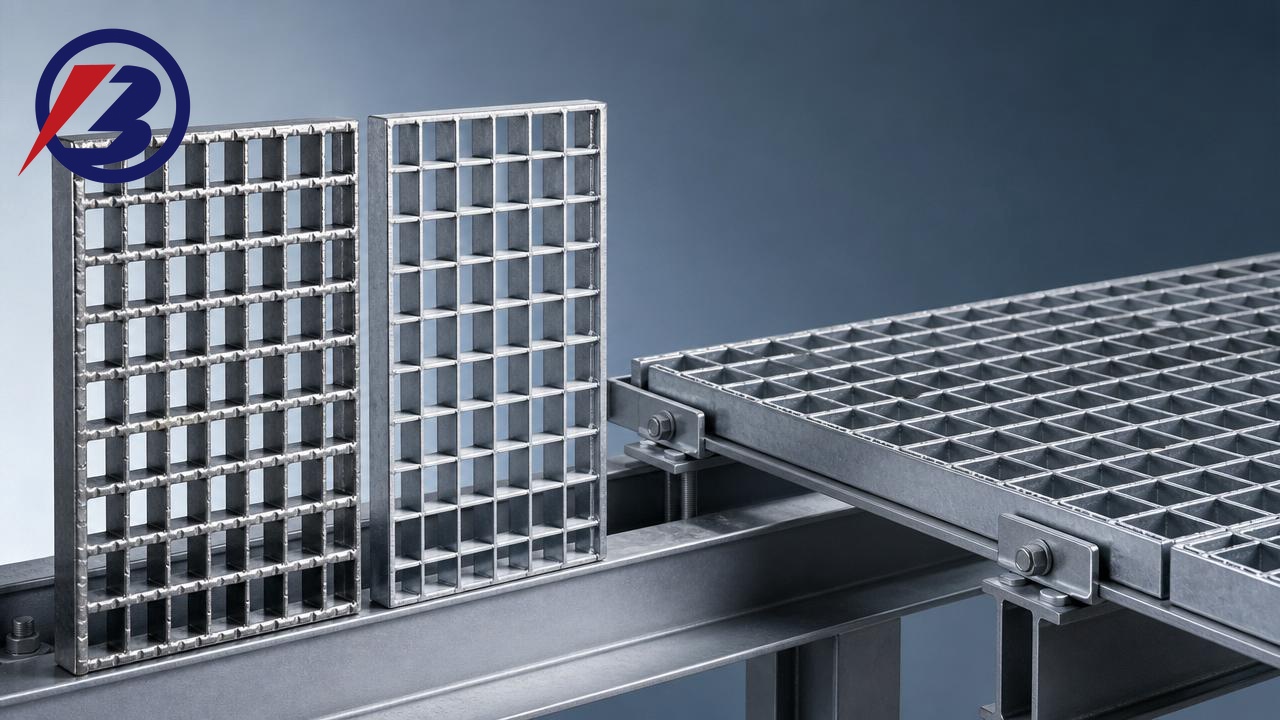
When comparing welded vs swaged steel grating, installation speed and jobsite efficiency often matter as much as load performance. For project managers and engineering leaders, choosing the right grating type can reduce labor time, simplify alignment, and lower overall project costs. This guide explains the practical installation differences, helping you identify which option best fits your project schedule, structural needs, and maintenance expectations.
In steel and structural projects, grating is rarely an isolated purchase. It affects fabrication sequencing, support steel tolerances, lifting plans, and future maintenance access. A grating panel that saves even 10 to 15 minutes per installation point can create meaningful labor savings across 100, 300, or 500 panels.
For project leaders comparing welded vs swaged steel grating, the real question is not only which product is stronger on paper, but which one arrives, fits, and installs with fewer field corrections. That difference becomes critical on platforms, trenches, mezzanines, catwalks, industrial walkways, and rooftop service areas.
Understanding the Two Grating Types Before Installation
Installation outcomes start with product structure. Welded steel grating is manufactured by resistance-welding bearing bars and cross bars at intersection points. Swaged steel grating is made by mechanically locking cross bars into pre-punched bearing bars under pressure, creating a clean and uniform panel.
Both products are common in the steel and sections industry, but they behave differently during handling, alignment, trimming, and attachment. In most projects, panel depth ranges from 25 mm to 75 mm, while spacing may vary from 30 mm to 40 mm for bearing bars and around 50 mm to 100 mm for cross bars.
How structure affects field work
Welded grating typically offers strong rigidity and good impact resistance, which is useful in heavy-duty industrial zones. However, its welded intersections can make field modification slower if last-minute cutouts are needed for pipe penetrations, columns, or irregular edge conditions.
Swaged grating is often selected where appearance, consistent spacing, and lighter handling are priorities. In many commercial and architectural installations, crews find it easier to position because the panel geometry is visually cleaner, especially when multiple adjacent panels must align within a tolerance of about 2 mm to 5 mm.
Typical installation contexts
- Welded steel grating: process plants, heavy equipment platforms, drainage covers, utility trenches, and forklift-adjacent zones.
- Swaged steel grating: rooftops, pedestrian platforms, architectural screens, maintenance walkways, and areas requiring a more refined finish.
- Mixed-use projects: service corridors, mezzanines, and access structures where load demands and installation speed must both be balanced.
The table below compares welded vs swaged steel grating from an installation planning perspective rather than only a manufacturing perspective.
The main takeaway is simple: welded grating often wins on robustness, while swaged grating frequently wins on panel consistency and smoother placement. For teams under schedule pressure, that distinction can determine whether installation flows in one pass or requires repeated panel repositioning.
Which Is Easier to Install on Site?
If the question is strictly about ease of installation, swaged steel grating is often easier in projects where dimensions are controlled, loads are moderate, and aesthetics matter. Welded steel grating is often easier in projects where ruggedness matters more than fine alignment and where minor visual variation is acceptable.
That said, “easier” depends on at least 4 variables: panel size, support steel accuracy, attachment method, and the number of penetrations or edge cuts. A 100-panel rooftop walkway and a 100-panel chemical plant platform may produce very different answers even if total area is similar.
Installation speed in real jobsite conditions
On jobs with repetitive panel modules, swaged grating can reduce alignment time because cross bars and bearing bars present a more regular face. Crews may spend less time rotating, flipping, or rechecking panel orientation, especially when support frames are fabricated within a 3 mm to 5 mm tolerance.
Welded grating can install quickly too, particularly in utility trenches or heavy-service platforms where supports are robust and clip placement is straightforward. If a site uses standard saddle clips or welded hold-downs at 4 points per panel, crews can maintain a reliable pace without needing precision architectural alignment.
Common reasons swaged grating feels faster
- Cleaner panel geometry simplifies visual alignment across long runs.
- Edges often look more consistent when installed near finished surfaces.
- Moderate-weight panels may be easier for 2-person handling in elevated areas.
- Less site correction may be needed where layout is repetitive and pre-engineered.
Common reasons welded grating still performs well
- High rigidity helps panels sit solidly on uneven or heavy-duty supports.
- Industrial crews are often already familiar with its layout and fastening patterns.
- For harsh-use locations, fewer concerns arise about cosmetic perfection.
- Load-driven projects may prioritize structural confidence over installation finesse.
The following table shows where installation efficiency usually shifts between welded vs swaged steel grating in field practice.
In short, swaged grating often feels easier to install where precision and repeatability dominate. Welded grating often feels easier where rugged service and structural confidence matter more than refined visual fit.
Key Installation Factors Project Managers Should Evaluate
A smart grating decision should go beyond catalog comparison. Project managers should review at least 6 checkpoints before ordering: span, load class, panel size, galvanizing requirement, support spacing, and fastening method. Missing one of these can create delays of 2 to 7 days during fit-up or rework.
1. Support steel tolerances
If support beams, angles, or frames are fabricated with loose tolerances, welded grating may be more forgiving in industrial settings. If the supporting steel is fabricated accurately and repeatable module spacing is critical, swaged grating usually rewards that precision with faster placement and cleaner lines.
2. Panel size and crew handling
Large panels improve area coverage but can slow installation if site access is limited. A common planning target is to keep manually handled panels within a size that 2 workers can safely position without excessive rotation. This is especially important in stair landings, roof access zones, and elevated catwalks.
3. Attachment method
Installation speed changes significantly depending on whether the specification uses saddle clips, hold-down clamps, or direct welding. Mechanical clips are often preferred when future removal is expected. Welding may reduce loose hardware but can add fire-watch procedures, coating touch-up, and inspection steps.
Fastening choices and implications
- Clip fixing: faster for maintenance access and panel replacement cycles.
- Weld fixing: common in permanent industrial layouts but slower for future removal.
- Hybrid approach: often used where perimeter stability and removable center panels are both required.
4. Galvanizing and edge treatment
Hot-dip galvanized grating is standard for many outdoor and corrosive settings. However, any field cutting may expose raw steel and require zinc-rich touch-up. When a project expects more than 5 to 10 field modifications, detailing quality becomes as important as the original grating type.
5. Access for future maintenance
Maintenance teams often remove grating for cable pulls, valve access, drain cleaning, or equipment servicing. In these cases, installation is not a one-time event. A panel system that can be removed and reinstalled in under 5 minutes per panel may create major lifecycle savings over 3 to 10 years.
Cost, Risk, and Scheduling Considerations
The cheapest panel is not always the lowest installed cost. In welded vs swaged steel grating decisions, project teams should look at total installed cost, not only material price per square meter. A 5% to 12% difference in product cost can be offset by lower labor hours, fewer corrections, or simpler maintenance access.
Where hidden costs usually appear
Hidden costs often come from 3 sources: field trimming, mismatched support details, and delayed installation sequencing. If panels arrive before embedded steel or edge angles are verified, crews may spend hours on stacking, relabeling, and reallocation rather than actual installation.
On retrofit projects, remeasurement is especially important. Existing structures may vary by 5 mm to 15 mm across runs that appear straight on drawings. In these environments, choosing the right grating type is helpful, but taking accurate field dimensions is even more important.
This table outlines practical procurement and scheduling issues that influence installation success.
For most project managers, the strongest result comes from matching product type to installation context rather than treating welded vs swaged steel grating as a purely material choice. Good detailing, tagging, and support verification can save more time than negotiating small differences in unit price.
Selection Guidance by Application
If your project team needs a practical rule of thumb, start with the service environment, then review installation constraints. This 2-step approach is more reliable than choosing by appearance alone or by assuming one grating type is universally easier.
Choose welded steel grating when
- Loads are heavy and impact resistance is a priority.
- The site is industrial, utility-focused, or exposed to rough service.
- Support conditions are strong but not perfectly uniform.
- Visual precision is less important than structural practicality.
Choose swaged steel grating when
- Installation must look clean across long visible runs.
- Panel repetition and dimensional consistency support fast placement.
- Loads are light to medium, such as pedestrian or maintenance access.
- Future removability and neat fit are operational priorities.
Best practice for procurement teams
Before issuing a purchase order, request shop drawings that clearly show panel numbering, bearing bar direction, support locations, and hardware requirements. Confirm 4 items with the supplier or fabricator: finish, panel dimensions, clip quantities, and any cutout details. This simple review step can prevent expensive installation disputes later.
For projects with tight deadlines, ask for delivery sequencing by zone rather than a single bulk shipment. Receiving grating in 2 to 4 logical batches often improves site control, reduces damage risk, and keeps installation crews productive.
Final Decision for Project Managers
In many cases, swaged steel grating is easier to install when the project emphasizes clean alignment, predictable modules, and moderate-duty access areas. Welded steel grating is often the better installation choice when the environment is harsher, the loads are heavier, and the project can accept a more utility-driven finish.
The best outcome comes from balancing installation speed, support tolerances, fastening method, maintenance needs, and lifecycle cost. If you are evaluating welded vs swaged steel grating for a platform, trench, walkway, mezzanine, or rooftop access system, a detailed technical review will reduce rework and improve installation efficiency.
If you need help comparing grating options for your specific load range, support layout, or delivery schedule, contact us to get a tailored recommendation, review your drawings, and learn more solutions for steel grating selection and project execution.
By clicking 'Allow All', you agree to the storage of cookies on your device to enhance site navigation, analyze site usage and assist with our marketing efforts. Coo Cookie Notice