
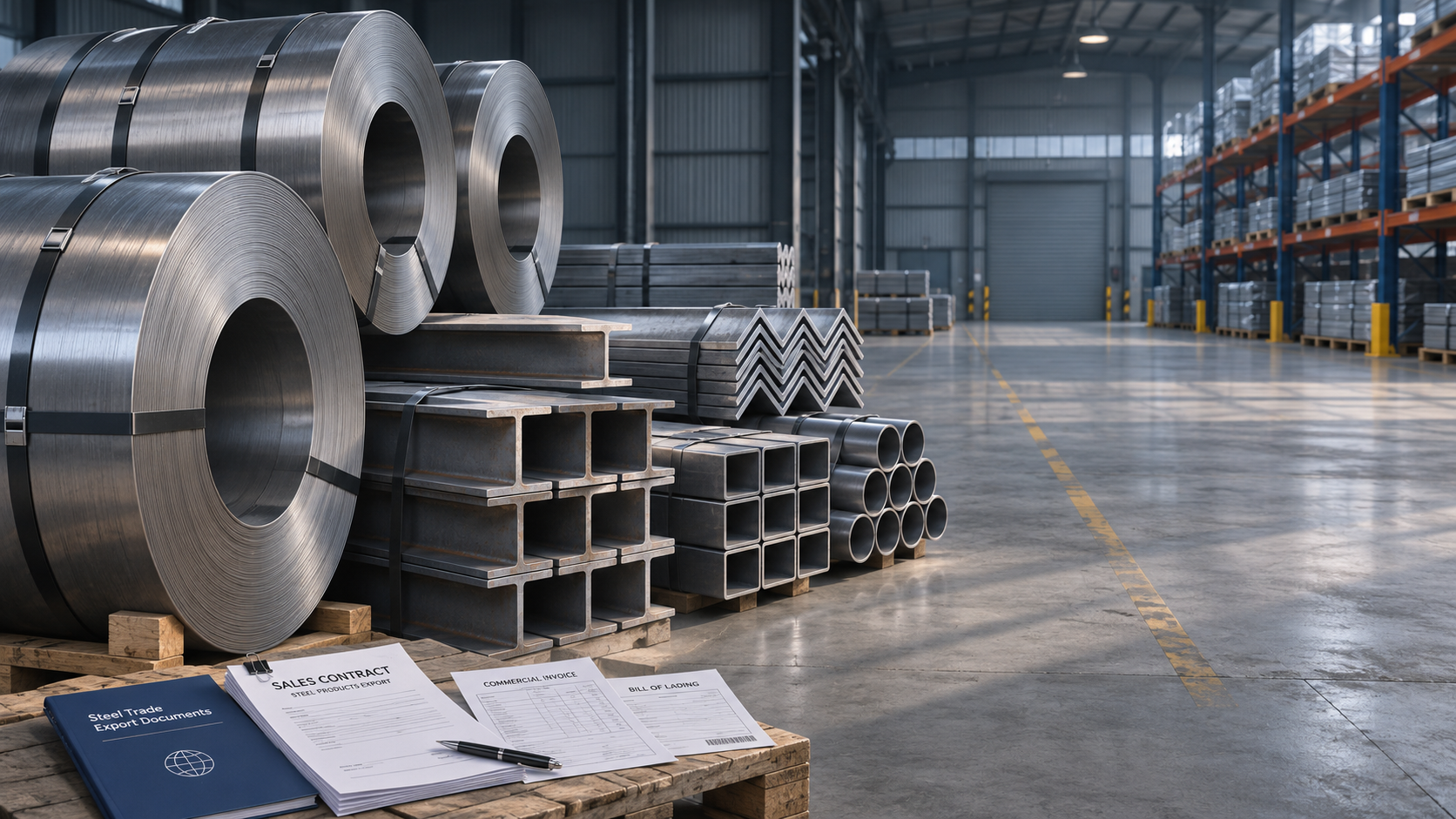
On 16 November 2026, the European Commission issued Implementing Regulation (EU) 2026/2498, refining rules under the Carbon Border Adjustment Mechanism (CBAM), including the treatment of carbon prices already paid in third countries. With CBAM charges in effect since January 2026, the development puts renewed attention on how steel exporters, buyers and their supply chains assess costs and prepare compliance information for sales to the EU.
What the November regulation and expert assessment say
The regulation issued on 16 November addresses CBAM implementation, including rules for deducting carbon prices already paid in third countries. On 19 November, the steel industry website My Steel published an explanation by Qi Shaozhou, a CBAM expert at Wuhan University, examining the implications for the steel sector.
According to that account, CBAM began charging in January 2026, the current carbon price was €75.36 per tonne, and the first settlement must be completed before September 2027. The information provided identifies potential consequences for the cost and compliance of steel exports to the EU but does not specify the calculation method, documentary requirements or detailed conditions for a deduction.
Where the cost question reaches the steel supply chain
Exporters face a more detailed pricing question
For businesses selling steel into the EU, the issue is not simply whether a carbon cost has been paid somewhere in the supply chain. Analysis suggests that the commercial effect may also depend on whether a particular payment qualifies for a deduction under the applicable rules and how that deduction is established. The input does not provide enough detail to determine eligibility or calculate an amount for any shipment.
Exporters may therefore need to examine how CBAM-related costs are reflected in quotations and commercial discussions. A price quoted today may be assessed differently depending on assumptions about the carbon price, any eligible deduction and the allocation of costs between trading partners. These are analytical considerations, not confirmed changes to contractual obligations. The reported €75.36 per tonne figure should also not be treated as the charge for every tonne of exported steel: the supplied information does not establish how an individual liability is calculated.
Buyers may seek greater clarity before committing
From a procurement perspective, EU buyers and their suppliers may find it useful to discuss which party will assemble information relevant to CBAM and how any uncertainty will be reflected in pricing. A buyer comparing offers could ask suppliers to explain the assumptions behind any stated carbon-related cost or claimed deduction. That discussion may affect the assessment of offers even where the product and delivery terms appear otherwise comparable.
The extent of any effect on purchase decisions remains to be observed. The information supplied does not establish that buyers have changed their sourcing practices, that a particular supplier has an advantage, or that additional documents are universally required. It does suggest a practical reason to clarify cost assumptions before a transaction is finalized, especially when the parties expect a third-country carbon payment to be taken into account.
Producers and intermediaries may need to connect records
Steel producers, exporters and trading intermediaries can hold different parts of the information relevant to a sale. Analysis suggests that a deduction linked to carbon prices paid in a third country may make coordination across those parties more consequential. A trader, for example, may need to ask an upstream business what information it can provide to support a proposed deduction, then discuss with the buyer whether that information addresses the applicable requirements.
The available summary does not identify the evidence that regulators will accept, prescribe a verification process or establish a new obligation for every intermediary. The practical issue is therefore one of readiness and communication: if the parties cannot explain the basis of a cost estimate or locate relevant records, they may have difficulty assessing the commercial implications of the refined rules.
Preparing for the first settlement
Check the deduction against the actual transaction
Companies assessing EU-bound steel business could begin by identifying where a carbon price has already been paid in a third country and whether that payment relates to the transaction under review. They should then check the regulation and subsequent official guidance for the conditions under which a deduction may be claimed. The summary confirms that the regulation addresses this subject; it does not confirm that every payment qualifies or that a deduction will equal the full amount paid.
When preparing an estimate, it may be useful to distinguish an amount that has been paid, an amount that might be eligible for consideration and an amount ultimately accepted under the applicable process. Keeping those concepts separate can help commercial teams explain uncertainty without presenting a preliminary calculation as a confirmed entitlement. The relevant currency, calculation basis and treatment of any individual payment should be checked against authoritative material rather than inferred from the summary.
Review the information available across suppliers
Businesses may also want to map which parties hold records relevant to carbon prices already paid and how those records can be obtained. A review could cover the link between the records and the steel being sold, the period they concern and the ability to explain the figures to a trading partner. The appropriate evidence and level of detail remain matters for verification against the regulation and any applicable official guidance.
For buyers and exporters, an early discussion with suppliers may reveal gaps while there is still time to seek clarification. It may also help the parties avoid relying on an assumed deduction in a quotation before the underlying information has been assessed. These are preparatory steps, not a statement that the supplied summary creates a specific new documentation requirement.
Align commercial planning with the reported deadline
The expert account identifies a first settlement deadline before September 2027. Companies with relevant EU steel business may therefore wish to review their internal planning, identify who is responsible for obtaining reliable information and consider when commercial estimates need to be updated. The summary does not specify each procedural step, the parties responsible for every filing or the precise timing of intermediate actions; those points require verification.
It may also be prudent to revisit quotations and contract discussions when assumptions change. For example, a cost estimate based on the reported carbon price should be clearly identified as an estimate and assessed alongside the applicable calculation rules. Parties can consider how they will discuss changes in the estimate, while checking their own contractual terms and the rules relevant to the transaction.
A regulation in place, with implementation still to examine
The most useful distinction at this stage is between the reported regulatory action and its transaction-level consequences. The input states that the Commission issued the implementing regulation and that CBAM charges began in January 2026. It also reports the expert view on the carbon price and first settlement deadline. Those points provide the basis for examining business exposure, but they do not establish the amount payable on a particular steel sale or the outcome of a proposed deduction.
From an editorial perspective, the development is best understood as a refinement of an operating mechanism and a signal to examine implementation. The practical effects may depend on the detailed conditions in the regulation, subsequent official explanations and how trading partners assemble and assess relevant information. Market responses and company experience also remain to be observed; the input does not provide evidence of completed settlements or measured changes in steel trade.
Several questions deserve continued attention: what evidence is needed to substantiate a third-country carbon price, how a qualifying deduction is calculated, and how businesses apply the rules when preparing for settlement. The answers could affect commercial estimates and the allocation of work across the supply chain. They should be verified against authoritative sources rather than assumed from the existence of the regulation alone.
What the development means for steel trade decisions
For the steel sector, the immediate significance is the need to connect a reported regulatory refinement with the particulars of each EU-bound transaction. Exporters and buyers may benefit from examining cost assumptions, identifying relevant records and confirming responsibilities in their commercial arrangements. None of those steps guarantees a deduction or establishes a uniform cost impact.
A measured response is to treat the regulation as a concrete development, while treating individual cost estimates and wider market effects as matters requiring further assessment. The reported first settlement deadline gives the issue a planning horizon; the details of eligibility, evidence and execution remain essential to a reliable decision.
Basis for this report and points to verify
This article is based on the supplied news title, event date and event summary, including their references to the European Commission regulation and the expert explanation published by My Steel. No specific official source link was provided in the input, so the regulation and its implementation should continue to be verified against official publications and relevant regulatory or trade authority information.
Further monitoring may cover official implementation details, the treatment of third-country carbon-price deductions, trade execution, industry feedback and companies’ experience preparing for settlement. The source material supplied does not establish outcomes for individual transactions.
By clicking 'Allow All', you agree to the storage of cookies on your device to enhance site navigation, analyze site usage and assist with our marketing efforts. Coo Cookie Notice