
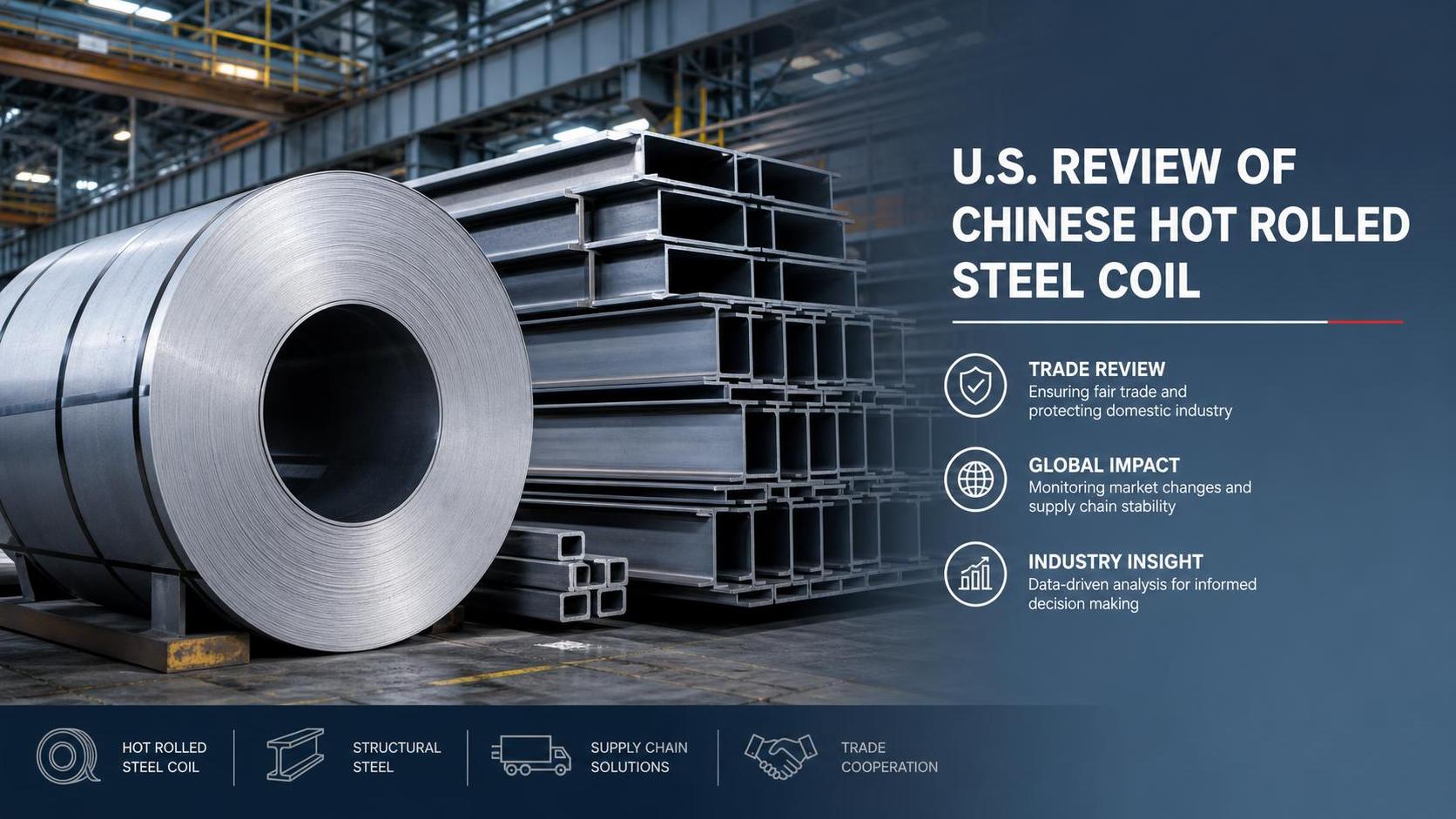
On July 21, 2026, the U.S. Department of Commerce formally opened an administrative review of anti-dumping measures on hot-rolled coil (HRC) from China, covering export shipments from April 1, 2025 to March 31, 2026. For U.S. importers, overseas distributors, and buyers tied to ASTM A656 and A1011 base materials, this development matters because it may affect customs-related costs, cash deposit adjustments, and pricing decisions for the next 12 months rather than remaining a purely procedural update.

What Has Been Confirmed So Far
The confirmed information is limited but commercially relevant. The U.S. Department of Commerce announced the start of an anti-dumping administrative review concerning hot-rolled coil of Chinese origin on July 21, 2026. The review period covers exports shipped between April 1, 2025 and March 31, 2026. According to the provided event summary, the review is expected to directly affect customs clearance costs for U.S. importers, possible changes in deposit requirements, and procurement pricing decisions over the coming year. The summary also identifies ASTM A656 and ASTM A1011 among the mainstream substrate specifications drawing attention in this process, while overseas distributors are expected to reassess supplier compliance qualifications and their ability to pass through price changes.
Where the Immediate Pressure May Appear
Import-side cost exposure is likely to be the first concern
From an industry perspective, U.S. importers are the most directly exposed group because the review may influence clearance costs and deposit arrangements tied to covered shipments. The operational impact is less about headline trade language and more about landed cost calculations, customs budgeting, and the timing of future purchase commitments.
Procurement teams may need to revisit price assumptions
Buyers sourcing HRC-based materials, especially where ASTM A656 or A1011 grades are relevant, may need to recheck pricing logic already built into contracts or sourcing plans. Analysis shows that even before any final commercial adjustment is clear, the review itself can become a trigger for renegotiation, contingency pricing, or shorter purchasing windows.
Distributors face a compliance and pass-through test
For overseas distributors, the issue is not only supply continuity but also whether suppliers can demonstrate compliance readiness and support documentation needs. What deserves closer attention is the distributor's ability to judge which suppliers can absorb or transmit cost changes without disrupting delivery commitments or margin structure.
Downstream manufacturers may feel the effect through sourcing timing
Processing and manufacturing companies using HRC as a base material may not be the direct subject of the review, but they can still be affected through purchase timing, revised quotations, and changes in available supply options. Observably, the practical impact for this group is likely to appear through supplier communication and procurement scheduling rather than through policy text alone.
What Companies Should Watch Next
Watch the wording of follow-up official communications
Companies involved in covered trade flows should closely track how the review is described in subsequent official statements. The key point is to distinguish between the start of a review and any later determination that could affect actual commercial treatment, because these are not the same stage of impact.
Check exposure by shipment period and product specification
Businesses should map which transactions fall within the April 1, 2025 to March 31, 2026 review window and whether affected volumes relate to mainstream specifications such as ASTM A656 or A1011. This is a practical screening step for estimating where pricing, customs processing, or customer communication may need adjustment.
Reassess supplier documentation and compliance readiness
For distributors and procurement managers, supplier qualification now deserves renewed scrutiny. The provided information specifically points to compliance credentials as an area requiring reevaluation, which means contract documents, shipment records, and product-related supporting materials may become more important in day-to-day execution.
Prepare for customer conversations on price transmission
Analysis shows that one of the more immediate business tasks may be explaining how review-related cost pressure could move through quotations and replenishment cycles. Companies that rely on imported HRC or distribute related materials should be ready to discuss not only current prices but also the conditions under which those prices may need revision.
Why This Looks More Like a Signal Than a Final Outcome
Analysis shows that this development is better understood as a live trade-policy signal than as a completed commercial result. The review has started, and that alone is meaningful for budgeting, procurement planning, and supplier assessment. At the same time, it would be premature to treat the announcement itself as a finalized market outcome. What deserves closer attention is how businesses translate this procedural step into near-term operating decisions without assuming more than the confirmed facts support.
How the Market May Read This for Now
At this stage, the industry significance lies in risk recalibration rather than in a confirmed shift in trade flows. For importers, distributors, and buyers of HRC-linked materials, the announcement is a prompt to revisit exposure in customs costs, deposit assumptions, and procurement strategy over the next year. It is more appropriate to understand this as a development that requires continued observation, with immediate operational relevance but without a confirmed final market conclusion yet.
Basis of This Article and Ongoing Verification
This article is based on the user-provided news title, event date, and event summary concerning the U.S. Department of Commerce's July 21, 2026 decision to initiate an anti-dumping administrative review on Chinese hot-rolled coil. For this type of industry update, commonly relevant source categories may include official government notices, company disclosures, industry association updates, authoritative media reporting, and standard-related documents. A specific official source link was not provided in the input, so the underlying documentation should continue to be verified. Follow-up attention should focus on later official wording, any operational clarification affecting covered shipments, and how companies adjust procurement and compliance practices in response.
By clicking 'Allow All', you agree to the storage of cookies on your device to enhance site navigation, analyze site usage and assist with our marketing efforts. Coo Cookie Notice