
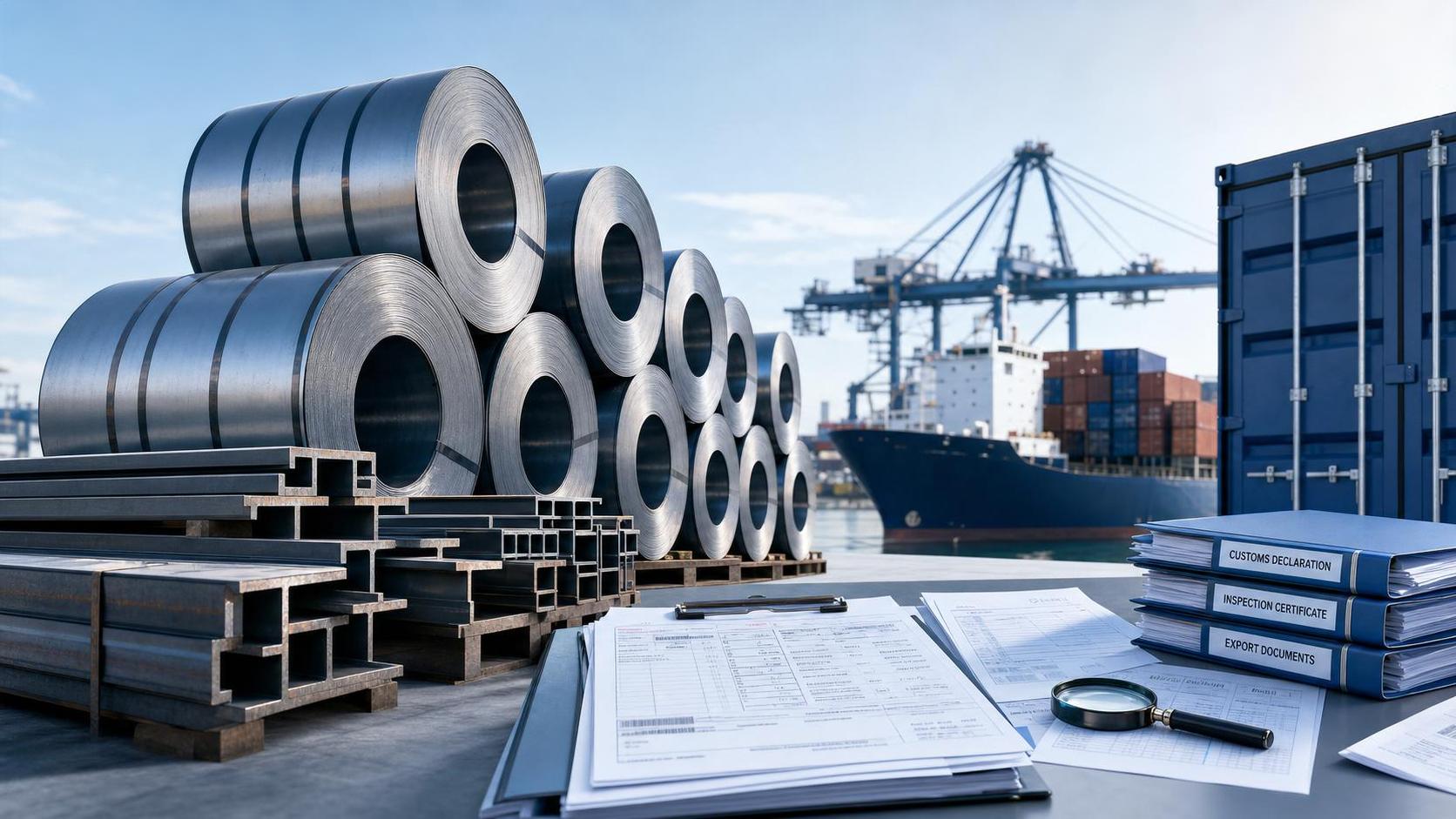
On July 17, 2026, the U.S. Department of Commerce announced the first Sunset Review of the antidumping duty order on hot-rolled steel coil (HR Coil) from China. The review will determine whether the current duty rates of 102.8% to 256.4% will be maintained or adjusted, making this a trade-rule development with direct implications for exporters, importers, procurement teams, customs compliance, and delivery planning tied to the U.S. market.
What has been formally put into motion
The confirmed fact is that the U.S. Department of Commerce has initiated the first Sunset Review of the antidumping duty order covering China-origin HR Coil. According to the provided event summary, the review concerns whether the existing duty range of 102.8% to 256.4% will remain in place or be changed. The same summary also states that the outcome will directly affect export eligibility and customs-clearance compliance pathways for the next five years in the U.S. market, and that importers need to reassess supplier certification, origin documentation, and tariff cost structures.
Where the immediate pressure points are likely to emerge
For exporters tied to the U.S. destination
From an industry perspective, exporters are likely to feel the impact first through market-access planning and shipment compliance. Because the review concerns the future treatment of an existing antidumping duty order, export-facing teams need to pay closer attention to origin-related paperwork, product identification consistency, and the compliance basis used in transaction documents. What deserves closer attention is not only the duty outcome itself, but also how buyers and intermediaries may tighten document review during the review period.
For U.S.-bound import and procurement functions
Importers and procurement teams may face the most immediate operational pressure in landed-cost calculations and supplier selection. Analysis shows that when a review can maintain or adjust a very high duty range, purchasing decisions, contract pricing assumptions, and sourcing continuity become more sensitive to documentation quality and tariff exposure. In practical terms, teams should watch supplier certification status, origin file completeness, and whether existing procurement structures remain workable under different duty scenarios.
For manufacturing and downstream delivery coordination
Processors, manufacturers, and downstream users connected to HR Coil procurement may not be the direct subject of the review, but they can still be affected through supply planning, lead-time expectations, and material substitution decisions. Observably, when trade compliance risk rises, delivery schedules and sourcing choices often require closer alignment between procurement, logistics, and internal compliance review. The issue here is less about a confirmed disruption and more about the need to prepare for stricter transaction screening.
For customs and supply-chain service providers
Customs brokers, trade compliance advisers, and other supply-chain service providers may see higher demand for document validation and origin-related checks. It is more appropriate to understand this as a signal that customs-clearance pathways may require closer scrutiny if the review changes how market participants assess risk. Service providers should therefore pay attention to the consistency of origin declarations, supporting documentation, and tariff assumptions used by clients handling U.S.-bound HR Coil business.
What companies should review now
Recheck supplier qualification and certification files
Analysis shows that supplier certification review should be treated as a near-term priority. The event summary specifically highlights the need for importers to reassess supplier certification, which means companies should verify whether existing qualification files are complete, current, and internally consistent for U.S.-related transactions.
Review origin documents with greater discipline
What deserves closer attention is the quality of origin documentation. Since the summary identifies origin files as a key area for reassessment, companies involved in export, import, or intermediary trade should examine whether commercial documents, shipment records, and origin-related statements align clearly enough to support customs compliance requirements.
Stress-test tariff cost assumptions in procurement and sales
Observably, the duty range cited in the review is high enough to make tariff treatment a core commercial variable rather than a background cost item. Companies should therefore revisit pricing models, procurement budgets, and delivery commitments that depend on U.S.-bound HR Coil transactions. This is not a statement that a new tariff result has already taken effect; it is a practical response to a live review that may preserve or alter the current structure.
Track later official wording and execution signals
The current information does not provide the detailed execution outcome of the review. For that reason, businesses should continue monitoring later official language, implementation signals, and any downstream changes in customer requirements, tender wording, or customs-facing compliance expectations. At this stage, continued observation is more defensible than assuming a final operating result.
Why this matters beyond the headline
Analysis shows that this development should be read as more than a routine announcement. It reflects an active review of the trade-rule conditions attached to China-origin HR Coil entering the U.S. market. At the same time, it is not yet a confirmed new end-state. It is more appropriate to understand this as an execution signal with medium-term consequences: companies do not yet have a final revised outcome, but they do have a clear reason to reassess compliance files, sourcing structures, and customs-risk exposure now.
How the market should interpret the current stage
At this point, the event is best understood as a formal rule-process development with practical business implications rather than as a completed policy outcome. The importance of the review lies in its potential effect on the next five years of export eligibility and U.S. customs compliance pathways. A rational reading is that affected companies should prepare operationally, keep documentation discipline high, and avoid assuming either continuity or change until subsequent official signals become clearer.
Basis of this article and what still needs verification
This article is based on the user-provided news title, event date, and event summary. For events of this type, relevant source categories usually include official government notices, releases from regulatory authorities, customs or trade-administration information, industry association updates, standards-related documents, and reporting from authoritative media. A specific official source link was not provided in the input, so it still needs to be verified on an ongoing basis. Subsequent points requiring continued observation include later policy wording, compliance interpretation, certification expectations, changes in tender or transaction documents, industry feedback, and how companies implement any resulting adjustments in practice.
By clicking 'Allow All', you agree to the storage of cookies on your device to enhance site navigation, analyze site usage and assist with our marketing efforts. Coo Cookie Notice