
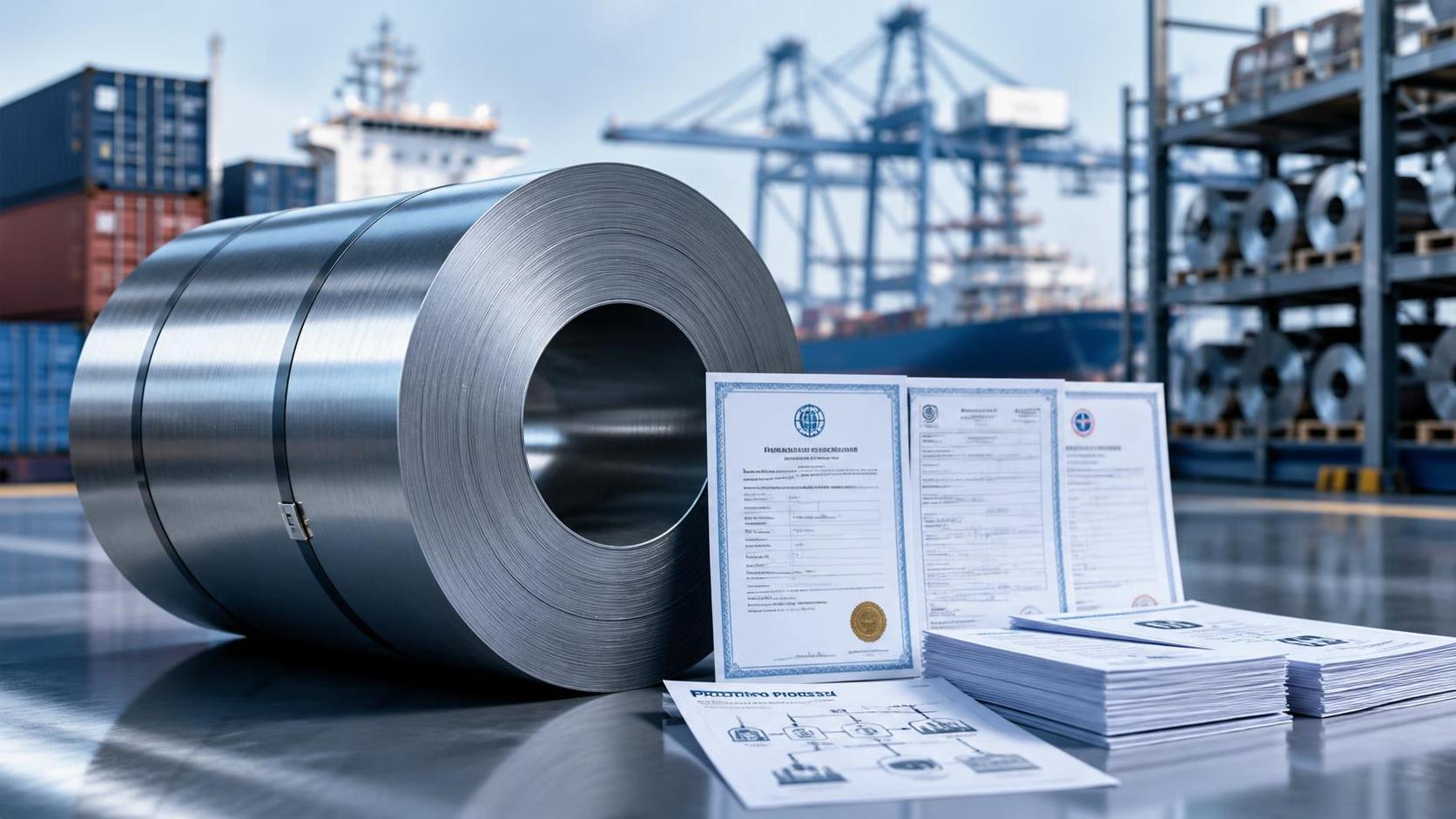
On August 10, 2026, a new compliance requirement took effect for U.S. imports of hot-rolled steel coil from China after the U.S. Department of Commerce announced a fresh anti-dumping duty order one day earlier. Beyond the duty range itself, the immediate operational change is that import filings for the covered products must now include a certified statement on origin and production process, a development that deserves close attention from importers, downstream processors, sourcing teams, and supply chain service providers managing clearance timing and procurement continuity.
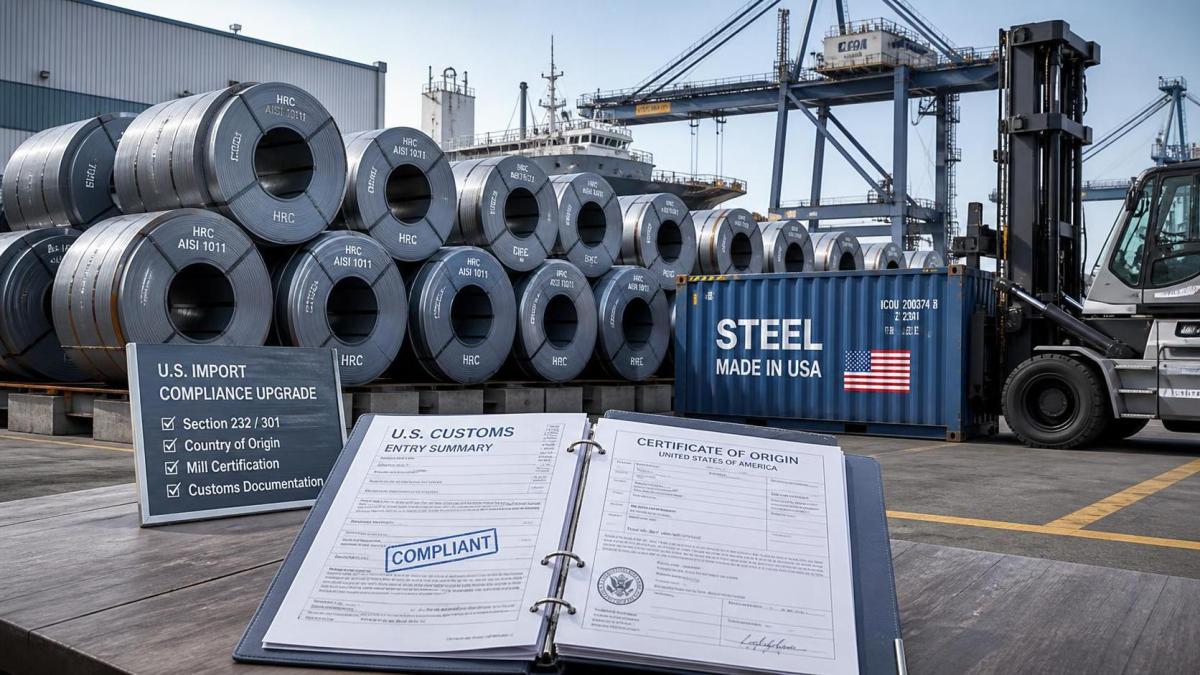
What the new filing requirement changes from August 10
According to the information provided, the U.S. Department of Commerce announced on August 9, 2026 that a new anti-dumping duty order would formally apply to hot-rolled steel coil originating in China under HS 7208.51-7208.90. The stated average duty range is 24.7% to 89.3%.
The same measure requires that, from August 10, 2026, all import declarations for the covered products be accompanied by a certified declaration covering both origin and production process. The information provided also states that this measure directly affects the U.S. procurement compliance route and customs clearance timing for downstream profile-processing enterprises.
Where the operational pressure is likely to appear first
Import compliance will move to the front of the transaction
From an industry perspective, importers are likely to feel the change first because the new requirement is tied directly to the declaration stage. The effect is not limited to duty exposure; it also touches document readiness, internal review steps, and the ability to complete customs filings without delay. What deserves closer attention is whether origin and production-process records can be assembled in a form that supports the required certified statement at the time of entry.
Downstream processors may need to revisit U.S. sourcing paths
For downstream processors using hot-rolled coil as an input, the measure may affect procurement planning and material routing into the U.S. market. Analysis shows that the issue is not only pricing under the anti-dumping duty range, but also whether existing sourcing arrangements remain workable when additional origin and production documentation becomes a filing prerequisite. Companies in this position should pay close attention to the compliance path attached to each shipment, not only to the commercial terms of supply.
Supply chain service providers will face tighter document coordination
Customs brokers, logistics coordinators, and other supply chain service providers may be affected through a narrower margin for document error or late submission. Observably, when a filing requires an additional certified declaration, coordination between exporter, manufacturer, importer, and service provider becomes more time-sensitive. The practical pressure point is likely to be consistency between shipment records and the declared origin and production-process information.
What companies should review now
Check whether current documentation can support the new declaration
Analysis shows that companies involved in covered imports should first review whether their existing origin files and production-related records are sufficient to support a certified declaration from August 10 onward. The information provided does not describe the detailed review standard, so this should be treated as a current compliance checkpoint rather than a confirmed documentation template.
Reassess purchase timing and customs lead time
For procurement and operations teams, one immediate concern is whether additional document preparation could affect shipment release timing. It is more appropriate to understand this as a live execution issue: where procurement cycles were built around standard entry documentation, the new declaration requirement may require more lead time before filing and delivery commitments are made.
Pay attention to covered product classification and internal handoff
Because the measure refers specifically to hot-rolled steel coil under HS 7208.51-7208.90, companies should review how covered goods are identified internally across purchasing, trade compliance, and logistics functions. From an industry perspective, the risk is often not only external regulation but also internal mismatch between product classification, supplier documents, and customs submission workflows.
Track how the requirement is reflected in commercial paperwork
Observably, the rule change may also flow into practical business documents, including procurement files and shipment support records. The input information does not provide a detailed execution framework, so companies should focus on monitoring how the declaration requirement is incorporated into transaction-level documentation and whether counterparties can respond consistently.
Why this reads as an execution signal rather than a distant policy watch item
Analysis shows that this development is better understood as an implemented trade-control change with immediate filing consequences, not as a policy discussion that remains at a conceptual stage. The duty order has been announced, an effective date has been given, and a specific declaration requirement is tied to import entries from August 10, 2026.
At the same time, it would be premature to treat all downstream effects as settled. Observably, the market still needs to watch how the requirement is applied in practice, how consistently certified origin and production-process statements are handled across transactions, and whether affected businesses adjust procurement and delivery arrangements in response.
How this development is best understood at this stage
In practical terms, this event signals a rule change that already matters at the shipment and declaration level for covered Chinese hot-rolled steel coil entering the U.S. market. Its significance lies not only in the anti-dumping duty range, but also in the added documentary threshold now attached to import clearance.
From an industry perspective, the most balanced reading is that this is both a landed compliance change and an early execution signal. The core rule is already in effect, while the full commercial and operational impact on sourcing, clearance timing, and downstream processing will need to be judged through continued observation of implementation and market response.
Basis of this article and points that still require verification
This article is based on the user-provided news title, event date, and event summary. For events of this type, commonly relevant source categories include official notices, releases from regulatory authorities, customs or trade-administration information, industry association updates, standard-setting documents, and reporting by authoritative media.
No specific official source link was provided in the input, so the exact official publication path still needs to be verified on an ongoing basis. What also remains worth watching includes any further policy detail, the practical interpretation of the certification requirement, changes in tender or procurement documents, market feedback, and how affected companies implement the new rule in day-to-day trade operations.
By clicking 'Allow All', you agree to the storage of cookies on your device to enhance site navigation, analyze site usage and assist with our marketing efforts. Coo Cookie Notice