

On August 8, 2026, the EU moved steel imports into the third implementation stage of CBAM, extending the requirement to hot-rolled, cold-formed, and structural steel profiles. For companies trading in products such as H-beams, square and rectangular tubes, and angle steel, the immediate issue is no longer general policy direction but operational market access: importers must submit certified life-cycle carbon emissions data through the EU CBAM portal, and any gap in that submission can directly affect customs clearance, delivery timing, and supplier eligibility.
What changed on August 8
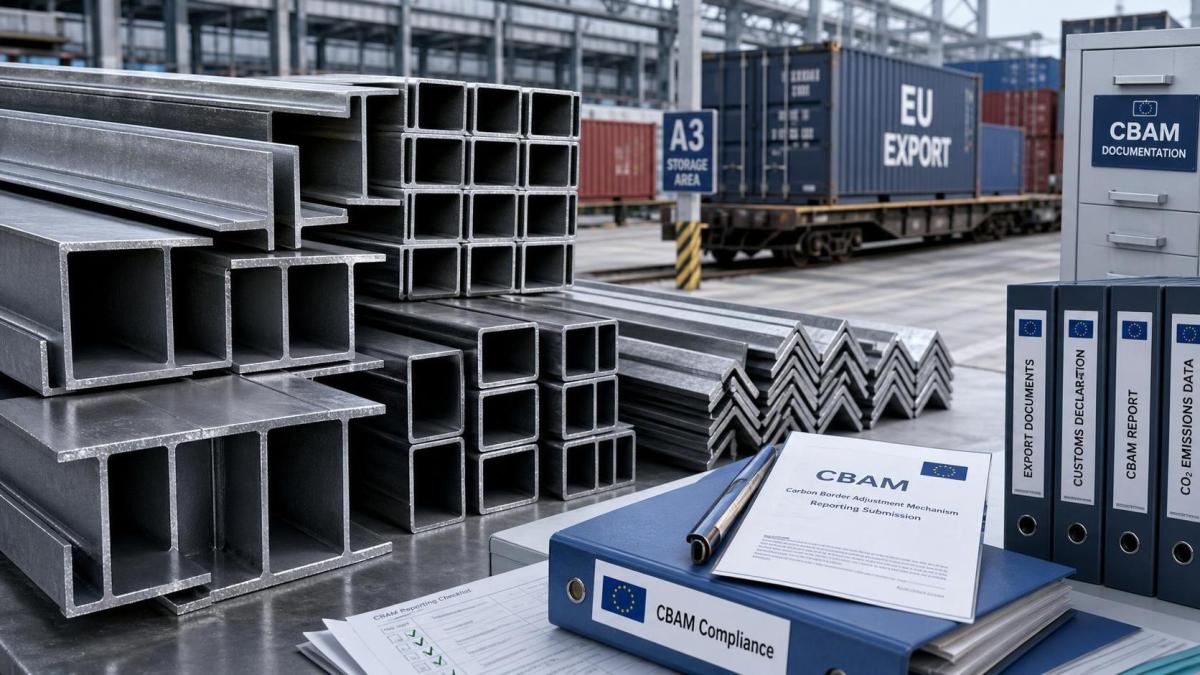
According to the provided event summary, the EU CBAM entered its third implementation stage on August 8, 2026. This stage covers all imports of hot-rolled, cold-formed, and structural steel profiles, including H-beams, square and rectangular tubes, and angle steel. Importers are required to submit certified full life-cycle carbon emissions data through the EU CBAM portal. If that requirement is not met, the goods may be denied customs clearance. The change directly affects the market access qualification and delivery cycle of Chinese steel exporters, and suppliers that have not completed MRV preparation may face a risk of losing orders.
Where the pressure is likely to appear first
Export transactions now hinge more directly on data readiness
For exporters shipping covered steel profiles into the EU market, the main impact is that product shipment is now tied more closely to emissions reporting readiness. The issue is not limited to product specification or price; it also extends to whether the importer can file certified life-cycle carbon emissions data through the required portal. From an operational perspective, this places additional attention on pre-shipment documentation, data coordination, and the timing of customs-related steps.
Importers and buyers face a tighter gate on supplier selection
For importers and procurement teams, the rule change can affect supplier screening and order planning. Where a supplier has not completed MRV preparation, the buyer may need to weigh the risk of customs disruption and delivery delay. What deserves closer attention is that compliance capability may function as a practical entry requirement alongside technical and commercial terms, especially for covered profile categories.
Supply-chain service providers may see longer coordination cycles
Logistics coordinators, trade service firms, and compliance support providers may be affected through document flow and shipment scheduling. If certified emissions data must be aligned before clearance, the handoff between exporter, importer, and service provider becomes more sensitive to timing and document completeness. Observably, delivery planning for covered steel imports may require earlier confirmation of reporting status than before.
Verification and reporting support become part of trade execution
For businesses involved in verification, reporting support, or related compliance services, the event signals a stronger connection between MRV preparation and actual shipment execution. The rule change does not simply add a reporting formality; it can influence whether a shipment proceeds through clearance at all. That makes document reliability and reporting consistency more relevant to routine trade operations.
What companies should examine now
Check whether covered products are already within the immediate filing scope
Companies handling hot-rolled, cold-formed, and structural steel profiles should first verify whether their export or procurement portfolio includes the covered categories named in the event summary. This is especially relevant where multiple profile types are shipped under similar commercial arrangements but may now face the same CBAM submission threshold.
Review the completeness of MRV-related preparation
Analysis shows that MRV readiness is one of the clearest practical pressure points in this development. Where suppliers have not completed monitoring, reporting, and verification preparation, the risk is not abstract; it may affect order continuity. Companies should therefore pay closer attention to whether internal records, supporting documents, and reporting workflows are sufficient for certified life-cycle emissions submission.
Reassess delivery commitments and procurement timelines
Because the summary states that non-compliant goods may be refused customs clearance, delivery timing deserves closer review. Exporters, importers, and buyers may need to recheck milestone dates tied to shipment release, handover, and contract performance. It is more appropriate to understand this as a compliance-linked delivery issue rather than only a sustainability reporting matter.
Watch for changes in document requirements and commercial terms
Where procurement documents, technical files, supplier qualification reviews, or trade paperwork are involved, companies should monitor whether emissions-related documentation becomes a required part of transaction review. The provided information does not set out detailed execution standards beyond the reporting obligation, so this remains an area that requires continued attention rather than assumption.
How this development should be read at this stage
From an industry perspective, this event is best understood as an executed compliance signal rather than a distant policy discussion. The key point is that the requirement is tied to customs clearance and therefore reaches directly into trade execution. At the same time, analysis should remain disciplined: the provided information confirms the reporting obligation, product coverage, and the risk to clearance, supplier access, and delivery, but it does not provide further detail on detailed enforcement practice, document review standards, or market-wide outcomes. Those points still require observation.
The practical meaning for the steel trade
The immediate significance of this development lies in the shift from broad carbon policy awareness to transaction-level compliance for covered steel profiles entering the EU. For exporters, buyers, and service providers, the issue is not simply whether CBAM exists, but whether certified life-cycle emissions data can be prepared and submitted in time for clearance. Current conditions make it more appropriate to read this event as a rule now affecting access and execution, while the finer points of implementation and market response still need to be watched carefully.
Basis of this article and what still needs verification
This article is based on the user-provided news title, event date, and event summary. For developments of this kind, relevant source types typically include official announcements, regulator publications, customs or trade authority notices, industry association updates, standards-related documents, and reporting by established professional media. No specific official source link was provided in the input, so the precise official reference still needs to be verified on an ongoing basis. Further observation is also needed regarding detailed implementation language, certification and reporting interpretation, changes in tender or procurement documents, market feedback, and how companies carry out MRV-related execution in practice.
By clicking 'Allow All', you agree to the storage of cookies on your device to enhance site navigation, analyze site usage and assist with our marketing efforts. Coo Cookie Notice