
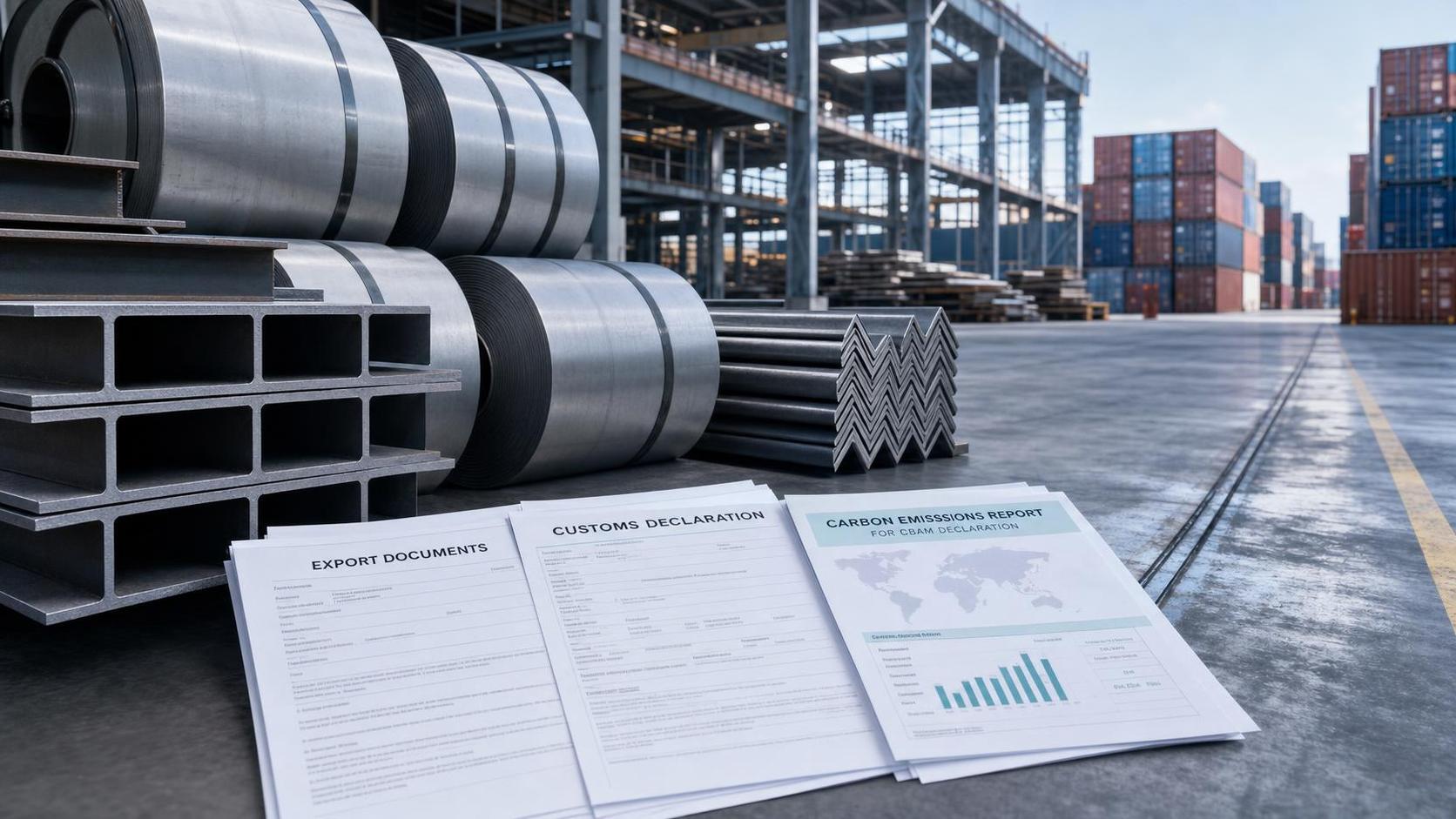
On July 18, 2026, the European Commission formally put new transitional CBAM reporting requirements into effect for imported steel products, making quarterly carbon emissions declarations mandatory for key categories such as hot-rolled coil, H-beams, and angle steel. For steel exporters serving the EU market, this is not just a filing update: it directly affects customs clearance, preparation for formal compliance access in October 2027, and the way exporters, buyers, and supply chain partners manage delivery, documentation, and cost discussions.
What the New Requirement Formally Covers
According to the provided information, from July 18, 2026, the EU CBAM framework requires mandatory quarterly reporting of carbon emissions data for imported steel and steel section products. The scope includes major product categories such as hot-rolled coil, H-beams, and angle steel.
The same information states that if importers or related parties fail to submit embedded carbon emissions reports verified by an accredited third party on time, customs clearance may be affected. It also states that delayed or missing reporting may influence compliance access in the later formal phase scheduled for October 2027.
The confirmed information further indicates that the requirement has a direct impact on delivery procedures, cost structures, and customer cooperation models for global steel exporters supplying the EU.
Where the Pressure Is Likely to Appear First
Export transactions tied directly to the EU market
From an industry perspective, direct exporters of steel products to the EU are likely to face the most immediate operational pressure because the new requirement is linked to product-level reporting and customs-related consequences. The main business impact is likely to appear in shipment preparation, emissions data collection, verification scheduling, and submission timing. What deserves closer attention is whether existing export workflows are already aligned with quarterly reporting cycles and third-party verification requirements.
Manufacturers and processors supplying covered steel categories
Analysis shows that manufacturers and processing companies involved in hot-rolled coil, H-beams, angle steel, and similar categories may be affected even when they are not the final customs declarant. This is because emissions reporting depends on upstream production information and supporting records. The practical concern is whether product and process data can be translated into reportable embedded carbon information that can withstand third-party review.
Import buyers and procurement-side coordination
EU-facing buyers and procurement teams may also be affected because compliance timing now has a closer connection with delivery reliability. Observably, the issue is no longer limited to price and lead time; the completeness and credibility of emissions documentation may become part of supplier evaluation and order coordination. Buyers are likely to pay closer attention to whether suppliers can support on-time reporting without disrupting customs and delivery schedules.
Service providers in documentation and supply chain execution
Supply chain service providers, including parties involved in trade documentation and shipment coordination, may see added complexity in document readiness and handoff timing. Analysis shows that the business risk here is procedural: if reporting materials, verification status, and shipment schedules are not synchronized, the result may be friction in customs processing and downstream delivery planning.
What Companies Should Watch in Day-to-Day Execution
Read the reporting duty as an operational requirement, not only a policy statement
What deserves closer attention is the difference between a policy signal and an operational threshold. In this case, the information provided points to a requirement that already affects whether goods can move through customs smoothly and whether market access remains aligned with the formal phase in October 2027. Companies should therefore treat the reporting timetable and supporting documentation as part of shipment execution.
Focus on covered product categories and supporting records
For companies trading or producing hot-rolled coil, H-beams, angle steel, and similar steel sections, the immediate task is to identify which transactions fall within the reporting scope and whether the required embedded carbon data can be assembled consistently. The issue is not only whether data exists, but whether it can be matched to shipments, products, and verification requirements in a usable form.
Check third-party verification readiness early
The provided information specifically refers to accredited third-party verification. From a practical standpoint, this means companies should pay attention to whether their reporting process includes enough time for verification before filing deadlines and shipment milestones. Delays are likely to matter not only for paperwork completeness but also for customs-related execution.
Prepare for customer communication on cost and delivery implications
Analysis shows that this requirement may affect cost structures and customer cooperation models. That does not confirm a uniform cost outcome, but it does suggest that exporters and buyers may need earlier discussions on documentation responsibility, reporting support, timing buffers, and possible delivery impacts. The commercial issue is therefore partly compliance-related and partly contractual in day-to-day execution.
Why This Looks Like More Than a Short-Term Adjustment
Observably, this development is better understood as both an immediate compliance change and a longer-term market signal. The immediate element is clear from the mandatory quarterly reporting and the stated customs implications. The longer-term element comes from the connection between current reporting performance and later formal-phase access in October 2027.
Analysis shows that the news does not by itself confirm how every exporter or buyer will respond, nor does it establish a final industry outcome beyond the facts provided. However, it does indicate that carbon reporting for covered steel products is moving closer to the center of normal trade execution rather than remaining a peripheral compliance topic. That is why continued industry attention is warranted.
How This News Is Best Understood Now
At this stage, it is more appropriate to understand this development as a concrete compliance signal with direct operational consequences, rather than as a distant regulatory backdrop. The confirmed facts already point to effects on customs clearance, formal-phase readiness, delivery procedures, and commercial coordination. The broader industry outcome still requires observation, but the near-term business relevance is already clear for companies trading covered steel products into the EU.
Basis of This Article and What Still Needs Verification
This article is based on the user-provided news title, event date, and event summary regarding the European Commission's implementation of transitional CBAM reporting requirements for imported steel products. For this type of industry update, relevant source categories typically include official announcements, company disclosures, industry association information, authoritative media coverage, and standards or compliance-related documents.
No specific official source link was provided in the input, so the exact official document path remains subject to further verification. What still deserves ongoing attention is whether later official wording, implementation detail, or procedural clarification changes how companies handle reporting scope, verification timing, customs coordination, and preparation for the October 2027 formal phase.
By clicking 'Allow All', you agree to the storage of cookies on your device to enhance site navigation, analyze site usage and assist with our marketing efforts. Coo Cookie Notice