
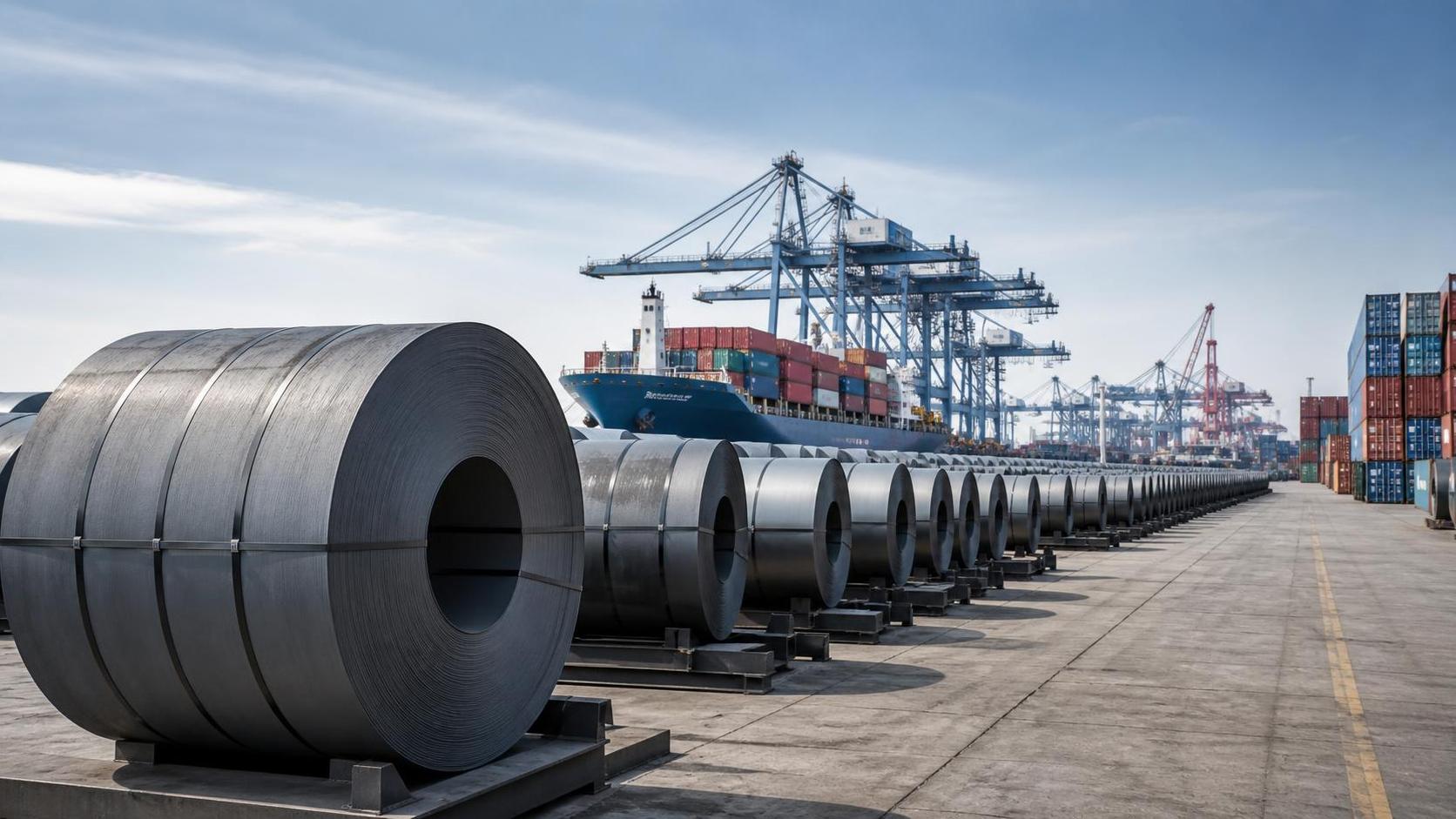
On August 6, 2026, China’s hot-rolled coil FOB export offer remained below comparable levels from Japan, Turkey, and India, keeping a visible price advantage in the export market. For steel traders, overseas importers, distributors, and supply chain operators, this matters because the spread is being treated as a practical buffer against cost pressure linked to new steel policy measures in Europe and the United States, while also supporting continued export activity and near-term purchasing decisions.
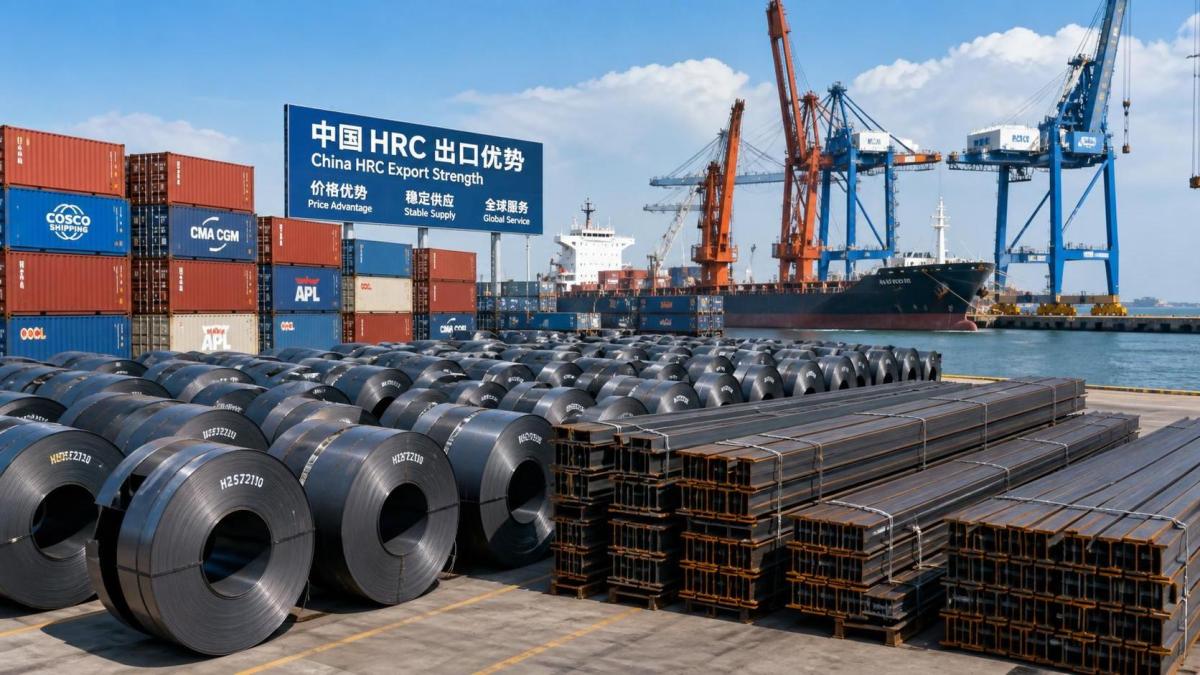
Confirmed pricing gap in the export market
As of August 6, 2026, China’s FOB export quotation for hot-rolled coil stood at USD 483 per ton. The same comparison placed Japan at USD 545 per ton, Turkey at USD 608 per ton, and India at USD 490 per ton. That left China lower by USD 62 per ton versus Japan, USD 125 per ton versus Turkey, and USD 7 per ton versus India.
The provided information also states that this price advantage is helping offset cost pressure created by new steel policy measures in Europe and the United States, as well as additional trade remedy investigations. It further identifies that gap as an underlying support for keeping China’s steel exports at a scale of tens of millions of tons, while indicating that overseas importers and distributors are still within a window to lock in short- to medium-term procurement costs.
Where the impact is likely to be felt first
Overseas importers and distributors weighing booking timing
From an industry perspective, overseas buyers are the most immediate group affected because the quoted spread directly changes landed procurement calculations and restocking decisions. The main impact is on order timing, cost locking, and supplier comparison. What deserves closer attention is whether buyers treat the current spread as sufficient reason to advance purchases for the short to medium term.
Export trading companies managing competitiveness under policy pressure
For direct trading businesses, the lower FOB level matters because it helps preserve offer competitiveness even when external policy and trade investigation risks raise uncertainty. The impact is concentrated in quotation strategy, customer negotiations, and contract conversion. What deserves closer attention is whether the existing spread remains stable enough to support repeat orders rather than one-off opportunistic transactions.
Supply chain service providers facing execution and compliance pressure
For logistics, documentation, and cross-border service providers, the relevance is less about mill pricing itself and more about whether a still-open purchasing window translates into transaction flow. The operational focus is likely to fall on shipment planning, document consistency, and delivery coordination. Observably, if more buyers move to lock near-term costs, execution quality becomes as important as headline price.
What companies should monitor now
Whether price advantage continues to offset external policy costs
Companies should track whether the current spread continues to absorb part of the added cost pressure associated with steel policy changes in Europe and the United States and with new trade remedy cases. The practical issue is not only the quoted difference itself, but whether that difference still holds after customers factor in compliance and risk costs.
How short- and medium-term procurement windows are used
For importers and distributors, the current market signal points to procurement timing rather than long-horizon certainty. Businesses should pay close attention to how quickly they can translate the spread into booked orders, especially when discussing short- to medium-term cost locking with customers and internal procurement teams.
Documentation and performance readiness in export transactions
Where buyers are acting on a cost window, supplier qualification, contract documentation, and delivery schedules become more sensitive. Companies involved in export execution should pay attention to whether supporting documents, trade terms, and fulfillment timelines are clear enough to avoid friction once orders move forward.
Distinguishing market opportunity from confirmed structural change
Analysis shows that firms should avoid reading a current quotation gap as a complete resolution of external trade pressure. The more practical approach is to separate a usable purchasing window from any assumption that the wider policy environment has stabilized.
Why this looks like a market signal rather than a final outcome
Analysis shows that this development is best read as a current competitiveness signal in the hot-rolled coil export market. The confirmed fact is the price gap itself and the role it is presently playing in supporting export transactions. The less certain part is duration: the information provided supports the existence of a window, but it does not by itself prove that the advantage will remain unchanged over a longer cycle.
Observably, the reason the market should keep watching this story is that pricing, trade policy pressure, and buyer behavior are all interacting at the same time. That makes the development relevant beyond a single quotation day, but still something that needs continued verification rather than a fixed conclusion.
How this update is best understood
At this stage, the most reasonable reading is that China’s lower HRC FOB offer is providing a workable commercial cushion for exports and a usable procurement reference for overseas small and mid-sized buyers. It is more appropriate to understand this as a near-term support factor with broader strategic implications, rather than as proof of a settled long-term trend.
Basis of this article and follow-up points
This article is based on the user-provided news title, event date, and event summary. For this type of industry update, commonly relevant source categories may include official announcements, company disclosures, industry association releases, authoritative media reporting, and standard-setting documents. A specific official source link was not provided in the input, so key details still require ongoing verification in subsequent market tracking.
Areas that warrant further observation include whether the quoted price gap remains stable, whether overseas importers and distributors continue to treat the market as a cost-locking window, and whether external steel policy measures or new trade remedy actions materially change transaction conditions.
By clicking 'Allow All', you agree to the storage of cookies on your device to enhance site navigation, analyze site usage and assist with our marketing efforts. Coo Cookie Notice