

On July 15, 2026, the U.S. Department of Commerce announced the start of an antidumping administrative review covering hot-rolled carbon steel coil from China under HS 7208.10-7208.99 for exports made from October 1, 2024 to September 30, 2025. For market participants, this is not just a procedural notice: it directly relates to customs-entry cost planning, cash tied up in deposit requirements, and the annual tariff treatment that may apply later. Importers, distributors, manufacturing buyers, and supplier management teams all have reason to follow the review closely because it affects both transaction economics and compliance checks across ongoing supply arrangements.
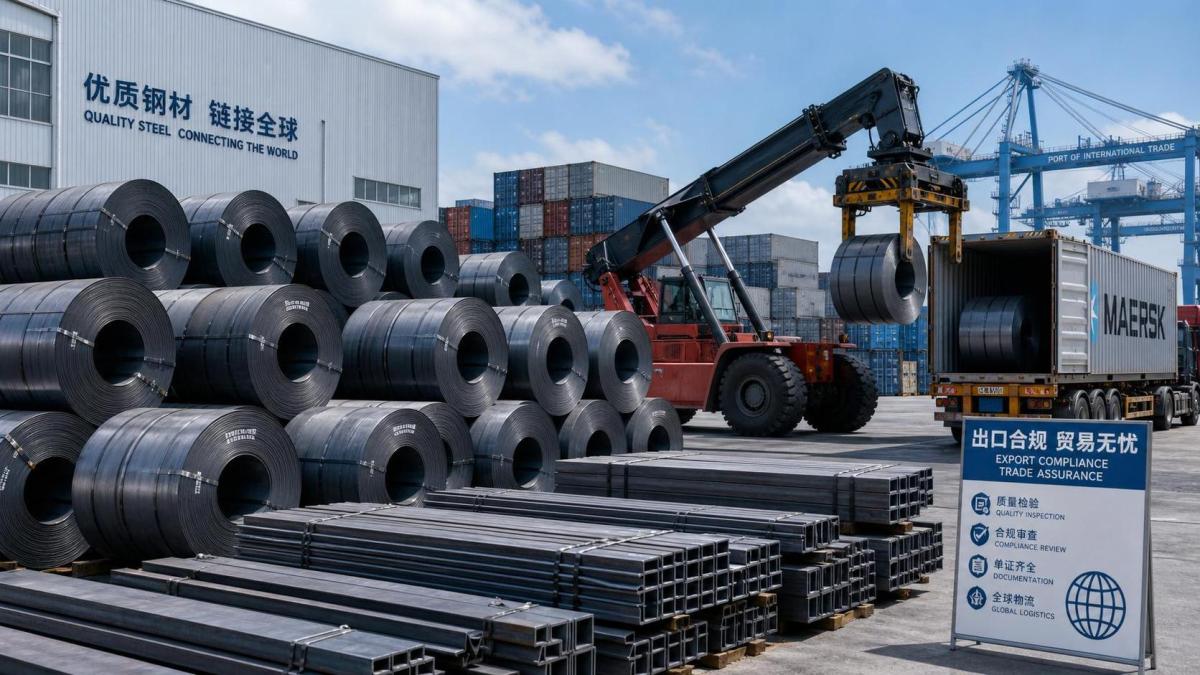
What the July 15 notice confirms
The confirmed facts are limited but commercially important. The U.S. Department of Commerce formally initiated an antidumping administrative review on July 15, 2026 for Chinese hot-rolled carbon steel coil classified under HS 7208.10-7208.99. The review covers the export period from October 1, 2024 through September 30, 2025. According to the provided event summary, the review will directly affect U.S. importers in three practical areas: customs-clearance costs, deposit payments, and the later application of annual duty rates. The same summary also indicates that large distributors and end-use manufacturers may need to reassess procurement budgets and review supplier compliance.
Where the pressure is likely to appear first
Import-side cost control and customs handling
From an industry perspective, U.S. importers are among the first to feel the operational effect because antidumping administrative reviews are tied to landed cost management and customs treatment. The relevant business points to watch are entry cost calculations, deposit exposure, internal trade compliance review, and document consistency for covered product categories. What deserves closer attention is whether purchasing and logistics teams are fully aligned on the covered HS range and on the review period referenced in the notice.
Distributors facing inventory and margin adjustments
For channel and distribution businesses, the impact is likely to concentrate on pricing discipline, inventory planning, and contract margin protection. Analysis shows that when a review directly affects deposit obligations and later duty-rate application, distributors may need to revisit cost assumptions built into ongoing sales arrangements. In practical terms, teams should pay closer attention to supplier files, product classification records, and commercial documents that support sourcing decisions and downstream quotations.
Manufacturing buyers under budget and supplier-review pressure
End-use manufacturers that purchase hot-rolled carbon steel coil may be affected through procurement budgeting and supplier qualification workflows. The event summary specifically points to budget reassessment and supplier compliance review, which suggests a need to examine how sourcing plans, delivery timing, and vendor approval processes interact with trade-rule exposure. Observably, the issue is not only the material price itself, but also whether procurement teams have adequate visibility into trade-related cost variables and supporting documentation.
Export-facing suppliers and supply-chain service providers
Chinese exporters and the service providers supporting cross-border shipments may need to pay closer attention to transaction records, shipment period matching, and product-scope consistency. It is more appropriate to understand this as a compliance-sensitive stage rather than a settled commercial outcome. For freight, customs, and trade-support teams, the key concern is whether records, declarations, and product descriptions are organized in a way that supports review-related scrutiny and customer inquiries.
Practical points companies should track now
Check product scope and shipment-period records
Companies handling affected material should first confirm whether their products and transactions fall within HS 7208.10-7208.99 and within the stated review period of October 1, 2024 to September 30, 2025. This is a basic but necessary control point for procurement, customs, and supplier-management teams.
Revisit budget assumptions tied to import costs
Analysis shows that the most immediate management issue may be budgeting discipline. Because the notice is described as directly affecting customs-clearance costs, deposit payments, and later annual duty-rate treatment, importers and manufacturing buyers should review whether current purchase budgets, cost forecasts, and contract assumptions remain workable under a review-driven cost environment.
Strengthen supplier compliance review files
The provided summary specifically highlights supplier compliance review. That makes supplier records, transaction documents, product descriptions, and internal approval trails more important. Where execution details are not yet provided in the input, companies should treat this as a prompt to tighten file readiness rather than assume any final enforcement outcome.
Watch for later official wording and execution practice
What deserves closer attention is the follow-through after the initiation notice. Businesses should continue monitoring how official language, operational interpretation, and customer-facing requirements develop in connection with the review. At this stage, it would be premature to present any final commercial result, but it is reasonable to prepare for changes in cost handling, compliance review, and sourcing decisions.
Why this reads as an execution signal, not a final outcome
Observably, this development is best read as an active trade-rule signal with immediate planning relevance rather than a completed result. The confirmed information already matters because it affects cost planning, deposit exposure, and supplier review behavior now. At the same time, analysis shows that the market still needs to watch how the review is carried through in practice before drawing hard conclusions about longer-term commercial consequences. For that reason, companies should avoid treating the announcement as a settled endpoint.
How the market may need to frame this development
The industry significance of this notice lies in its direct connection to trade compliance execution and purchasing economics. It points to a rule-driven change in operating conditions for companies handling covered hot-rolled carbon steel coil, especially where customs cost, annual duty-rate exposure, and supplier oversight are commercially sensitive. The more balanced reading at this point is that the review has clearly moved into an actionable stage for business planning, while its full operational effect still requires continued observation.
Basis of this article and what still requires verification
This article is based on the user-provided news title, event date, and event summary. For events of this type, market participants would normally also monitor source categories such as official government notices, regulator releases, customs or trade-administration information, industry association updates, standard-setting documents, and reporting from established trade media. A specific official source link was not provided in the input, so the exact official publication path still needs to be verified on an ongoing basis. Continued attention is also warranted for later rule detail, execution interpretation, procurement-document changes, tender language, industry feedback, and how companies actually implement compliance responses.
By clicking 'Allow All', you agree to the storage of cookies on your device to enhance site navigation, analyze site usage and assist with our marketing efforts. Coo Cookie Notice